





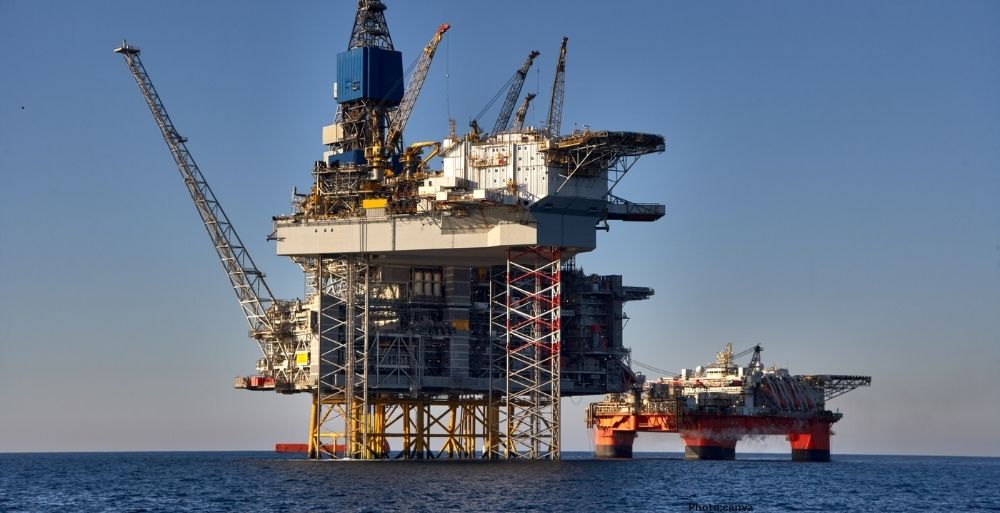
The Supreme Court’s unanimous decision allows oil and gas companies to shift lawsuits regarding Louisiana’s coastal land loss from state to federal court, following a significant jury award against Chevron.
WASHINGTON — On April 17, 2026, the United States Supreme Court delivered a significant ruling favoring oil and gas companies embroiled in legal disputes concerning environmental damage and coastal land loss in Louisiana. The court’s unanimous decision enables these companies, including Chevron, to pursue their cases in federal court, following a state jury’s order for Chevron to pay more than $740 million to remedy environmental degradation along the state’s coastline.
The ruling serves as a procedural victory for the energy sector, which has argued that the litigation stems from historical activities conducted under federal oversight during World War II. Justice Clarence Thomas, writing for the 8-0 majority, emphasized that Congress has historically permitted lawsuits against the government and its contractors to be adjudicated in federal court. The court recognized the connection between Chevron’s wartime efforts to enhance the U.S. aviation fuel supply and the current lawsuits, which claim that the company’s operations have contributed significantly to Louisiana’s coastal erosion.
Context of Coastal Land Loss
According to the U.S. Geological Survey, Louisiana has lost more than 2,000 square miles (approximately 5,180 square kilometers) of land over the past century, with oil and gas infrastructure identified as a major contributing factor. Projections from the state’s coastal protection agency warn that an additional 3,000 square miles (about 7,770 square kilometers) could be lost in the coming decades if current trends continue.
The litigation addressing the accountability of oil companies for coastal degradation has transcended typical partisan divides in Louisiana. Notably, the hefty financial judgment awarded against Chevron emerged from a jury in Plaquemines Parish, a region characterized by its conservative, pro-energy demographic. Republican Attorney General Liz Murrill acknowledged the unusual cross-party support for the lawsuits, reflecting a shared concern for environmental issues among local leaders.
Responses from Local Leaders and Environmental Advocates
Local officials and community leaders remain resolute in their commitment to pursuing accountability for the oil companies despite the Supreme Court’s ruling. Attorney John Carmouche, representing the plaintiffs, asserted, “Simply changing where the case will be heard, as has happened, will not deter our efforts to have Big Oil held accountable for the damages they caused and the enormous restoration they owe the people of Louisiana.” Carmouche’s remarks underscore a determination to continue the fight against major oil producers.
Environmental advocates, such as Anne Rolfes, the director of the Louisiana Bucket Brigade, characterized the Supreme Court’s decision as a “bump in the road” in the broader effort to hold the oil industry accountable for the consequences of their operations, which have significantly altered Louisiana’s natural landscape and increased vulnerability to hurricanes.
Industry Reactions and Legal Implications
In contrast, Chevron welcomed the Supreme Court’s decision, framing the lawsuits as an attempt to assign blame for conditions resulting from activities undertaken under federal regulation. A spokesperson for the company stated, “Chevron looks forward to litigating these cases in federal court, where they belong.” The company has consistently denied responsibility for coastal land loss and contends that suing over pre-existing activities prior to state environmental regulations is unjust.
The litigation in question is part of a broader wave of lawsuits initiated in 2013, wherein multiple oil giants, including Chevron and ExxonMobil, have been accused of violating state environmental laws over decades of operations. The recent ruling reverses a 2024 decision made by the U.S. Court of Appeals for the Fifth Circuit and is anticipated to influence a significant portion of the ongoing litigation, affecting roughly a quarter of the cases filed against various oil companies.
Economic Considerations and Future Litigation
The ruling has elicited a mixed response from economic stakeholders in Louisiana. The energy industry group Grow Louisiana hailed the Supreme Court’s decision as a pivotal moment, arguing that the ongoing lawsuits have resulted in substantial economic losses for the state, with Executive Director Marc Ehrhardt stating, “These lawsuits have cost Louisiana billions, killed jobs and padded trial lawyers’ pockets. Enough is enough. Stop these lawsuits.”
Conversely, the Louisiana Association of Business and Industry described the decision as “an important win for legal clarity,” suggesting that it could potentially streamline future legal proceedings involving environmental claims against oil companies.
Justice Samuel Alito recused himself from the case due to financial ties to ConocoPhillips, marking a notable absence in this pivotal ruling. Alito has previously recused himself from cases where potential conflicts of interest arose due to his stock holdings.
This latest Supreme Court decision not only underscores the ongoing legal battles surrounding environmental accountability but also highlights the complex interplay between energy interests, local governance, and environmental stewardship in Louisiana.





No Comment! Be the first one.