



Papua New Guinea Designates Massive “No-Take” Marine Reserve in the Bismarck Sea to Anchor Regional Conservation Corridor

In a significant expansion of Pacific Ocean conservation efforts, Papua New Guinea has unveiled plans to establish the Western Manus Marine Protected Area, a 200,000-square-kilometer “no-take” zone in the Bismarck Sea. Announced at the inaugural Melanesian Ocean Summit in Port Moresby, the reserve will completely prohibit industrial fishing and all other extractive human activities within its boundaries. Spanning an area roughly equivalent to the size of the United Kingdom, the sanctuary will serve as a foundational anchor for the newly formed Melanesian Ocean Corridor of Reserves, a collaborative network of national and jointly managed protected areas connecting Papua New Guinea, Fiji, and Vanuatu. Government officials emphasize that while the zone encompasses active commercial fishing grounds, extensive ecological data suggests the closure will ultimately stabilize regional fish stocks through biological spillover effects without harming the national economy.
A Massive Sanctuary in the Bismarck Sea
PORT MORESBY, Papua New Guinea — The Government of Papua New Guinea has formally announced the creation of the Western Manus Marine Protected Area (MPA), a sweeping 200,000-square-kilometer reserve designed to protect critical marine ecosystems from all commercial fishing and destructive human activities. The designation represents one of the most ambitious conservation mandates in the history of the Western Pacific, setting aside a vast expanse of ocean roughly the size of the United Kingdom as a strict “no-take” zone.
The initiative was unveiled earlier this week before an audience of more than 500 regional leaders, international scientists, and policy delegates gathered at the inaugural Melanesian Ocean Summit in Port Moresby. The new sanctuary will serve as the Western anchor for the newly established Melanesian Ocean Corridor of Reserves (MOCOR). This regional framework represents a coordinated network of national and jointly managed marine protected areas spanning the territorial waters of Fiji, Vanuatu, and Papua New Guinea, aimed at establishing contiguous migratory pathways and ecological safe havens across the Melanesian archipelago.
Papua New Guinea occupies a critical position within the Coral Triangle, a region universally recognized by marine biologists as the global epicenter of marine biodiversity. Situated where the tropical waters of the Pacific and Indian Oceans converge, the nation’s exclusive economic zone holds an extraordinary array of marine life. Baseline surveys conducted within its waters have documented more than 700 distinct reef fish taxa and over 300 species of hard coral.
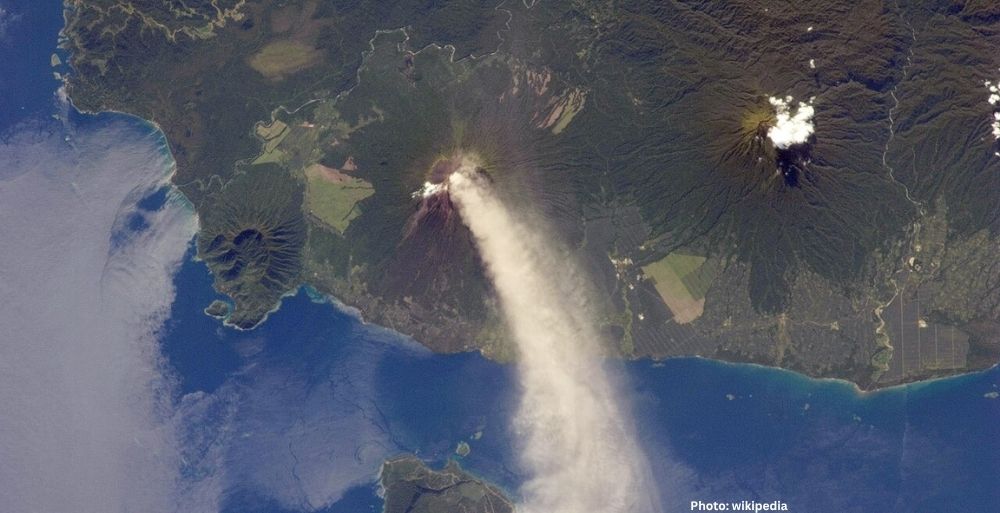
The Western Manus region is characterized by complex bathymetry, featuring steep underwater mountains, deep-sea ridges, and oceanic canyons. Oceanographers describe this terrain as a “marine highway” that links shallow, sunlit reef systems directly to unexplored abyssal environments thousands of meters below.
Balancing Ecological Legacy and Economic Reality
The implementation of a strict “no-take” policy across such a vast territory introduces complex economic variables for a developing nation reliant on its marine resources. The newly designated Western Manus MPA covers a geographic area that currently accounts for approximately 6.7% of Papua New Guinea’s total industrial fishing yield, and 10% of its highly lucrative industrial tuna fishing operations.
Despite the immediate withdrawal of these waters from commercial exploitation, government economists and fisheries officials express confidence that the long-term economic impacts will be net-positive. This assessment is grounded in empirical data gathered from comparable large-scale marine protected areas across the Pacific and Indian Oceans.
Peer-reviewed research indicates that well-enforced, large-scale marine sanctuaries generate a “spillover effect,” wherein fish populations within the protected zone multiply rapidly and migrate outward into adjacent, legally fishable waters. On average, commercial tuna catch rates have been observed to increase by 12% to 18% along the outer boundaries of established marine reserves, effectively replenishing adjacent commercial fisheries.
“Papua New Guinea is one of the most biodiverse places on the planet,” stated Jelta Wong, Minister of the country’s National Fisheries Authority, delivering his remarks with a measured focus on the balance between conservation and national interest. “Establishing the Western Manus Marine Protected Area will allow us to preserve and protect our ecological legacy and, at the same time, ensure that our ocean continues to provide people with what we need—food and a source of income.”
The policy shift aligns with international conservation benchmarks, specifically the global “30 by 30” initiative, which challenges nations to designate 30% of their land and sea territories as protected areas by the year 2030.
“We take our commitment to protect 30% of our waters by 2030 very seriously, and this new MPA brings us one large step closer to that goal—in addition to ensuring environmental sustainability for present and future generations,” said Yvonne Tio, Executive Manager at the Conservation and Environment Protection Authority (CEPA). Speaking to reporters on the sidelines of the summit, Tio emphasized that local communities remained central to the planning process. “Our rigorous process for researching and designating which areas to prioritize for protection always puts communities first. We’re excited to announce the Western Manus Marine Protected Area so that people in PNG and worldwide can benefit.”
Scientific Foundations of the Reserve
The boundaries of the Western Manus MPA were not drawn arbitrarily; they are the result of an intensive, data-driven scientific campaign. In 2024, National Geographic Pristine Seas launched a comprehensive three-month research expedition in direct partnership with PNG’s Conservation and Environment Protection Authority and the Wildlife Conservation Society (WCS). Utilizing advanced deep-sea submersibles, drop cameras, and satellite tracking tags, the joint research team documented both the profound ecological vitality and the acute vulnerabilities of the remote Bismarck Sea.
The expedition gathered critical data on pelagic and migratory species. To establish the optimal geographic scope of the reserve, scientists mapped the movements of endangered grey reef sharks using acoustic and satellite telemetry, observing how the predators moved between shallow reefs and deep-water drop-offs.
However, because multi-species ecosystems require broader protections, the final boundary was extended far beyond the immediate habitat of the sharks. The zone was expanded to encompass the foraging ranges of wide-ranging pelagic seabirds, which routinely travel more than 200 nautical miles from their island nesting sites to gather food for their young.
Western Manus MPA At a Glance:
- Total Area: ~200,000 km² (Approx. size of the United Kingdom)
- Economic Impact Area: Encompasses 6.7% of PNG industrial fishing, 10% of tuna fishing
- Anticipated Spillover: 12% to 18% average increase in tuna catch rates near boundaries
- Key Protected Species: Scalloped hammerheads, Cuvier's beaked whales, Yokozuna slickhead
The scientific team documented thriving, resilient coral communities in the Western Islands, which have so far managed to resist the severe bleaching events plaguing other tropical reef systems globally. Yet, the expedition also recorded distinct warning signs of anthropogenic pressure. Shark populations were notably low across several surveyed sites—a clear indicator of historic and ongoing targeted longline fishing pressure.
Concurrently, the team’s deep-sea cameras captured footage of unique abyssal organisms, including the colossal yokozuna slickhead (Narcetes shonanmaruae), a deep-sea apex predator never previously recorded in Papua New Guinea’s territorial waters.
“At a time when coral reefs are in crisis, it’s exciting to see the Western Islands still shimmering with healthy corals and schools of fish like wahoo, rainbow runners and jacks,” noted Lindsay Young, Vice President of Research at Pristine Seas, during a technical presentation at the summit.
Young delivered her assessment with an earnest urgency, underscoring that isolation is no longer a guarantee of safety. “This is not just a beautiful place, it’s a highly connected system, where shallow reefs, deep-sea habitats and open ocean waters are linked, supporting species that move across them. Although these reefs are among the healthiest in the Pacific, they are increasingly under threat from global warming, overfishing and plastic pollution. The new MPA comes at a critical juncture to protect these connections and ensure the long-term health of the ocean and the communities that depend on it.”
The resulting sanctuary is designed to shield a vast array of vulnerable marine megafauna. Among the species frequenting the protected zone are scalloped hammerhead sharks, silky sharks, spinner dolphins, bottlenose dolphins, and Cuvier’s beaked whales. Furthermore, the area contains critical feeding corridors for pods of killer whales (Orcinus orca) that migrate through the Bismarck Sea on a highly predictable seasonal basis.
Cultural Identity and the Legislative Path Forward
For the indigenous populations of Manus Province and the surrounding islands, the establishment of the MPA represents an institutional validation of traditional conservation practices. For centuries, Melanesian coastal communities have utilized customary marine tenure systems, known locally in various districts as tambu zones, to temporarily close areas to fishing and allow marine populations to recover.
Powes Parkop, Governor of the National Capital District, who spent his formative years in Manus Province, framed the announcement as a historic milestone that bridges ancestral tradition with modern international law.
“Our ancestors have always lived in harmony with the sea, but today, we are writing a new chapter for our children,” Parkop stated, his voice carrying a distinct resonance that quieted the crowded summit hall. “To see the waters of Western Manus recognized as the largest marine protected area in Papua New Guinea fills my heart with a profound sense of Lapan pride. We aren’t just protecting fish or coral; we are safeguarding our identity.”
Parkop emphasized that environmental stewardship is deeply intertwined with cultural preservation for maritime communities. “By standing as the guardians of this sanctuary, our province is showing the rest of the world that we have the strength to preserve our ‘blue heritage’ while ensuring our reefs remain vibrant and full of life for generations to come. This is more than a sanctuary; it is our legacy.”
Following the successful conclusion of the Melanesian Ocean Summit, which brought together heads of state and ministers from Papua New Guinea, Fiji, the Solomon Islands, New Caledonia, and Vanuatu, the focus shifts to statutory implementation. The government of Papua New Guinea is scheduled to initiate the formal national legislative process required to grant the Western Manus MPA permanent statutory legal designation.
This phase will involve finalizing the specific legal coordinates, establishing monitoring protocols, and allocating national budget resources for maritime enforcement. Government compliance vessels, supported by satellite surveillance data and international conservation partners, will be tasked with patrolling the perimeter to deter illegal, unreported, and unregulated (IUU) fishing vessels that frequently target the rich waters of the Coral Triangle.




No Comment! Be the first one.