





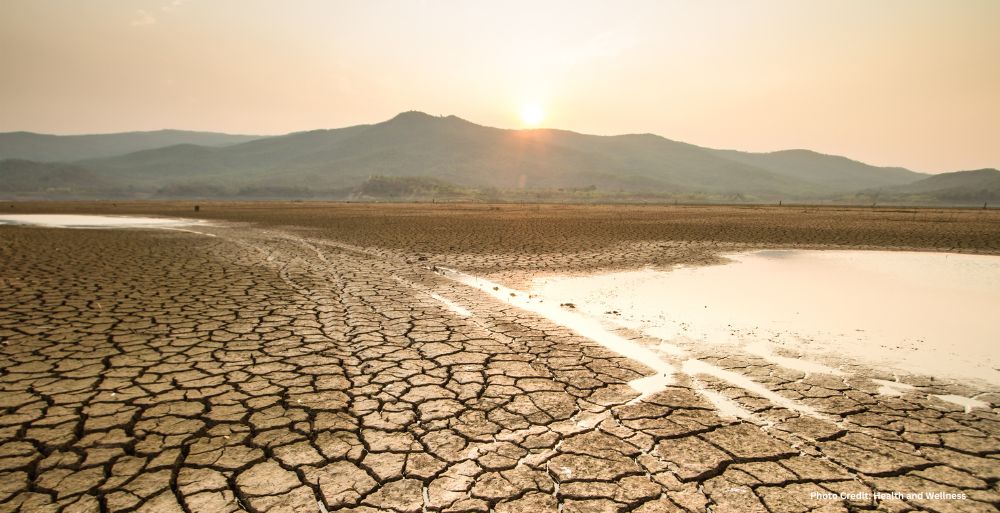
India is experiencing unprecedented heat wave conditions, exacerbating health, labor, and financial crises for its 1.4 billion residents, according to a recent report from Harvard University.
NEW DELHI—In late April, an unusual heat wave gripped India, with every one of the world’s 50 hottest cities recorded within the country, according to data from the air-quality monitoring platform AQI. On April 27, average peak temperatures in these cities reached approximately 112 degrees Fahrenheit, marking an alarming weather anomaly.
Banda, a city located in northern India, recorded the highest temperature, where the coolest measurement that day was 94.5 degrees Fahrenheit. While temperatures have slightly decreased since then, many areas continue to see peak temperatures near or exceeding 100 degrees. Meteorologists warn of more extreme heat events anticipated for May and June, particularly with the El Niño weather pattern developing over India.
While high temperatures are customary during India’s summers, research indicates that extreme heat events are projected to become both more frequent and severe as climate change accelerates. This extreme heat is exacerbating concurrent health, labor, and financial crises across the nation, as highlighted in a recent white paper released by Harvard University’s Salata Institute for Climate and Sustainability.
The Vulnerability of a Nation
India, with a population exceeding 1.4 billion, is the most populated country globally and is also one of the hottest. A variety of factors contribute to the vulnerability of the majority of its citizens to the health and welfare risks posed by heat waves such as the recent events in April. Only 8 percent of households in India have access to air conditioning, necessitating reliance on passive cooling methods like shade and reflective roofs to mitigate heat effects at home.
The labor force is similarly affected, with around 75 percent engaged in heat-exposed sectors such as agriculture and construction. Informal or gig workers, who lack contracts that ensure basic rights or protections, comprise approximately 90 percent of the labor force, as noted by the Salata Institute’s Climate Adaptation in South Asia research cluster. Kartikeya Bhatotia, a climate fellow at Harvard, stated, “Heat is a systems-wide issue. It’s related to health, housing, labor, infrastructure, and finance.” He emphasized that climate change amplifies these issues by increasing the baseline of danger.
The report illustrates the multifaceted ways heat influences society in India, from agricultural losses to increased rates of infectious diseases. In Gujarat, the country’s largest salt-producing region, workers routinely labor in temperatures exceeding 110 degrees Fahrenheit, often altering their schedules to work during cooler hours to avoid the peak heat.
While government officials are currently attempting to determine the full extent of heat-related fatalities, reports indicate that over 17,000 people died from heat waves in India between 2000 and 2020, according to The New York Times.
Challenges in Mitigation
The Harvard study also critiques existing heat mitigation strategies and adaptation policies, asserting that they often fall short as climate change intensifies temperatures. One proposed solution highlighted in the research is parametric insurance, offering predetermined payouts to outdoor workers when temperatures exceed a certain threshold. This approach aims to mitigate public health risks and facilitate timely financial support. However, the authors caution that such measures may be misconstrued as standalone fixes.
Determining whether conditions on any given day meet payout criteria can be complicated, as individual heat-health risks vary by age and other factors. Moreover, parametric insurers could face significant losses as climate change progresses if premium prices are not adjusted accordingly. The study notes that India has implemented heat action plans in major cities to enhance early warning systems, emergency aid, and infrastructure improvements. However, the authors argue that the extensive scope of these initiatives may lead to conflicts with daily administrative priorities, resulting in potential neglect.
Expanding access to air conditioning could appear to be a straightforward solution. However, this approach presents its own climate challenges. Data indicates that the late-April heat wave contributed to a surge in electricity demand, largely attributed to increased air conditioning usage. Due to existing shortages in liquefied natural gas and petroleum gas supplies, India resorted to ramping up coal usage to meet demand, as reported by CNBC.
Despite a rise in renewable energy sources—over half of India’s total installed power generation capacity comes from non-fossil-fuel sources—coal remains the predominant electricity producer. The pattern of frequent and intense heat waves may perpetuate reliance on fossil fuels, consequently driving additional global warming—a concerning cycle observed in various regions worldwide.
Bhatotia remarked on the complexities of addressing cooling solutions effectively, stating, “There exists a challenge in recommending how cooling can be deployed in the most efficient way that doesn’t worsen the problem but also addresses the very real and urgent issues of heat.”
Conclusion
The implications of this extreme heat wave extend far beyond immediate discomfort, touching on critical health and economic concerns that could define India’s future as it grapples with the realities of climate change. As the country navigates these challenges, the need for comprehensive, integrated strategies that acknowledge the interconnectedness of health, labor, and environmental policies is more urgent than ever.






No Comment! Be the first one.