





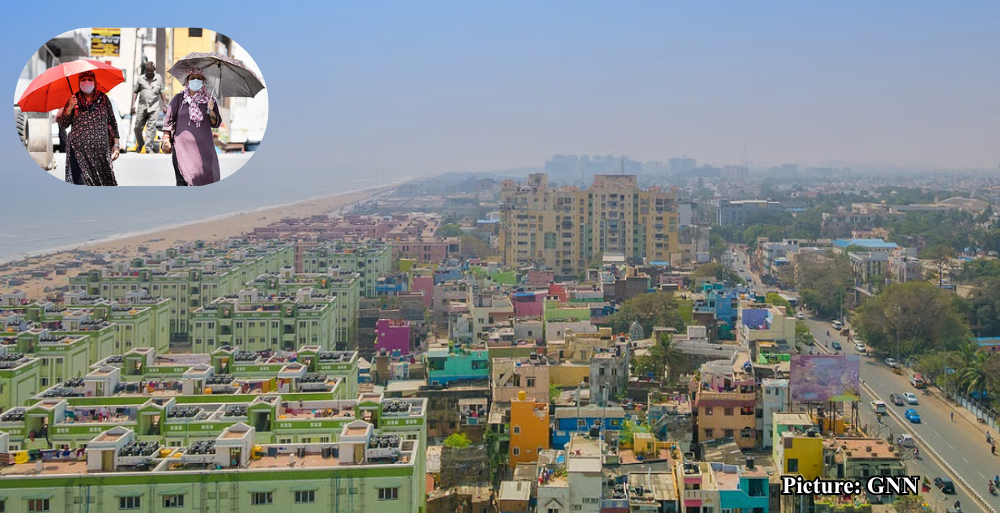
A recent study by Climate Trends highlights the severe indoor heat challenges faced by low- and middle-income households in Chennai, indicating that nighttime temperatures offer little relief from escalating heat stress.
Chennai, India – A comprehensive study conducted by Climate Trends has unveiled significant concerns regarding indoor heat exposure among low- and middle-income households in Chennai. The research, titled “Nighttime Thermal Stress in Low and Middle Income Housing in India,” was carried out from October 2025 to April 2026, revealing that indoor temperatures frequently exceeded 32°C, with some households enduring nearly eight months—approximately 5,800 hours—of continuous heat exposure.
The findings indicate that nighttime temperatures seldom fell below 31°C. Notably, the study observed that indoor spaces often reached their peak temperatures between 8 PM and 9 PM, with recorded temperatures soaring to nearly 34.7°C. This phenomenon is largely attributed to the thermal retention characteristics of reinforced concrete structures, which release heat accumulated during the day, exacerbating nighttime discomfort. Furthermore, humidity levels consistently hovered above 75%, compounding the heat stress experienced by residents.
Health Implications and Economic Strain
Aarti Khosla, founder and director of Climate Trends, expressed her alarm over the implications of these findings. “It is concerning to note the level of baseline heat exposure and heat stress for the residents, and what’s most pertinent is that even at night, their indoor temperatures rarely dropped below 31°C,” Khosla stated. This chronic exposure to elevated temperatures poses significant health risks, including heat-related illnesses and the exacerbation of mental health conditions, particularly among vulnerable populations.
The study also identified a stark disparity in access to cooling solutions between different income groups. Among the high-income households surveyed, all were equipped with air conditioning units, whereas low-income households depended solely on ceiling fans for cooling. The report highlighted that “thermal comfort is achievable for those who can afford mechanical cooling. For those who cannot, heat exposure persists through the night,” underscoring the socioeconomic divide in coping mechanisms against heat stress.
Structural Factors and Urban Planning Challenges
Researchers determined that housing structure plays a pivotal role in the heat problem, often overshadowing income levels. Buildings constructed with reinforced cement concrete are particularly prone to trapping heat, while dense urban layouts and inadequate ventilation significantly hinder the potential for nighttime cooling. This structural inadequacy disproportionately impacts low-income households, leading to severe public health implications.
Moreover, current heat action plans primarily focus on outdoor temperatures and daytime heat waves, neglecting the pressing issue of indoor heat exposure. Naveen Puttaswamy, an associate professor at Sri Ramachandra Institute of Higher Education and Research and co-author of the study, emphasized this oversight. “Most people spend the majority of their time indoors, where they face the dual threats of heat stress and poor air quality. These exposures carry uncertain physiological trade-offs and add psychological as well as economic strain on individuals,” he stated. This insight calls for a reassessment of existing policies to effectively address the realities of indoor heat stress.
Recommendations for Policy and Urban Design
The report advocates for a multifaceted approach to mitigate indoor heat exposure. Among the key recommendations are the implementation of cool roofs and reflective coatings, improvements in cross-ventilation, and the use of climate-responsive building materials. Additionally, the study suggests that urban heat action plans should incorporate mandatory indoor heat monitoring to better safeguard vulnerable populations.
As Chennai and other urban centers grapple with the escalating impacts of climate change and rapid urbanization, the findings from this study underscore the urgent need for comprehensive strategies that address both outdoor and indoor heat exposure. With an increase in the frequency of heat waves and rising ambient temperatures, it is imperative for policymakers to implement proactive measures that ensure the health and well-being of all residents, particularly those in low- and middle-income sectors who are disproportionately affected by these challenges.
The implications of this study extend beyond individual households; they influence public health systems, urban planning, and climate resilience strategies. As cities like Chennai continue to grow, the pressure on housing and infrastructure will only intensify, necessitating an integrated approach that includes sustainable building practices and equitable access to cooling technologies. Addressing these issues is not merely about improving comfort; it is a crucial step toward safeguarding the health and livelihood of the most vulnerable populations.
Furthermore, the study’s findings highlight the urgent need for a shift in how urban policymakers structure heat action plans. Existing protocols often prioritize immediate outdoor temperatures and fail to consider the indoor environments where people spend the majority of their time. By incorporating measures that address indoor heat stress, such as public awareness campaigns about the risks of prolonged heat exposure and the importance of adequate ventilation, policymakers can better protect the health of their communities.
In the broader context of climate change, the study serves as a reminder of the urgent need for targeted interventions that prioritize the most affected demographics. As heat-related illnesses continue to rise globally, particularly in rapidly urbanizing regions, the lessons drawn from Chennai’s experience can inform best practices for other cities facing similar challenges. The path forward must be guided by equity, ensuring that all residents, regardless of their socioeconomic status, have access to safe and comfortable living conditions.




No Comment! Be the first one.