



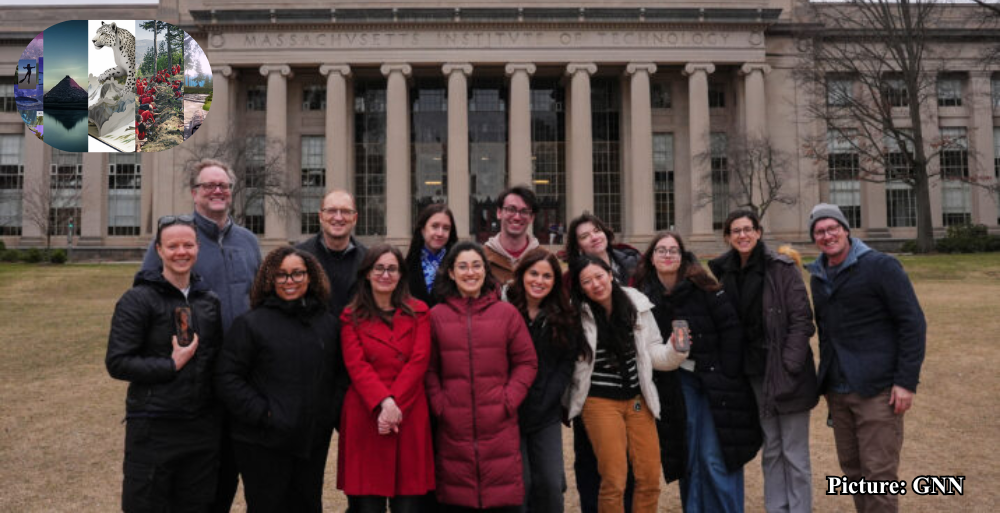
The Associated Press and the Massachusetts Institute of Technology recently hosted a workshop focused on climate storytelling, resulting in four diverse environmental stories crafted by students and AP journalists.
The Associated Press (AP) and the Massachusetts Institute of Technology (MIT) recently collaborated on a climate storytelling workshop that spanned three intensive days, bringing together AP journalists and students from the MIT Graduate Program in Science Writing. This initiative aimed to enhance the students’ reporting skills while focusing on environmental issues through fieldwork in the greater Boston area.
The workshop took place in early March, where students engaged in hands-on reporting, discussions, and presentations. The outcome of this collaboration was the creation of four impactful stories covering diverse topics, including kelp farming, sewage pollution in Boston-area waterways, the unique ecology of cranberry bogs, and the historical significance of the Blue Hill Observatory, the nation’s oldest continuously operating weather observatory.
Workshop Structure and Objectives
The preparation for this workshop began months in advance, led by Alyssa Goodman, AP’s climate photo editor, and Christina Couch, associate director of MIT’s Graduate Program in Science Writing. Prior to the in-person sessions, AP journalists conducted four online presentations covering essential aspects of climate change reporting, including how to effectively use photographs and videos in storytelling as well as the impact of data in climate journalism.
Upon their arrival, students were divided into pairs and tasked with pitching story ideas relevant to the Boston and Cambridge areas. The goal was to select stories that would allow them to actively report in the field, capturing visual content alongside textual narratives.
Field Experience and Real-Time Feedback
On March 12, the students met with AP journalists in person for the first time, embarking on a weekend of immersive field reporting. Throughout this period, they received real-time feedback on their work, which was integral to their development as reporters. This aspect of the workshop underscored the importance of adaptability in journalism, as students continually revised their leads and story angles based on insights gained from both their experiences and discussions with their AP mentors.
Laura Martín Agudelo, a student who collaborated with Alex Megerle to report on the Blue Hill Observatory, noted the value of this iterative process: “The idea we had in mind when we pitched it turned out not to be the most interesting part of the weather observatory, and we only discovered this by going to Blue Hill every day, speaking with staff and visitors repeatedly,” she explained.
For many students, the workshop was not only about reporting but also about developing technical skills. Megerle remarked on the confidence gained through the practical experience of handling equipment like microphones and cameras during interviews. “I’d shot some video before this story but wasn’t as comfortable working with mics and filming a source interview in the field,” he stated. “This collaboration gave me reps doing those things and more confidence to maybe utilize them in my own reporting in the future.”
Successes and Learning Outcomes
The students—hailing from diverse backgrounds including Colombia, Romania, the United Kingdom, Brazil, and the United States—brought a wealth of journalistic experience to the workshop. This diversity enriched the project, leading to strong story ideas and innovative approaches to reporting. For instance, Lucie McCormick, who worked on the sewage story with Ashley D’Souza, expressed how the experience transformed her understanding of visual journalism. “The real-time feedback and guidance helped me think differently about how I compose and capture images,” she said.
As the students continued to work on their stories following the workshop, they maintained communication with their AP mentors, engaging in a process of editing and refining their narratives. This ongoing mentorship was essential for helping them clarify their storylines and improve their reporting techniques. Jamie Jiang, who partnered with Julia Vaz for their cranberry bog story, commented on the evolution of their narrative: “We kept trying to figure out through the reporting process what our story was exactly… and we learned this was also a natural part of the reporting process.”
Vaz added that she was proud of both the photos she captured and the story they developed together, stating, “I now have the confidence to take on more creative and innovative journalism projects.”
Conclusion and Future Implications
This collaboration not only provided students with practical skills but also fostered meaningful connections between emerging journalists and seasoned professionals. The diverse stories produced during the workshop reflect a growing commitment to environmental journalism, highlighting critical issues related to climate change that resonate with communities. The AP and MIT partnership serves as a model for future educational initiatives aimed at enhancing journalistic practices in the field of climate reporting.
As the climate crisis continues to unfold, initiatives like this workshop are vital for equipping the next generation of journalists with the tools and knowledge needed to tell compelling and impactful stories about our changing world.


No Comment! Be the first one.