





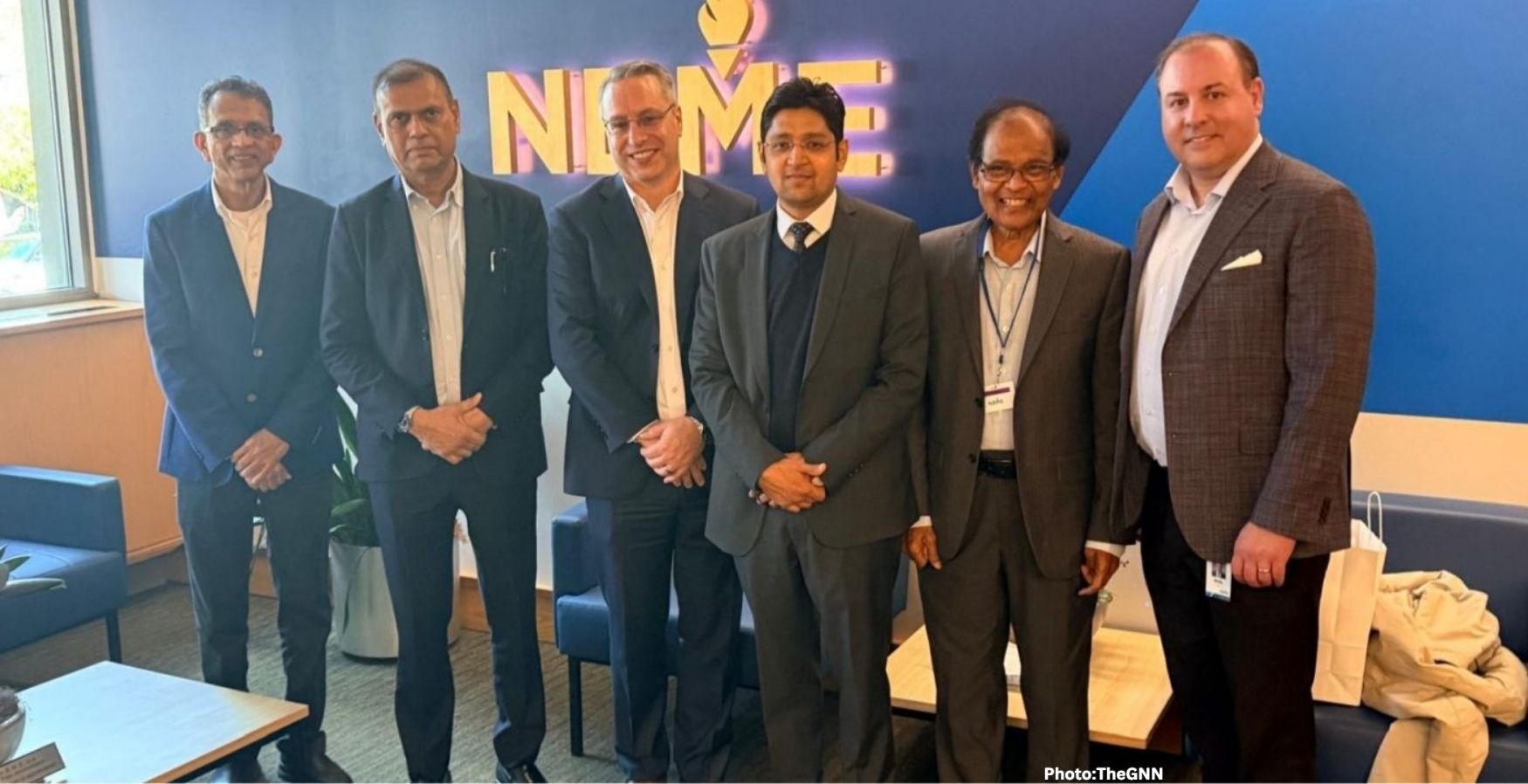
“The participation of National Medical Commission (NMC) representatives in the Federation of State Medical Boards (FSMB) 2026 Annual Meeting, held from April 30 to May 2, 2026, in Baltimore, Maryland, reflects a significant step toward strengthening international collaboration in medical regulation, education, and licensure,” said Dr. Lokesh Edara, Past Chairman of the AAPI Board of Trustees.
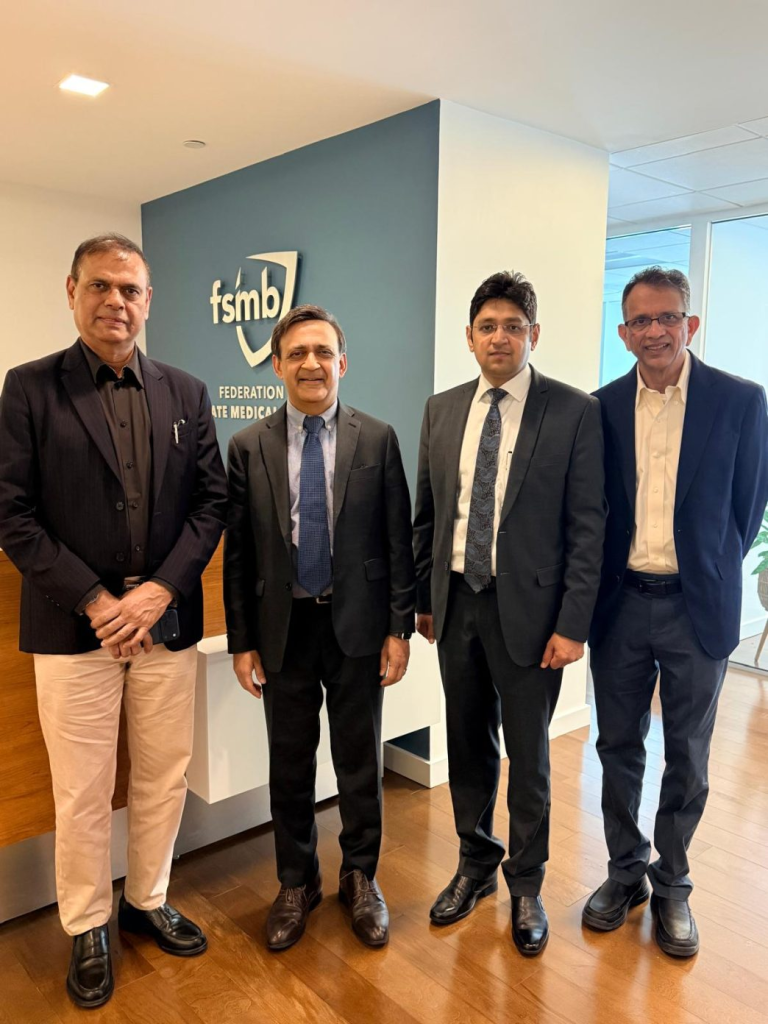
The delegation, comprising Dr. M.K. Ramesh, President of the Medical Assessment and Rating Board (MARB); Dr. Raghav Langer (IAS), Secretary of the NMC; and Dr. Lokesh Edara, Past Chairman of the AAPI Board of Trustees, attended the Annual Meet under the guidance of NMC Chairperson Dr. Abhijat Seth. Their engagement underscores India’s growing commitment to aligning with global best practices in healthcare regulation.
During the conference, NMC representatives actively participated in discussions centered on physician licensure frameworks, regulatory standards, and quality assurance mechanisms. These interactions provided an opportunity to explore collaborative pathways with leading international organizations such as the FSMB, the Educational Commission for Foreign Medical Graduates (ECFMG), the National Board of Medical Examiners (NBME), and the American Association of Physicians of Indian Origin (AAPI).
As Dr. Ramesh noted, “International collaboration is essential to ensuring that medical education and licensure systems remain robust, transparent, and globally relevant.”
A key highlight of the meeting was the NMC delegation’s engagement with prominent leaders in the field of medical regulation and assessment. Among those were Dr. HumayunChaudhry, President and CEO of FSMB; Dr. Peter J. Katsufrakis, President and CEO of NBME; and Dr. Eric Holmboe, President of ECFMG.
These interactions facilitated knowledge exchange on evolving trends in competency-based assessment, physician mobility, and regulatory innovations. Dr. Langer emphasized that “dialogue with global counterparts enables the continuous refinement of regulatory frameworks in line with emerging healthcare challenges.”
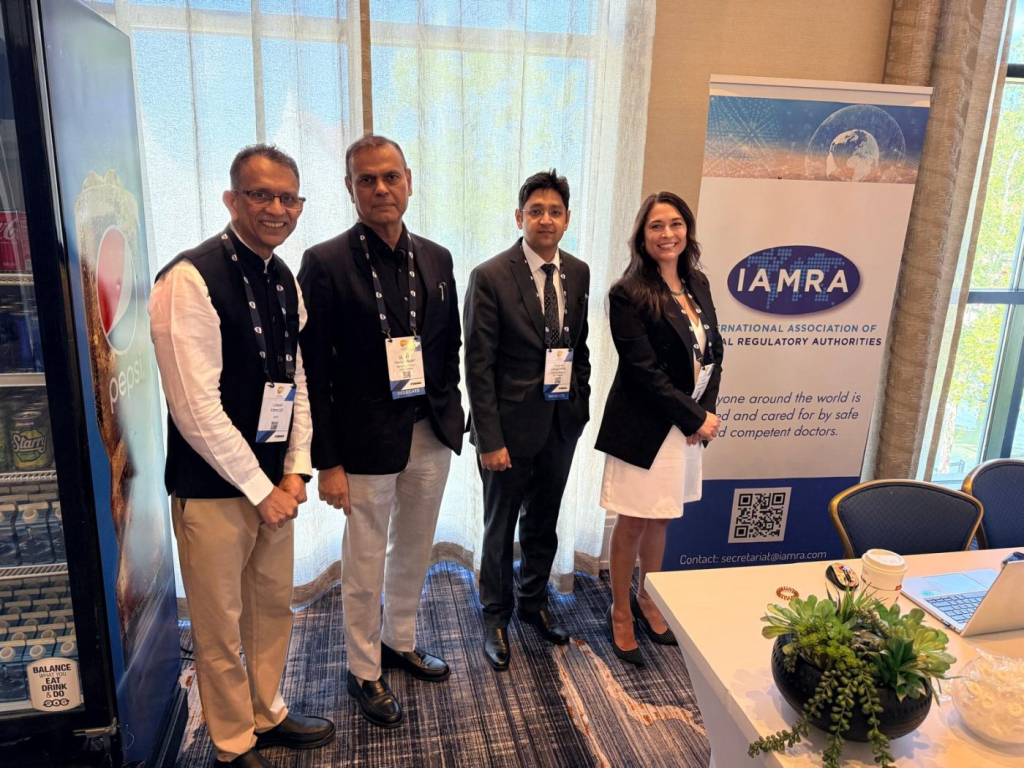
The NMC’s role as a member of the International Association of Medical Regulatory Authorities (IAMRA) further reinforced the importance of such engagements. Through this platform, the delegation connected with leadership from ECFMG, a division of Intealth, which integrates initiatives such as the Foundation for Advancement of International Medical Education and Research (FAIMER).
India’s longstanding association with FAIMER is particularly noteworthy, as the country hosts four FAIMER Regional Institutes (FRIs). As of 2023, these institutes have produced 685 fellows—accounting for approximately 42% of the global total of 1,633 FAIMER fellows. This contribution highlights India’s leadership in capacity building for medical educators. As one participant observed, “India’s investment in faculty development through FAIMER demonstrates a sustained commitment to excellence in medical education.”
The historical legacy of the FSMB adds depth to the significance of the NMC’s participation. Established in 1912, the FSMB has consistently advocated for high standards in physician licensure and regulation, with the overarching aim of safeguarding public health, safety, and welfare.Its evolution, including the milestone of hosting its first independent annual meeting in 1982 in New Orleans, reflects a longstanding dedication to advancing regulatory practices.
The alignment of NMC’s objectives with those of FSMB is further evidenced by recommendations from a Parliamentary Standing Committee on Health in India, which encouraged the NMC to study and adopt international best practices.
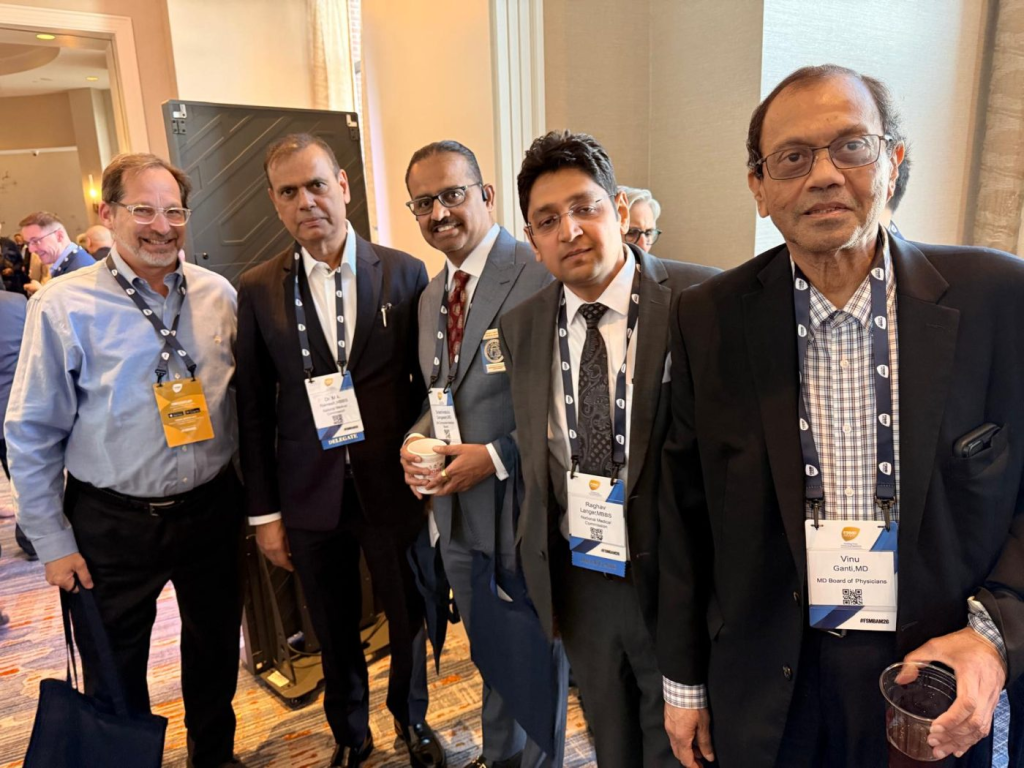
In addition to high-level engagements, the NMC delegation also interacted with several state medical board members across the United States. These included Dr. Chaitanya Anand from Minnesota, Dr. S. Chetan Shah of New Jersey, Dr. Sreeni R. Gangasani from Georgia, and Dr. Harbhajan Ajrawat representing Maryland.
These exchanges offered valuable insights into state-level regulatory models and operational frameworks. Reflecting on these discussions, Dr. Edara stated, “Understanding the diversity of state medical board systems enriches our perspective and informs the development of adaptable regulatory strategies.”
The delegation also met with Dr. George M. Abraham, Chief of Medicine at Saint Vincent Hospital in Worcester, Massachusetts, and a Professor of Medicine at the University of Massachusetts Medical School. Such interactions bridged the domains of clinical leadership, academic medicine, and regulatory governance, further enhancing the scope of the visit.
Overall, the NMC’s participation in the FSMB 2026 Annual Meeting represents a meaningful step toward fostering global partnerships and strengthening regulatory systems. The engagement not only facilitated knowledge exchange but also reinforced the importance of harmonizing standards in an increasingly interconnected medical landscape. As articulated by the delegation, “Collaboration across regulatory bodies is indispensable for ensuring high-quality healthcare delivery worldwide.”





No Comment! Be the first one.