





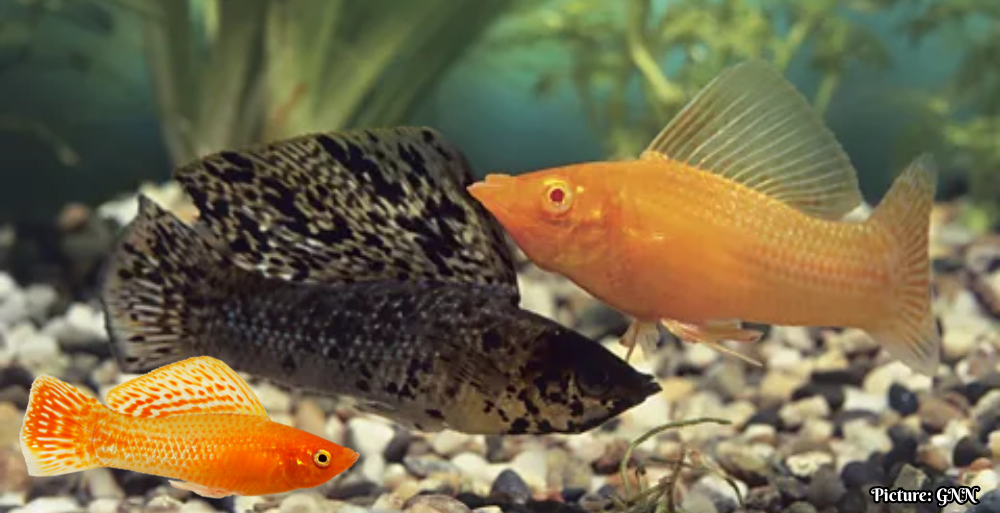
The Amazon molly, a fish species from Mexico and southern Texas, has survived for approximately 100,000 years without the presence of males, defying conventional evolutionary theories that suggest asexual species are doomed to extinction due to genetic decay.
In the rivers of Mexico and southern Texas, the Amazon molly, a unique fish species, has become a subject of fascination for scientists due to its extraordinary reproductive strategy. This all-female species has persisted for approximately 100,000 years, utilizing a process known as gynogenesis, where eggs develop using male sperm to stimulate growth but discard the male’s genetic material. As a result, each offspring is a clone of the mother, raising important questions about the survival of asexual species in the natural world.
The Evolutionary Paradox
Historically, evolutionary theory posits that asexual species face significant challenges and should be short-lived due to the accumulation of harmful mutations within their genomes. This concept is often illustrated through Muller’s ratchet, which describes the irreversible process by which genomes degrade over time without the genetic shuffling that sexual reproduction provides. Despite these theories, the Amazon molly thrives, contradicting expectations and prompting researchers to reevaluate the resilience and adaptability of asexual organisms.
Edward Ricemeyer, a computational biologist at Ludwig Maximilian University of Munich and co-author of a recent study, emphasizes the complexity of sexual reproduction. He notes that while sexual reproduction allows for genetic diversity through the mixing of genes from two parents, it also entails significant costs, particularly for females, who often invest more energy in reproduction than males. In contrast, asexual reproduction can seem advantageous as it allows for the direct transmission of genes without the need for a mate.
Understanding the Mechanisms
Despite the apparent advantages of asexual reproduction, the dominance of sexual reproduction across the tree of life raises questions about the mechanisms that enable long-lived asexual species like the Amazon molly to evade genetic decline. As highlighted by evolutionary biologist Dave Speijer from the University of Amsterdam, sexual reproduction enhances genetic variability, which is crucial for a species’ survival in changing environments. This genetic diversity allows for greater adaptability and resilience against diseases and environmental changes.
Ricemeyer and his colleagues explored the genetic health of the Amazon molly through whole-genome sequencing. Their findings revealed that the species employs a unique form of genetic repair known as gene conversion, which acts as a maintenance mechanism for its genome. Unlike other asexual species, which may rely solely on clonal reproduction, the Amazon molly exhibits a high frequency of gene conversion, effectively allowing for the repair and preservation of its DNA.
The Origins of the Amazon Molly
The Amazon molly’s lineage is believed to have originated from a hybridization event roughly 100,000 years ago, when a female Atlantic molly mated with a male sailfin molly. This unusual reproductive event produced a new lineage capable of asexual reproduction and has resulted in a genetically diverse population. The hybrid nature of the Amazon molly, inheriting DNA from two closely related species, provides a biological advantage in terms of genetic variability, which may contribute to its resilience against mutation accumulation.
Implications for Understanding Evolution
The implications of the Amazon molly’s unique survival strategy extend beyond this singular species. Researchers like Ricemeyer suggest that understanding the genetic mechanisms that enable asexual species to maintain genome integrity could offer insights into broader biological processes, including human health. The study of genetic mutations is particularly relevant in the context of diseases like cancer, which arise from genetic errors.
While the Amazon molly’s success challenges the long-held notion that sexual reproduction is the only viable strategy for maintaining genetic health, it also opens the door to further research into the genetic strategies of other asexual organisms. The bdelloid rotifer, for example, is another all-female species that has existed without males for millions of years, yet the mechanisms behind its longevity remain largely unexplained.
As scientists continue to explore the genetic resilience of asexual species, the findings regarding the Amazon molly underscore the complexity of evolutionary processes. The discovery of extensive gene conversion within its genome indicates that alternative strategies for managing genetic integrity do exist, providing a new perspective on the evolutionary challenges faced by asexual organisms.
In conclusion, the Amazon molly serves as a compelling case study for understanding the potential for asexual species to thrive in the natural world. While the debate over the evolutionary advantages of sexual versus asexual reproduction continues, the longevity of the Amazon molly raises intriguing questions about the diversity of reproductive strategies in nature.






No Comment! Be the first one.