


Springfield Initiative Reports Dramatic Improvement in Blood Pressure Control After Decade-Long Prevention Campaign

The Springfield experience suggests that long-term investment in prevention, education, early diagnosis, and community engagement can substantially improve blood pressure control and reduce the burden of cardiovascular disease among underserved populations.
A community health initiative in Springfield has reported a dramatic improvement in blood pressure control after more than a decade of prevention-focused outreach, with organizers saying the results demonstrate how sustained public education, early screening, and access to basic health resources can significantly improve cardiovascular health.
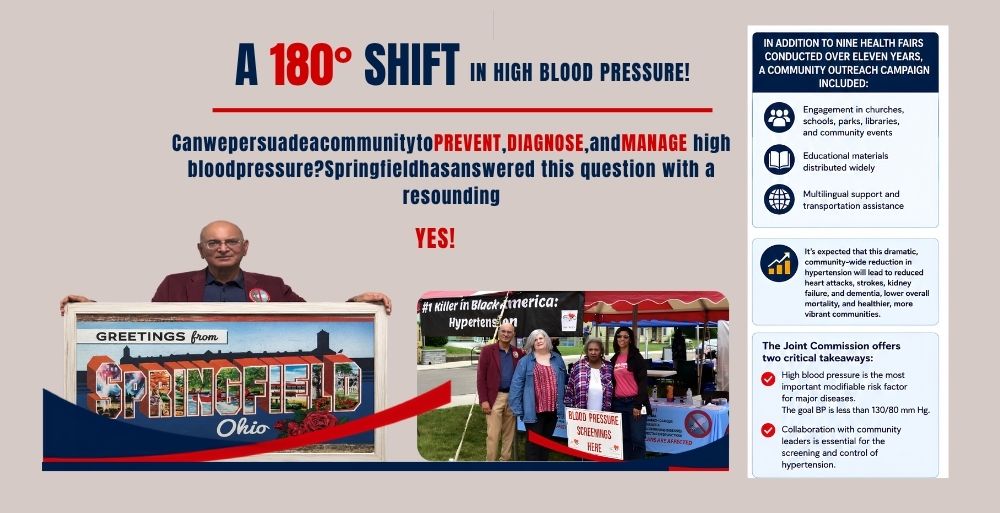
According to data released by Heart Health Now LLC, a nonprofit founded by cardiothoracic surgeon Dr. Surender R. Neravetla, screenings conducted at the 2025 Minority Health Fair found that 92% of participants recorded blood pressure within the normal range. The figure marks a striking contrast to 2014, when approximately 95% of adults screened had uncontrolled hypertension.
The initiative focused on underserved communities, including Black Americans, Hispanic Americans, Haitian immigrants, migrant workers, and low-income families. Participants received free health screenings, education on cardiovascular disease prevention, laboratory testing for conditions such as diabetes and kidney disease, and home health toolkits that included blood pressure monitors, thermometers, and pulse oximeters.
The reported improvement comes as hypertension continues to pose a major public health challenge in the United States. According to the American Heart Association, nearly 58% of Black adults have high blood pressure—among the highest rates globally—while the U.S. Department of Health and Human Services has reported significantly higher mortality rates from hypertension-related diseases among Black Americans.
The Springfield initiative reflects years of preventive work led by Dr. Neravetla, who has consistently argued that addressing hypertension requires community education long before patients develop serious cardiovascular complications.
In 2019, Dr. Neravetla launched a public campaign encouraging restaurants to disclose sodium content on their menus while raising awareness about the health risks associated with excessive salt consumption.
“Children’s ill health has reached epidemic levels in this country. But this is a man-made disaster. As a parent, you would probably give your life to protect your youngsters from danger. So the last thing you want to do is to voluntarily feed them a diet that compromises their health now and in the future. The key to better health for our children is simple. We have to start by getting rid of enemy number one in our food: salt,” he said at the time.
The campaign emphasized that lowering sodium intake, improving nutrition, and encouraging regular health screenings could help reduce hypertension and the risk of heart disease, stroke, kidney failure, and other chronic illnesses.
The following year, Dr. Neravetla continued advocating for preventive approaches, cautioning against misconceptions surrounding dietary sodium while reinforcing the importance of reducing excessive salt consumption.
“We should be stepping up efforts to cut salt in our food,” he wrote in a 2020 public health commentary, arguing that prevention remains the most effective strategy for combating hypertension and its long-term complications.
Over the years, the Springfield program expanded beyond blood pressure screening to include testing for diabetes, anemia, kidney function, prostate health, mammography referrals, dental care, vision screening, CPR education, and broader community health awareness initiatives.
Organizers say the long-term effort focused on four key principles: prevention, early diagnosis, appropriate treatment, and home monitoring. By providing free screening opportunities and equipping participants with tools to track their health outside clinical settings, the initiative sought to empower individuals to take a more active role in managing cardiovascular risk.
The latest screening results suggest that sustained community engagement and preventive healthcare interventions can produce measurable improvements over time, particularly among populations that have historically experienced higher rates of hypertension and limited access to healthcare services.






No Comment! Be the first one.