





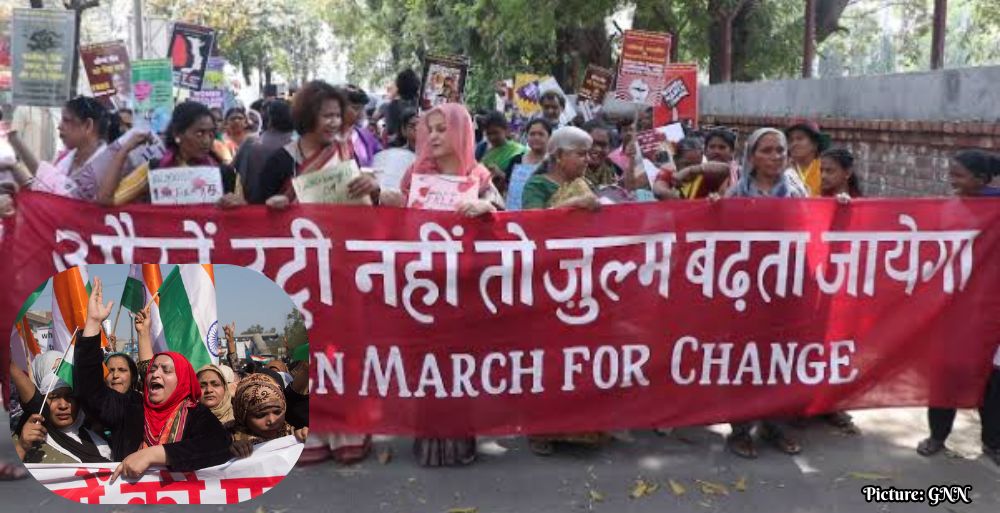
As India celebrates its 79th Independence Day, women from diverse backgrounds are stepping into the political spotlight, driving movements for social change and demanding accountability in education and governance.
NEW DELHI — On the occasion of India’s 79th Independence Day, the nation reflects on the significant yet often underappreciated role women have played in shaping public life and political discourse throughout its history. Historically, women have been at the forefront of social movements, from organizing boycotts during the struggle for independence to spearheading environmental protests and more recently, challenging controversial citizenship laws. As India navigates a complex political landscape, these women continue to advocate for change, often at great personal risk.
Historical Context and Current Movements
The history of women’s activism in India is rich and varied. During the struggle for independence from British rule, women participated in boycotts of British goods, made contraband salt, and confronted police forces, taking on roles traditionally held by men. The Chipko movement in the 1970s saw women physically protecting trees from being felled, highlighting the intersection of environmental and gender issues. More recently, protests led by grandmothers in Shaheen Bagh against a contentious citizenship law demonstrated how women’s voices can create spaces for dissent in an increasingly polarized society.
According to a 2025 analysis by the Association for Democratic Reforms, nearly 50% of female parliamentarians and state legislators in India come from political families, underscoring the challenges women face in entering formal politics. This figure contrasts sharply with men, only 18% of whom come from political dynasties, illustrating the additional barriers women must overcome to participate in the political process.
Voices from the Frontlines
The current student-led protests, particularly against the backdrop of rising educational costs and accountability issues, have seen many women emerge as prominent activists. Neha Bora, president of the All India Students’ Association (AISA), has become a notable figure within this movement. At 29, she undertook a 23-day hunger strike demanding accountability for exam paper leaks and the resignation of the Education Minister. “Politics is not just slogans and protests,” Bora stated. “It is the very language in which you talk to yourselves, the thoughts you formulate in your head, and the relationships you have with your friends, family, and peers.” She emphasized that true freedom as a student means access to education that is not treated as a profit-making opportunity.
Another activist, Rhiya Ahir, 27, exemplifies the personal toll of activism. A model and theatre artist, she faced significant backlash after blocking a police van carrying detained protesters in Mumbai. “Freedom for me is to have a voice – and not be ashamed,” Ahir expressed, reflecting on the societal pressures and criticisms she faced, particularly regarding her appearance. “My clothes are just my clothes,” she asserted, emphasizing that one’s character should not be overshadowed by superficial judgments.
Danish Ali, a 24-year-old member of the Jawaharlal Nehru University Student Union, has also faced personal repercussions due to her activism. Following her protests against governmental policies, which included dismantling a facial recognition system at her university, she reported that police visited her ancestral village seeking information about her. For Ali, freedom is deeply personal and tied to her identity as a Muslim woman. “Freedom means being an equal citizen in this country,” she stated, highlighting the ongoing marginalization of Muslim voices in India.
Changing Political Landscape
Ratna Singh, 31, has shifted her career from law and journalism to become the legal head of the Cockroach Janata party, inspired by the students’ demands for accountability. She noted that her generation is often labeled as “impatient” for demanding immediate change. “We are done with divide-and-rule politics based on religion,” she said. Singh believes that the youth’s hunger for change is reshaping the political landscape, with new leaders emerging from various localities to advocate for their communities.
In a recent speech during Independence Day celebrations, Prime Minister Narendra Modi announced several initiatives aimed at youth, including an AI skills program and free online coaching for competitive exams. However, his comments regarding “dimagi naxals,” a term he used to refer to individuals aligned with a specific ideological movement, have drawn criticism from opposition parties, who argue that such rhetoric may serve as a tool for suppressing dissent.
Conclusion
The contributions of women activists in India are emblematic of a larger struggle for social justice and equality. As they continue to rise against historical and contemporary barriers, their voices and actions challenge existing power structures and call for a more inclusive democracy. The ongoing protests and movements reflect a significant shift in political engagement, particularly among younger generations, who are increasingly unwilling to accept the status quo.






No Comment! Be the first one.