





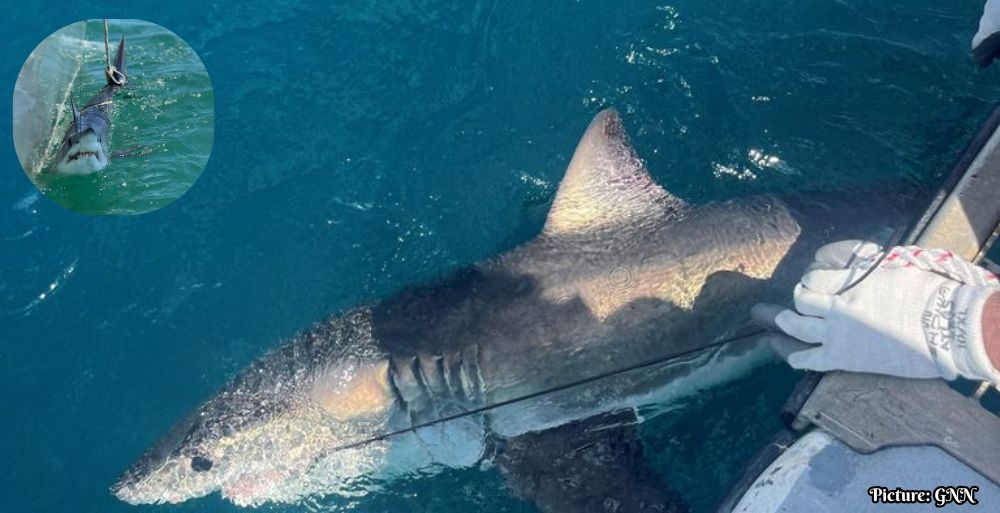
Researchers are examining the movement patterns of sharks to improve hurricane forecasting, utilizing the animals’ acute sensitivity to environmental shifts to inform predictive models.
In an innovative research initiative, a multidisciplinary team of scientists is exploring the relationship between shark behavior and hurricane activity to enhance forecasting accuracy. This project, which began earlier in 2023, seeks to leverage the unique sensitivities of sharks to environmental changes—such as fluctuations in water temperature and pressure—to develop more reliable hurricane prediction models.
Sharks, known for their acute sensory capabilities, are believed to react to the environmental conditions that precede hurricane formation. The study focuses on tracking various shark species off the coast of Florida, a region frequently impacted by hurricanes. The researchers aim to correlate the sharks’ movement patterns with real-time environmental data collected during hurricane events, potentially providing insights into storm intensity and development.
The Significance of Shark Sensitivity
The research team has equipped several shark species with advanced tracking devices to monitor their movements and behavior. Dr. Emily Thompson, a marine biologist involved in the project, remarked, “Sharks are among the top predators in the ocean, and their behavior can reflect significant changes in the environment. If we can establish a pattern, it could lead to more accurate models for predicting hurricanes.” This emphasis on biological indicators represents a novel approach in meteorological research.
Understanding how sharks respond to changing environmental conditions could offer a valuable perspective on hurricane dynamics. For instance, warmer ocean temperatures are known to fuel hurricane development, and sharks’ movements may provide real-time indicators of such changes. By closely monitoring these movements, scientists hope to identify correlations that can be integrated into existing meteorological models.
Contextualizing the Need for Improved Hurricane Predictions
The necessity for enhanced hurricane forecasting is underscored by the increasing frequency and intensity of storms observed in recent years. According to the National Oceanic and Atmospheric Administration (NOAA), the Atlantic hurricane seasons of 2020 and 2021 were marked by several record-breaking storms, resulting in damages amounting to billions of dollars and affecting millions of lives. Traditional forecasting methods heavily rely on computer models that simulate atmospheric conditions, but these models can struggle to capture the nuances of rapid storm intensification.
As climate change reshapes weather patterns, the urgency for innovative predictive tools has become paramount. The integration of biological data from shark movements into meteorological models could provide a new dimension in understanding hurricane behavior. This research aligns with the scientific trend of biomimicry, where biological processes inspire technological advancements and solutions.
Implications for Disaster Preparedness and Response
Enhancing hurricane prediction capabilities could have profound implications for disaster preparedness and response efforts. Accurate forecasts can empower officials to allocate resources effectively, issue timely evacuations, and implement safety measures to protect vulnerable communities. Dr. Thompson emphasized the potential benefits, stating, “If we can forecast storms with greater accuracy, we can save lives and reduce economic losses. Understanding shark behaviors is just one piece of a larger puzzle in enhancing our predictive capabilities.” This perspective highlights the importance of interdisciplinary collaboration in addressing complex environmental challenges.
While the research is still in its infancy, preliminary findings have already generated interest within the meteorological community. Experts express optimism about the potential for meaningful collaboration between marine biology and meteorology, suggesting that interdisciplinary partnerships may yield innovative approaches to understanding and predicting hurricanes.
Research Funding and Community Engagement
The study has garnered support from various funding sources, including government grants and private donations aimed at advancing climate-related research. In addition to scientific inquiry, the research team is committed to public engagement, raising awareness about the essential role of marine ecosystems in mitigating climate change impacts. Educational programs are being developed to inform communities about the significance of sharks in ocean health and their potential contributions to scientific research.
As data collection continues, researchers remain hopeful that their findings will not only advance hurricane forecasting but also contribute to broader discussions surrounding climate resilience and the preservation of ocean ecosystems. The collaboration between marine scientists and meteorologists reflects an increasing recognition of the interconnectedness of environmental systems and the need for innovative solutions to address climate-related challenges.
Looking Ahead
The implications of this research extend beyond immediate hurricane forecasting. It raises important questions about how integrating biological data into meteorological models can reshape our understanding of environmental dynamics in a rapidly changing climate. As researchers delve deeper into the relationship between shark behavior and hurricane patterns, the potential for groundbreaking discoveries could pave the way for more effective disaster preparedness strategies and inform policy decisions related to climate adaptation.
In conclusion, the ongoing research into shark behavior as a means to enhance hurricane prediction models exemplifies a forward-thinking approach to addressing the challenges posed by climate change. By harnessing the natural behaviors of these apex predators, scientists aim to develop a more holistic understanding of hurricane dynamics, ultimately contributing to efforts aimed at safeguarding communities and ecosystems alike.



No Comment! Be the first one.