





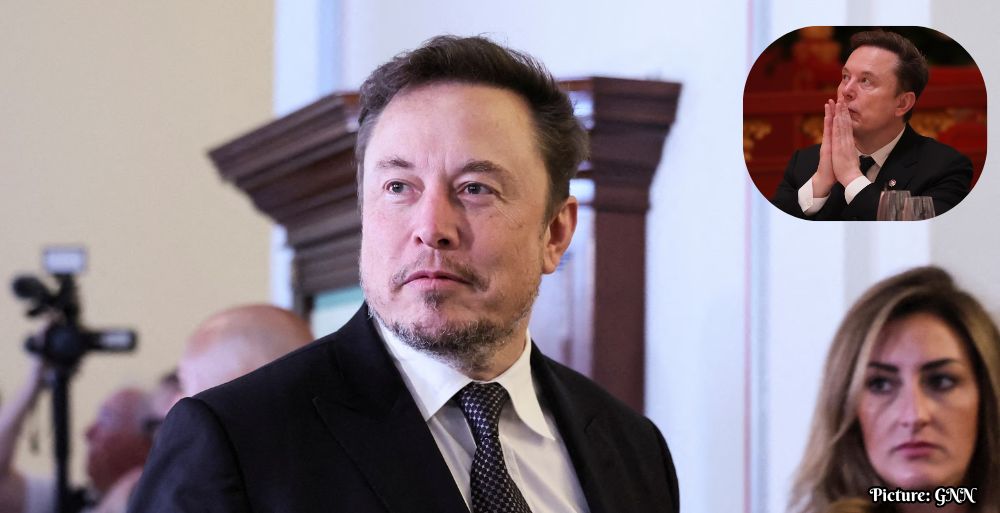
The Trump administration and Elon Musk’s AI company are leading challenges against citizen suits, which allow individuals and organizations to enforce federal laws, particularly in environmental protection. Legal experts warn that these efforts could significantly undermine accountability and enforcement mechanisms.
WASHINGTON (AP) — A coalition of right-leaning legal activists, supported by the Trump administration, is mounting a significant challenge against the legal framework that underpins the ability of individuals and local governments to file lawsuits over violations of federal law. This movement is particularly focused on the right to bring citizen suits, a mechanism that has historically empowered private entities to hold corporations and the government accountable for environmental and regulatory violations.
The legal challenge, which is being supported by Elon Musk’s artificial intelligence company, is grounded in the argument that the U.S. Constitution allocates substantial power to the president and federal agencies regarding the enforcement of federal law. Proponents assert that Congress should not have delegated this authority to private entities through citizen suits, which have become a vital tool in various sectors, including environmental protection and campaign finance.
Historical Context and Implications
For decades, citizen suits have been instrumental in enforcing compliance with environmental laws. They have enabled organizations and community members to extract millions in fines from companies that violate regulations. For instance, citizen lawsuits played a crucial role in addressing the lead contamination crisis in Flint, Michigan, by ensuring that responsible parties were held accountable. Legal experts warn that the current wave of challenges could undermine these critical enforcement mechanisms, especially in light of a conservative majority in the Supreme Court.
Recent developments include four federal cases that are currently pending, one of which was filed last week. Legal analysts note that the conservative composition of the court raises the likelihood that these challenges could succeed. Richard Lazarus, a Harvard professor specializing in environmental law, commented, “Many of us who worked in this area have been waiting basically 26 years for this shoe to drop.” He referred to a Supreme Court decision from 2000 that opened the door for questioning the constitutionality of citizen suits.
Key Players and Their Arguments
The Pacific Legal Foundation, a conservative organization, is at the forefront of these challenges. This summer, they filed a constitutional challenge in a Tennessee federal court regarding a citizen suit initiated by Tennessee Riverkeeper against the town of Springfield for alleged violations of the Clean Water Act. The Foundation’s attorneys argue that such suits divert resources and allow unelected activists to exert undue influence over government actions. Sean Radomski, an attorney with the Pacific Legal Foundation, stated, “It’s better when the government is the one wielding the power because the government remains accountable to the people.” He clarified that their focus is on suits where penalties go to the Treasury rather than to individuals, implying that civil rights lawsuits would not be affected by these challenges.
On another front, Musk’s company, xAI, is embroiled in a legal dispute with the NAACP over allegations that it operated gas turbines near Memphis without proper permits, posing a pollution threat. The Trump administration has intervened in this case, arguing that the lawsuit could jeopardize national security by disrupting operations that support military functions. The Department of Justice has asserted that the court should dismiss the case in light of national security concerns.
Concerns Over Environmental Enforcement
Critics of the proposed changes to citizen suits warn that limiting this avenue for legal recourse could have severe repercussions for environmental enforcement at a time when federal protections are already diminished. Laura Thoms, director of enforcement at Earthjustice, representing the NAACP, stated, “This administration has determined that the company should be allowed to continue to pollute and that therefore, they should have the unilateral and unreviewable authority to veto our citizen suit.”
Historically, Congress established citizen suits to address the limitations of federal enforcement, recognizing that the government often lacks the resources or political will to pursue every violator. The current environment, marked by budget constraints at the state level and a reduction in federal protections under the Trump administration, raises urgent concerns about the potential erosion of accountability mechanisms.
Experts also caution that the shift in enforcement authority could lead to increased corruption, as the executive could selectively waive laws for political allies. Critics believe this could disproportionately affect disadvantaged communities, which often bear the brunt of environmental degradation.
Legal Perspectives and Future Outlook
While some legal scholars maintain skepticism about the challengers’ claims regarding executive power, others recognize the current Supreme Court’s willingness to favor the executive branch in matters of federal law implementation. David Adelman, a law professor at the University of Texas at Austin, noted, “Before the current conservative majority on the Supreme Court, I would have thought there was a close to zero percent chance the challenges would succeed. But this court has been so protective of the executive branch’s complete control of implementation of federal law that it’s not implausible that something like this could prevail.”
The ongoing legal battles and their implications for citizen suits are being closely monitored by environmental advocates, legal experts, and lawmakers. As the landscape of environmental enforcement continues to shift, the outcome of these cases could fundamentally alter the balance of power between government agencies and private citizens seeking to uphold the law.






No Comment! Be the first one.