





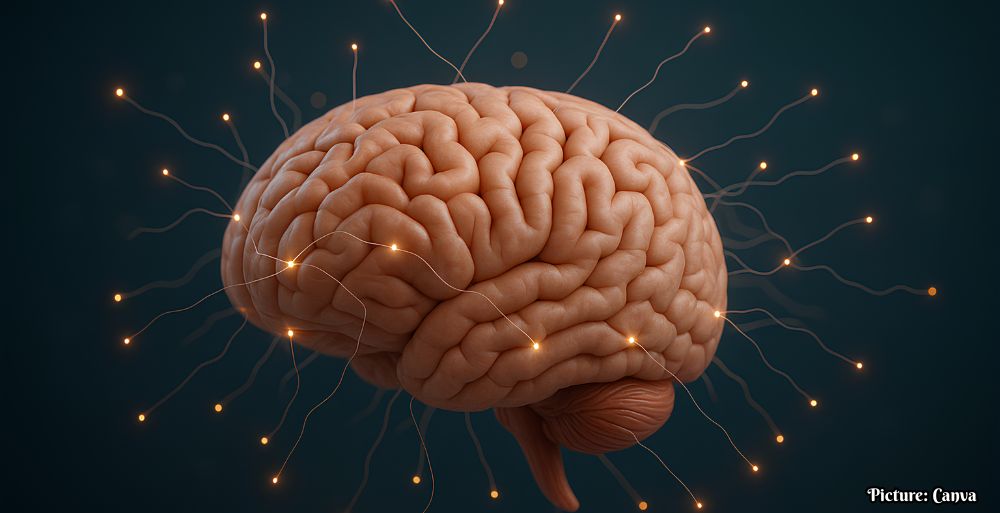
This study presents a novel computer model that connects the molecular chemistry of the human brain to its broad activity patterns, revealing how variations in receptor density influence brain function.
Researchers from the Institute of Biomedical Investigations August Pi i Sunyer (IDIBAPS) have published a significant study in the Proceedings of the National Academy of Sciences (PNAS) that unveils a groundbreaking computer model. This model connects the intricate molecular chemistry of the human cortex with its overarching patterns of neural activity, demonstrating how regional differences in receptor density can shape the flow of information across the brain.
The research utilized The Virtual Brain (TVB), an open-source platform designed for comprehensive brain simulations, which is part of the broader EBRAINS research infrastructure. The initiative received partial funding from both the EBRAINS 2.0 project and The Virtual Brain Twin Project, both aimed at advancing the understanding of brain dynamics through sophisticated computational modeling.
Unraveling the Molecular Influence on Brain Function
Understanding how molecular-level processes affect the brain’s overall functionality has long been a daunting challenge in the field of neuroscience. Leonardo Dalla Porta, the study’s first author and a researcher at IDIBAPS, articulated this challenge, stating, “Our study provides a concrete example of how we can begin connecting these very different scales within the same computational framework.” This statement emphasizes the necessity of linking molecular biology with large-scale neural dynamics to gain insights into brain function.
Traditionally, large-scale brain models have oversimplified the complexity of the cortex by treating all cortical regions as if they operated uniformly. However, the new model diverges from this paradigm by integrating detailed maps of muscarinic acetylcholine receptor density across 68 distinct brain regions. This receptor is a crucial target for the neuromodulator acetylcholine, which plays significant roles in various cognitive functions, including attention and memory.
Enhanced Coordination and Improved Information Flow
The researchers conducted a series of simulations that spanned a spectrum of brain states, ranging from wakefulness to sleep. Their findings indicated that incorporating biologically grounded heterogeneity—reflected in the varying receptor densities—enhanced coordination between different brain regions and improved the flow of information. This contrasts with previous models where all regions behaved identically.
Maria V. Sanchez-Vives, the study’s last author, underscored the importance of these findings, stating, “Whole-brain models offer systems neuroscientists deep insight into the global impact of local phenomena, giving us a better understanding of mechanisms and generating testable predictions.” Her comments highlight the model’s potential to offer deeper insights into the mechanistic underpinnings of brain function.
Reproducing Sleep-Like States
Moreover, the model demonstrated the ability to spontaneously reproduce a phenomenon observed in actual brains: localized, sleep-like slow waves appearing in certain regions while the remainder of the cortex maintained a wake-like state. This occurrence has been documented in various scenarios such as attentional lapses, sleep deprivation, and the presence of brain lesions. The ability of the model to simulate such realistic brain dynamics signifies its potential to illuminate the complexities of consciousness and cognitive states.
The authors argue that these findings reveal how intricate molecular details can significantly influence broader patterns of neural activity. They propose that this framework could be pivotal for understanding state transitions in various conditions, including brain lesions and disorders of consciousness, which often present unique challenges in clinical settings.
Implications for Future Research
The study also suggests that neuromodulators like acetylcholine do not exert uniform effects throughout the brain. Instead, their impacts are contingent upon the concentration of their receptors in different regions. This discovery has profound implications, indicating that identical chemical signals may elicit divergent network dynamics across various cortical areas. Coupled with an understanding of structural connectivity, this knowledge could refine future models aimed at capturing how the brain transitions between wakefulness, sleep, and altered states.
In conclusion, this research marks a significant advancement in the field of neuroscience, providing a new lens through which to view the interplay between brain chemistry and activity. By bridging the gap between molecular and macroscopic levels of brain function, the model paves the way for deeper exploration into the complexities of human cognition and consciousness. This innovative approach could lead to the development of more sophisticated models that enhance our understanding of the brain’s intricate workings and its response to various neurological conditions.
Future Directions in Neuroscience
The integration of detailed receptor density maps into brain modeling represents a pivotal shift in neuroscientific research. As researchers continue to explore the intricacies of the brain’s neural circuits, the potential applications of such a model extend beyond basic science. For instance, understanding how receptor distribution influences cognitive processes can lead to new therapeutic approaches for neurodegenerative diseases and psychiatric disorders.
Moreover, the capacity of the model to simulate localized brain states mirrors the brain’s behavior in real-life scenarios, thereby offering a promising tool for preclinical testing of drugs targeting specific brain regions. Such advancements could enhance drug development processes by allowing researchers to predict the effects of new compounds on brain function more accurately.
As the field of computational neuroscience evolves, the collaboration between experimental and computational neuroscientists will become increasingly vital. The ability to validate computational models through experimental data will ensure that the insights gained from these simulations are grounded in biological reality, ultimately leading to a richer understanding of the human brain.
In summary, this innovative research not only provides a new framework for understanding brain dynamics but also opens avenues for future studies aimed at unraveling the complexities of the brain. The implications of this work are vast, with the potential to inform clinical practices and enhance our understanding of neurological conditions.





No Comment! Be the first one.