





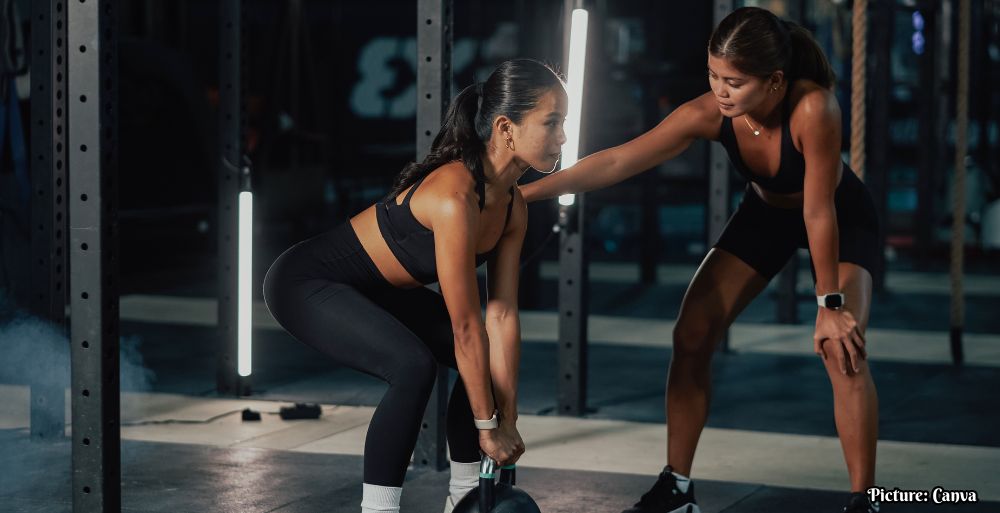
Fitness coach Vanja Moves shares five accessible movements that individuals can use to evaluate their strength, mobility, balance, and flexibility from home, emphasizing the importance of functional fitness beyond traditional gym workouts.
In a recent social media post, fitness coach Vanja Moves outlined five fundamental movements designed to help individuals assess various aspects of their physical fitness. Published on August 8, the post emphasizes that fitness extends beyond traditional metrics such as weight lifting and running speed. Instead, it highlights the significance of everyday functional movements, which can indicate one’s mobility, strength, and overall fitness level.
Understanding Functional Fitness
Functional fitness refers to exercises that replicate movements people perform in their daily lives, aiming to improve one’s ability to execute these activities safely and effectively. According to Moves, these basic movements require little or no equipment and can be performed in the comfort of one’s home. The five tests she presents serve as informal assessments that anyone can do, regardless of their fitness level.
1. Deep Squat Hold
The first movement is the deep squat hold, which assesses lower-body mobility and control. Moves instructs participants to position their feet hip-width apart, ensuring their heels remain flat on the ground while holding the squat for up to 60 seconds. She notes, “If your heels lift or you need support, this is your starting point.” This movement requires adequate mobility in the ankles, knees, and hips, while also demanding strength and stability from the lower body.
2. Dead Hang
Next, the dead hang focuses on grip strength and upper-body endurance. Moves advises individuals to grip a sturdy bar and let their body hang completely for 30 seconds. She cautions, “If your shoulders creep up to your ears or you cannot hold 30 seconds, this is your starting point.” This test emphasizes the importance of sufficient grip strength and shoulder control, and individuals with pre-existing shoulder issues are encouraged to approach this exercise with caution.
3. Floor Get-Up
The third assessment targets the ability to transition from sitting on the floor to standing without assistance. Moves explains, “Sit on the floor. Stand up without using your hands, knees or forearms. If you need support, this is your starting point.” This movement evaluates balance, lower-body strength, coordination, and mobility. Research has indicated a correlation between the ability to perform similar sitting-rising movements and longevity, underscoring the importance of this functional ability.
4. Forward Fold
The fourth test assesses flexibility, particularly through the posterior chain of the body. Moves instructs individuals to stand with feet hip-width apart and fold forward, attempting to touch the floor with straight legs. She asserts, “If not, your posterior chain has been neglected. This is your starting point.” Flexibility is an individual characteristic that can vary greatly; thus, being unable to touch the floor does not necessarily indicate a problem but rather highlights the need for gradual improvement in flexibility.
5. Single-Leg Balance
The final assessment challenges balance and proprioception. Moves suggests standing on one leg with closed eyes for 30 seconds, stating, “If you wobble or cannot hold, your proprioception and ankle stability need work. This is your starting point.” This test requires coordination among muscles, joints, and the nervous system to maintain stability. Given the increased challenge posed by closing one’s eyes, it is advisable to perform this test in a safe area where support can be quickly accessed if necessary.
Evaluating Fitness Levels
These five movements provide a straightforward method for individuals to consider their functional fitness beyond the confines of conventional gym exercises. They assess a range of abilities, including mobility, grip strength, balance, flexibility, coordination, and lower-body control. However, Moves emphasizes that these tests should be viewed as informal assessments rather than formal medical evaluations. Factors such as age, training history, prior injuries, and individual mobility can all influence an individual’s performance in these movements.
The overarching goal is not to pass every test immediately but to identify key areas where strength, mobility, or balance can be enhanced progressively and safely. Moves encourages individuals to approach these movements with the mindset of gradual improvement, promoting a more comprehensive understanding of their physical fitness.
It is important to note that this article is intended for informational purposes only and should not replace professional medical advice. Individuals are encouraged to consult healthcare professionals regarding any medical concerns or fitness-related inquiries.

No Comment! Be the first one.