





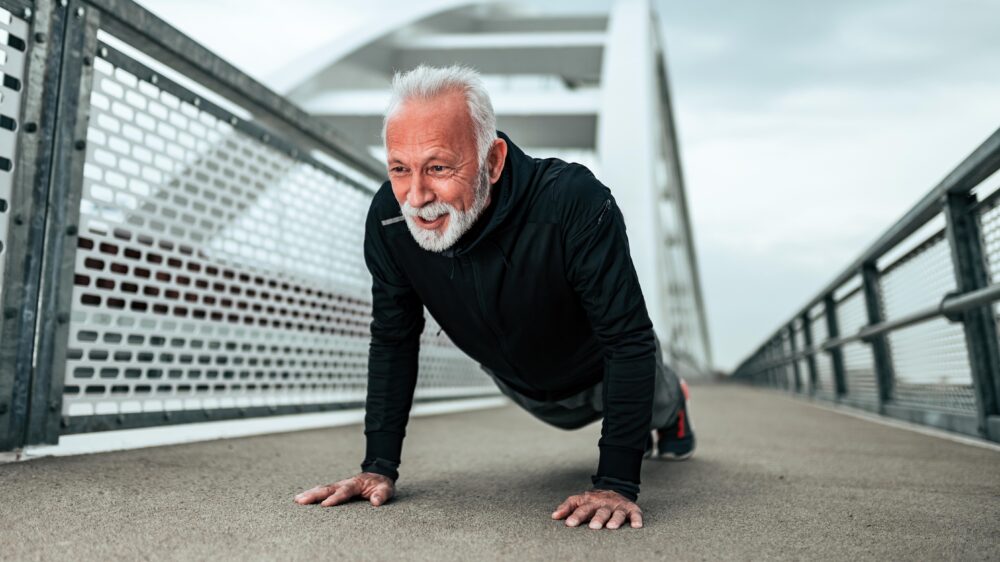
Experts recommend five key exercises to improve balance and prevent falls for individuals aged 70 and older, highlighting the significance of strength and coordination.
As the population ages, maintaining balance becomes increasingly vital for preventing falls and related injuries. According to the Centers for Disease Control and Prevention (CDC), falls are the leading cause of injury among adults aged 65 and older, making effective balance training essential for this demographic. As individuals transition into their 70s and beyond, their physical capabilities change, necessitating a reevaluation of exercise routines.
Francesco Zen, founder of ZTraining Executive Fitness Coaching and an expert in fitness with over 18 years of experience, emphasizes that while traditional exercises like walking and yoga are beneficial, they do not adequately address the complexities of balance required in later life. “Walking is forward, rhythmic, and on two feet. It rarely asks you to hold one leg under load, move sideways, or recover from a stumble,” Zen notes. He explains that after the age of 70, balance relies heavily on leg strength and the ability to react quickly to unexpected situations, which are not adequately developed through walking or yoga.
Sylvester King, an NASM-certified trainer and owner of SKfit in San Diego, concurs with Zen, underscoring the need for a more dynamic approach to balance training. “Balance training must teach your body to react, to catch yourself with a quick step, to control side-to-side and backwards movement, and to stay steady on one leg,” King explains. He highlights that effective balance training engages strength in the hips and ankles, as well as coordination among various sensory systems, including vision and the inner ear, which are crucial for maintaining stability.
Recommended Exercises for Seniors
To assist seniors in enhancing their balance, experts recommend five key exercises. These exercises target essential muscle groups and coordination, providing a comprehensive approach to improving balance and reducing fall risk:
1. Single-Leg Stand
This fundamental exercise develops the strength and stability required for everyday movements. To perform the single-leg stand:
- Stand tall on a flat surface with your feet hip-width apart.
- Optionally, lightly place your hands on a sturdy counter for support.
- Shift your body weight onto your left foot, lifting your right foot a few inches off the ground.
- Engage your core, ensuring your shoulders are stacked over your ribs and your hips remain level.
- Hold this position for the designated time, then switch sides.
2. Sumo Squats
Sumo squats are effective in building strength in the glutes and inner thighs, which are crucial for maintaining balance. To perform sumo squats:
- Stand tall with your feet outside shoulder-width, with toes slightly pointing outward.
- Extend your arms in front of you, place your hands on your hips, or hold a dumbbell or kettlebell with both hands.
- Bend at the knees and hips to lower into a squat until your thighs are parallel to the floor.
- Press through your heels to return to a standing position.
3. Heel-to-Toe Walk
This exercise trains the body to maintain a narrow base of support, which is particularly important as individuals age. To perform the heel-to-toe walk:
- Stand tall next to a sturdy counter.
- Walk straight, placing one foot directly in front of the other, heel to toe.
- Complete 10 to 15 steps forward along the counter three times.
4. Clock Taps
Clock taps help improve stability while shifting weight. To execute clock taps:
- Stand tall facing a wall, with your feet hip-width apart and one hand lightly on the surface for support if needed.
- Balance on one leg.
- With the other foot, tap the ground at various positions corresponding to a clock face—12 o’clock (in front), 3 o’clock (to the side), 6 o’clock (behind), and 9 o’clock (across your body).
- Perform two sets of five taps per leg.
5. Stiff-Leg Deadlifts
This exercise targets the muscles along the back of the body, essential for maintaining upright posture and balance. To perform stiff-leg deadlifts:
- Stand tall with soft knees.
- Hold a broom handle with both hands in front of you.
- Press your hips back and slide the handle down your thighs as far as comfortable.
- Stand back up tall to complete the repetition.
Incorporating these exercises into a regular fitness routine can significantly enhance balance and reduce the risk of falls among seniors. As the aging population continues to grow, the importance of tailored fitness approaches cannot be overstated. Engaging in targeted balance training not only promotes physical health but also fosters greater independence and confidence in older adults, allowing them to maintain their quality of life.
Moreover, community programs and fitness centers are increasingly recognizing the necessity of offering specialized classes for older adults to address these needs. These programs often include trained professionals who can ensure safety and provide modifications for individuals with varying levels of ability. Ultimately, making balance training a priority is crucial for ensuring the well-being of seniors, as more individuals live longer and seek to maintain their health and mobility.



No Comment! Be the first one.