





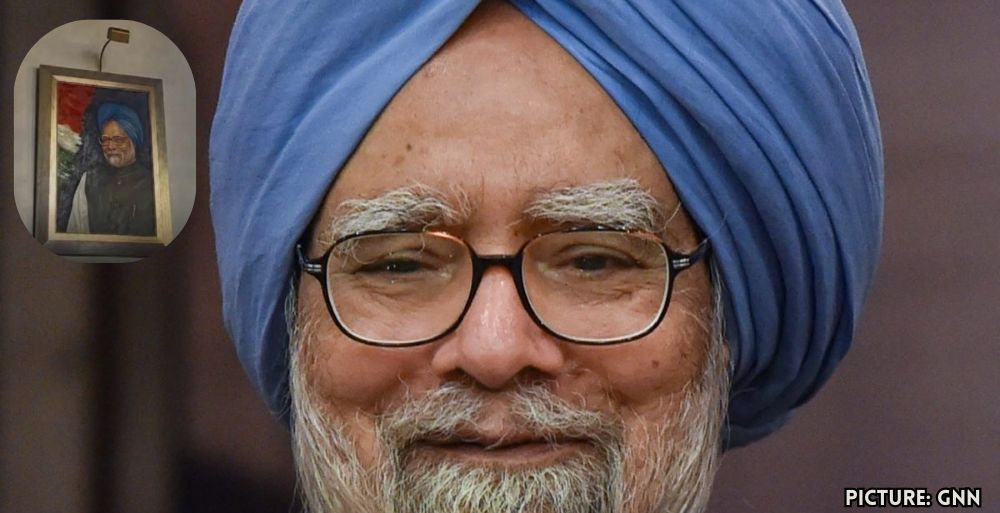
The University of Cambridge has unveiled a portrait of late former Prime Minister Manmohan Singh, recognizing his profound contributions to economics and governance, as noted by influential academics and former colleagues.
The University of Cambridge officially unveiled a portrait of the late former Indian Prime Minister Manmohan Singh on October 15, 2024, an event that has sparked widespread admiration from the academic and political communities. This rare honor highlights Singh’s significant legacy and marks a notable recognition from an institution that typically reserves such tributes for its most distinguished alumni.
Academic Foundations and Political Ascendancy
Born in 1932 in a small village in Punjab, India, Singh’s journey began at the University of Cambridge, where he pursued his studies at the Faculty of Economics. He graduated with First Class Honours in Economics in 1957, a foundational achievement that significantly influenced his later career. Following his time at Cambridge, Singh earned a DPhil in Economics from Nuffield College, Oxford University, in 1962. His academic pursuits and early works, particularly his book “India’s Export Trends and Prospects for Self-Sustained Growth,” provided critical critiques of India’s trade policies, laying the groundwork for his future role in reshaping India’s economic framework.
Singh served as India’s Prime Minister from 2004 to 2014, a period during which he was acknowledged for implementing pivotal economic reforms that transitioned India towards liberalization and globalization. These reforms not only modernized the Indian economy but also positioned India as a competitive player in the global market. His tenure is often credited with significant reductions in poverty levels and substantial increases in GDP growth, which averaged around 8% during his administration.
Recognition from Peers and Scholars
The unveiling of Singh’s portrait was met with enthusiasm from notable figures, including Kaushik Basu, a former Chief Economic Adviser to the Government of India, who took to social media to express his sentiments: “I am glad Cambridge unveiled Manmohan Singh’s portrait. He was one of the world’s most respected leaders.” Basu, who closely collaborated with Singh, emphasized Singh’s unique blend of intellect, modesty, and integrity, asserting that these qualities significantly enhanced India’s global standing.
The University of Cambridge had previously acknowledged Singh’s contributions in a statement following his passing in 2024, expressing deep sorrow over the loss of one of its most distinguished alumni. The statement highlighted Singh not only as one of India’s longest-serving Prime Ministers but also as the first non-Hindu Prime Minister, emphasizing his unique position in Indian parliamentary history.
Legacy of Leadership and Vision
Professor Sriya Iyer, a member of the Faculty of Economics, lauded Singh’s multifaceted contributions, referring to him as a “great economist, visionary, scholar, and statesman of India.” Iyer noted Singh’s achievements, including the prestigious Adam Smith Prize he received as a student at Cambridge, and his role as an Honorary Fellow of St John’s College. Iyer remarked on Singh’s lifelong commitment to championing rights related to information, work, education, land, and tolerance, underscoring his dedication to social justice.
Singh’s influence extended beyond India’s borders. His tenure was marked by significant diplomatic efforts that helped elevate India’s profile on the world stage. He was instrumental in fostering international partnerships and agreements that not only benefited India’s economy but also solidified its standing among emerging economies. His leadership style, characterized by a focus on consensus-building and collaborative governance, earned him respect from global leaders and institutions alike.
The Unveiling Ceremony and Symbolism
The portrait unveiling at Cambridge serves as both a memorial and a celebration of Singh’s enduring impact on economic policy and governance. As attendees gathered for the ceremony, the atmosphere was filled with reflections on Singh’s legacy, both in India and worldwide. The portrait is expected to inspire future generations of leaders and economists, reminding them of the values of integrity, dedication, and intellectual curiosity that Singh embodied.
Singh’s life story illustrates the intersection of academia and public service, showcasing how scholarly rigor can inform and enhance governance. His modest demeanor, coupled with a profound understanding of economics and public policy, positioned him as a respected figure in both domains.
The University of Cambridge’s decision to honor Singh with this portrait is a significant acknowledgment of his contributions, serving as a reminder of the vital role that education and scholarship play in shaping effective leadership. As students and visitors encounter his likeness, they are invited to reflect on the principles and policies that have shaped modern India.
Conclusion: A Legacy in Focus
In conclusion, the unveiling of Manmohan Singh’s portrait at the University of Cambridge encapsulates a legacy of resilience, intellect, and public service. It reinforces Singh’s pivotal role in not only transforming the Indian economy but also in promoting values of transparency and accountability in governance. This tribute is a testament to how one individual’s vision and commitment can leave an indelible mark on society, inspiring future leaders to pursue excellence in both scholarship and service.




No Comment! Be the first one.