





Episode 1: Sweat, Snacks And Sanity
The Meno-logues:
Nobody warned me menopause would begin like a silent home invasion. Not dramatic enough for people to notice immediately. Just tiny things quietly disappearing one by one. Patience. Sleep. Waistline. Memory. The ability to tolerate loud chewing.
One day I was a fully functional woman balancing work, family logistics, WhatsApp groups, emotional support duties, healthy meal planning, forgotten passwords, and everybody else’s crises with military precision.
The next day I was standing in my kitchen at 4:47 pm eating peanut butter directly from the jar while googling: “Can estrogen deficiency make you irrationally angry at cupboard doors?”
Apparently yes. And also at supermarket lighting, husbands breathing peacefully, socks on the floor, and people saying, “Just relax.”
Menopause is fascinating because it arrives at the exact age women are carrying the maximum mental load of their lives. Teenagers. Work stress. Health scares. Family schedules. Emotional labour. Grocery lists. School forms. All while your hormones quietly resign without even sending a formal email.
And because women are exceptionally talented at functioning while exhausted, many of us normalise symptoms we should actually understand.
The anxiety.
The exhaustion.
The sudden rage after skipping lunch.
The mysterious belly fat that arrives like a neighbour’s cat asking for snacks and refuses to leave.
For years, women have been told menopause is “just hot flashes.”
Excuse me. Hot flashes are merely the opening act.
Menopause affects sleep, metabolism, mood, insulin sensitivity, bone density, muscle mass, memory, heart health, and energy levels. Yet so many women enter this phase wildly underprepared, armed only with green tea and vague optimism. And somehow society still expects us to smile politely while “watching calories.”
Ma’am.
This is no longer a calorie problem.
This is now a hormonal hostage situation.
The biggest thing I’ve learned is this:
My Dear girls,
Menopause is not the season to eat less.
It is the season to eat smarter.
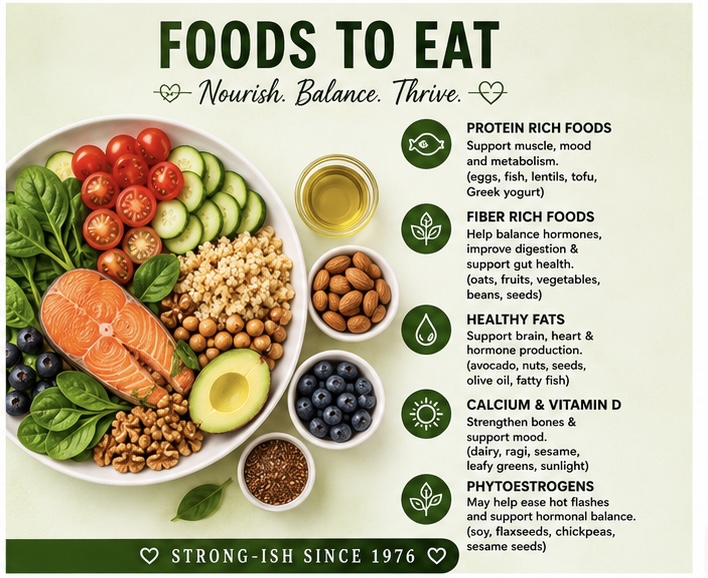
The routines that worked in our thirties may suddenly stop working in midlife, but the discipline of caring for our bodies still matters deeply. Not punishment. Not restriction. Support.
Because food is no longer just food now.
Food becomes:
Mood stability.
Blood sugar management.
Inflammation control.
Temperature regulation.
Muscle preservation.
Energy support.
Nervous system survival.
Which explains why one tiny cupcake can now create emotional, spiritual, and digestive consequences for approximately 48 business hours.
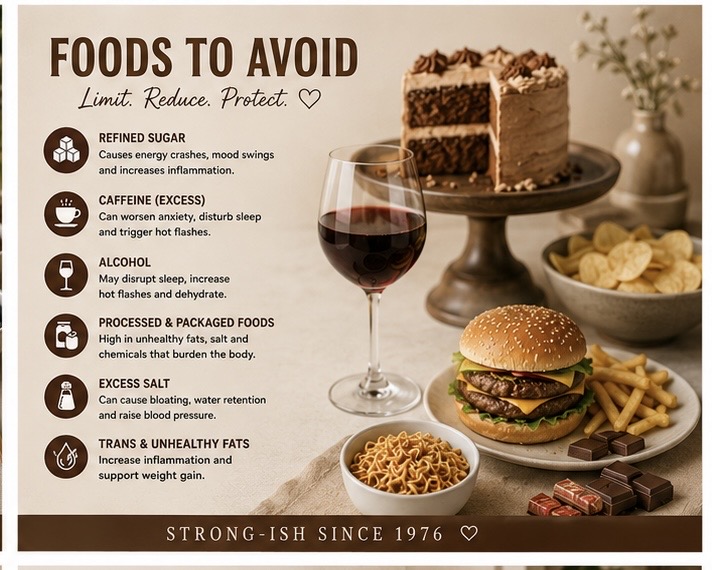
I started noticing patterns quickly.
If I skipped protein at breakfast, by 11 am I had the emotional resilience of a wet tissue.
If I drank coffee on an empty stomach, I transformed into a TED Talk on anxiety.
If I ate too much sugar, my hot flashes arrived with the confidence of a surprise Beyoncé concert.
Turns out fluctuating blood sugar can worsen fatigue, mood swings, cravings, and hot flashes during menopause. And declining estrogen also affects the way women process stress, store fat, and maintain muscle.
Which is why starving ourselves through midlife is perhaps one of the least helpful wellness strategies ever marketed to women.
Research now shows menopause is not just a hormone shift but a metabolic one. Nearly 70% of women experience weight gain during menopause, while up to 75% report symptoms like hot flashes, poor sleep, fatigue, and mood changes, all of which affect eating habits and cravings. Scientists are increasingly linking menopause symptoms to inflammation, blood sugar instability, muscle loss, and gut health, explaining why the body suddenly stops tolerating nutritional chaos. Reference – North American Menopause Society.
Studies also show that Mediterranean-style eating patterns rich in vegetables, legumes, olive oil, nuts, seeds, and protein may help reduce inflammation and support heart health during menopause. Research on soy-rich, plant-forward diets found significant reductions in hot flashes, while higher protein intake helps preserve muscle and metabolism in midlife. Experts now recommend focusing less on restriction and more on stabilization: balanced meals, fiber, hydration, sleep, and reducing ultra-processed foods, excess sugar, and alcohol. Reference – Harvard Health Publishing / PubMed Studies.
So now I eat protein like it is part-time employment.
Eggs. Greek yogurt. Lentils. Fish. Paneer. Nuts. Seeds.
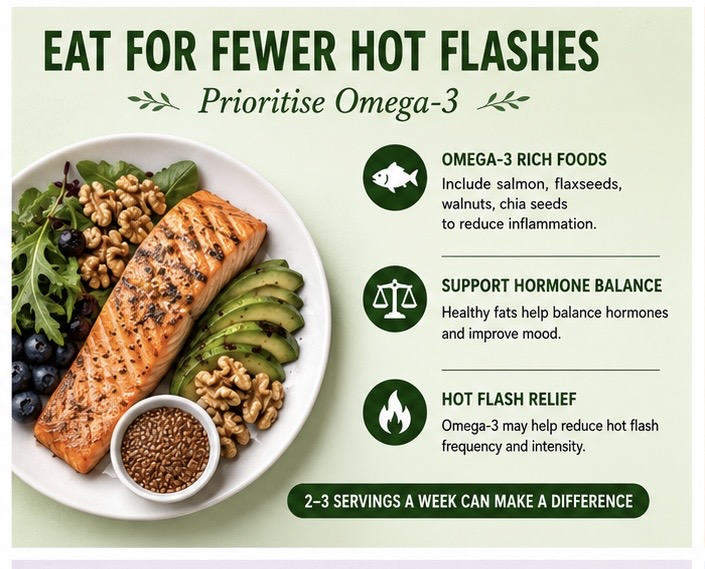
Because menopause is when your body suddenly starts treating muscle like an unsubscribe option. And strength matters now more than ever.
I’ve also become emotionally attached to foods I once considered aggressively healthy. Flax seeds. Pumpkin seeds. Chia seeds. Magnesium-rich dinners. Chamomile tea. At some point every woman becomes one wellness podcast away from fermenting vegetables and growing micro-greens on the kitchen counter.
But honestly? Some of it helps.
Especially because menopause is not only hormonal. It is neurological too.
Many women in midlife are operating in a constant state of overstimulation, carrying years of stress, caregiving, multitasking, emotional labour, and chronic cortisol spikes while sleeping poorly and eating inconsistently. No wonder the nervous system starts protesting.
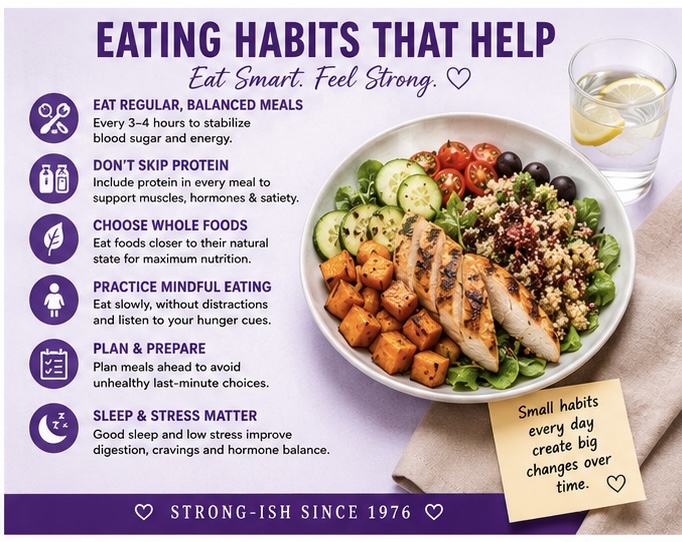
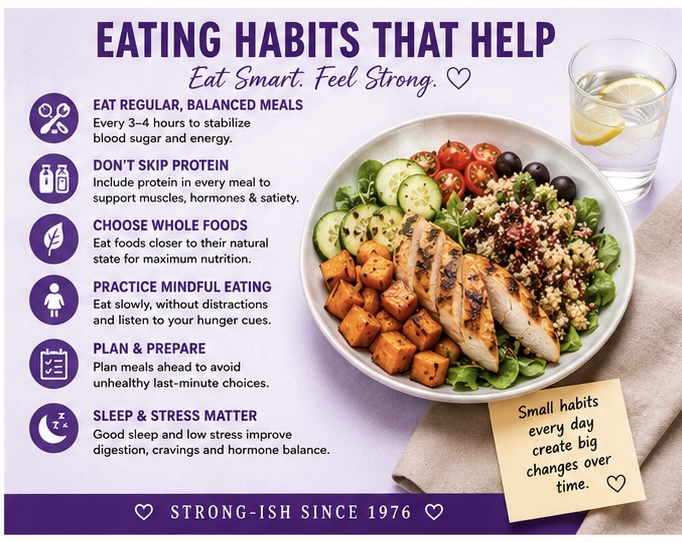
What helped me most was not chasing perfection, but creating steadier rhythms.
Protein at breakfast.
Walking after meals.
More fibre.
Earlier dinners.
Strength training.
Hydration before caffeine.
Regular homemade meals.
Less surviving on tea and adrenaline.
Simple things. Not glamorous things. But supportive things.
And perhaps that is the real shift menopause demands from women.
Not smaller bodies.
Not harsher discipline.
Not pretending we are fine while surviving on leftover toast crusts and cortisol.
But nourishment. Real nourishment. Physical, emotional, neurological.
Because maybe menopause is not the end of vitality. Maybe it is the phase of life that finally forces women to stop running on depletion and start building lives that support them too.
Maybe menopause is not the collapse of womanhood at all, but the phase that quietly removes the filters, biological, emotional, and social, so we can finally see what has been draining us and what has been silently demanding more than it gives.
It’s not that we suddenly become “too sensitive” or “too tired” or “too forgetful.” It’s that the body stops negotiating on behalf of everyone else. Hormones shift, yes, but so does tolerance. And somewhere between the night sweats and the new food labels, you realise you are no longer willing to run your life on borrowed energy and reheated expectations.
So the “change of life” begins to look less like decline and more like editing. You start reading ingredient lists, not just on food, but on routines, conversations, obligations, even friendships. You begin asking quieter but sharper questions: Does this nourish me? Or just keep me occupied enough not to notice I’m exhausted?
And slowly, without drama, you start putting things back on the plate only if they deserve space there.
For easing into this phase, without turning it into a self-improvement marathon disguised as wellness, start small, almost embarrassingly small. Hydrate before you “optimise.” Walk before you transform. Eat in a way that doesn’t punish you later. Sleep like it is not a luxury you have to earn. And for the love of your own nervous system, stop treating stress as a personality trait.
Let your habits become softer, not stricter. Let discipline look like care, not control. Midlife doesn’t need a reinvention arc; it needs less friction.
And yes, there will still be days when you forget why you walked into a room, stare at the fridge like it owes you money, and question whether your body has started running its own secret internal group chat without inviting you. That’s normal. Apparently.
But here’s the quiet truth this stage keeps whispering: you are not falling apart, you are falling out of tolerance for things that never fit you.
So if this is the “change,” let it be the kind that changes the terms, not just the temperature. And if anyone asks how you’re coping, you can smile politely and say:
“I’m in my hormonal renovation era. No, I’m not available for unnecessary chaos or lukewarm energy.”
Then go drink water, stretch your spine like you mean it, and continue building a life that doesn’t require you to disappear inside it.
Because apparently, midlife is not the end of the story. It’s just the part where you stop being the unpaid intern of your own existence, and finally become the person who signs off the decisions.
And honestly? That’s a promotion worth sweating through.
About the Author:

Ancy James is a health and wellness writer, certified functional fitness and nutrition coach, internationally trained cake artist, and former television producer based in Bengaluru. She holds certifications from AFAA, NASM, ACE, and TFA, bringing a unique blend of scientific knowledge, real-world experience, and practical wisdom to her work.
With more than 25 years of professional experience spanning media, leadership, storytelling, entrepreneurship, and wellness, Ancy spent 17 years with NDTV before stepping away from her media career to focus on raising her daughter and redefining life on her own terms. That journey of reinvention now informs much of her writing.
Her columns explore the realities of modern womanhood, including menopause, motherhood, resilience, identity, fitness, family life, and midlife transformation. Combining evidence based research with lived experience as a mother, runner, caregiver, entrepreneur, and woman navigating midlife, she offers readers practical, relatable insights that go beyond trends and quick fixes.
Ancy is passionate about helping people build sustainable health habits that fit into real lives. Through her writing, she translates complex wellness concepts into actionable strategies that empower readers to improve their physical health, mental well-being, and overall quality of life. Her work focuses on habit formation, healthy ageing, stress management, resilience, and the often-overlooked mental load carried by modern women.
Beyond her writing, Ancy leads a growing pan-India wellness community through running groups, online accountability circles, and annual health challenges for the Indian Cake Artists community. Over the past five years itself the community has helped many individuals especially women and young adults, develop healthier lifestyles through consistency, community support, and her practical 21-day habit-building framework.
Known for her sharp observations, honest storytelling, self-deprecating humour, and evidence-based approach, Ancy writes for thoughtful readers seeking realistic solutions rather than perfection. Her mission is simple: to help people live stronger, healthier, and happier lives—one small habit at a time.
When she is not writing, you will find her running slowly and lifting heavy, creating towering gravity-defying cakes and intricate sugar flowers, interviewing fascinating people, or learning life lessons the hard way so her readers do not have to.



No Comment! Be the first one.