



New Meditation Technique ‘Hope Breath’ Aims to Alleviate Emotional Distress in Just Three Minutes

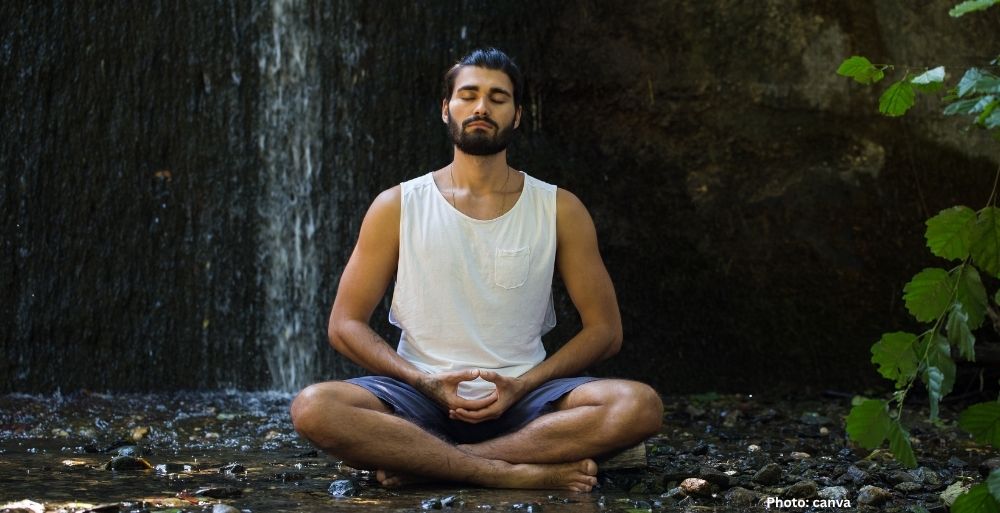
A new meditation practice called ‘Hope Breath’ seeks to help individuals process their discomfort and connect with emotional resilience in just three minutes. Developed from traditional Tibetan methods, this technique aims to provide immediate relief from everyday stressors.
On October 10, 2023, the journal Mindfulness published a new meditation protocol known as ‘Hope Breath,’ designed to assist individuals in managing emotional and psychological challenges. This innovative technique, developed over several years, emphasizes a brief, three-minute practice that encourages participants to focus on their own discomfort before extending compassion to others.
Inspired by Tonglen, a Tibetan Buddhist practice that involves inhaling the suffering of others and exhaling relief, ‘Hope Breath’ has emerged as a potential alternative for those who may find the traditional method daunting. Although research suggests that Tonglen can effectively reduce symptoms of anxiety, depression, and PTSD, its adoption in clinical settings has been limited. The author of the study identifies two main reasons for this underutilization: the intimidating nature of voluntarily inhaling another’s pain and the time commitment required for traditional practices, which often range from ten to thirty minutes.
Redefining the Meditation Experience
In addressing these challenges, the ‘Hope Breath’ protocol modifies Tonglen by shifting the initial focus to the practitioner’s own feelings of discomfort. The author notes that beginning with personal emotions provides a more manageable entry point for individuals. Participants are encouraged to acknowledge everyday stresses—such as work deadlines or interpersonal conflicts—before attempting to engage with the suffering of others.
The practice is designed to facilitate a connection with a greater source of compassion, which can be conceptualized as God, nature, or the universe. This grounding is considered essential for the technique’s effectiveness. Participants first rate their discomfort on a scale of one to five, identify where they feel this discomfort in their body, and visualize it as a dark cloud. They then inhale this cloud and exhale a ‘white cloud’ of joy, compassion, hope, and love, repeating this cycle for three minutes. The anticipated outcome is a reduction in the discomfort rating, typically by one or two points.
Empirical Evidence and User Experiences
While the protocol is still in development, preliminary observations suggest that participants often experience a notable decrease in tension and anxiety. The author provides a composite vignette of a participant, referred to as ‘Joe,’ a 43-year-old construction worker who reported significant benefits from the practice. Joe described the transformation of his inhaled dark cloud into a ‘pink’ exhalation, contributing to a sense of weightlessness and relaxation. He stated, “It’s a drug for me, that feeling, that weightlessness.”
It is important to clarify that while these anecdotes may inspire hope, they do not constitute scientific evidence. The author explicitly mentions that the experiences shared serve as hypotheses for further exploration rather than proof of efficacy.
Addressing Potential Limitations
The author also acknowledges potential limitations and concerns regarding the practice. A critical aspect of ‘Hope Breath’ is the necessity to connect with a greater source of compassion. Individuals who struggle to establish this connection may not experience the same benefits. Additionally, ‘Hope Breath’ is not intended as a substitute for traditional therapy or medication, particularly for those dealing with severe mental health conditions such as major depression or active suicidal ideation.
Participants are advised to exercise caution and discontinue the practice if it exacerbates their symptoms. The protocol aims to serve as a complementary tool rather than a standalone solution, focused on reducing suffering and fostering resilience.
The Broader Context of Mindfulness and Meditation Practices
The emergence of ‘Hope Breath’ reflects a growing interest in mindfulness and meditation practices as tools for mental health and emotional well-being. In recent years, various studies have underscored the psychological benefits of mindfulness, demonstrating its effectiveness in managing stress, anxiety, and depression. Traditional practices such as mindfulness meditation have gained traction in both clinical and everyday settings, providing individuals with strategies to cope with the complexities of modern life.
However, as various meditation techniques proliferate, it becomes increasingly important to evaluate their effectiveness and applicability across diverse populations. The integration of practices like ‘Hope Breath’ into therapeutic settings could provide valuable alternatives for individuals who may find conventional methods unapproachable or impractical.
Conclusion and Future Implications
The aspiration behind ‘Hope Breath’ is not solely to alleviate immediate suffering but also to instill a sense of hope and transformation. By encouraging individuals to pause and notice the small changes within themselves, the practice aims to reconnect them with their innate capacity for resilience. The author concludes that transformation is an inherent quality within each person, suggesting that by simply taking a moment to breathe and reflect, one can access the warmth of change that exists with every breath.
As ‘Hope Breath’ continues to evolve, further empirical research will be necessary to validate its effectiveness and establish best practices for its implementation. The growing body of literature on mindfulness and meditation underscores the potential of these techniques to enhance emotional well-being, indicating that innovative practices like ‘Hope Breath’ may play a significant role in future mental health strategies.






No Comment! Be the first one.