





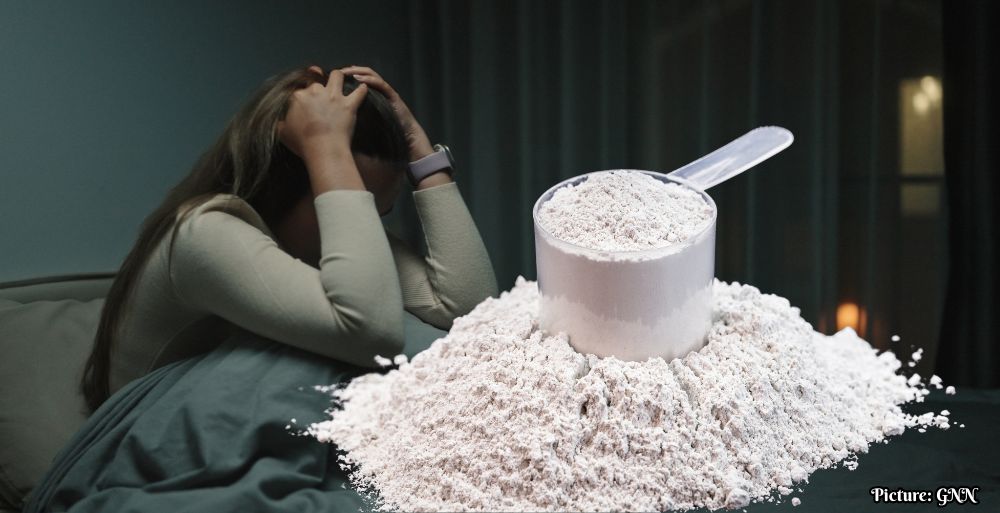
Recent studies suggest that creatine, commonly used as a sports supplement, may have potential benefits in alleviating symptoms of depression, although results have been mixed and further research is needed.
Researchers are investigating whether creatine, a supplement predominantly known for enhancing athletic performance, could also serve as a potential treatment for depression. A systematic review published in Brain Medicine delves into this possibility, highlighting both encouraging findings and significant uncertainties regarding its efficacy in treating depressive symptoms.
Review of Clinical Evidence
The study, led by Bassam Jeryous Fares from the University of Ottawa, did not conduct new trials but analyzed existing research to assess the relationship between creatine supplementation and depression relief. The review included six published reports encompassing five randomized controlled trials, where participants were assigned either creatine or a placebo without knowing which treatment they were receiving.
These trials were conducted across several countries, including South Korea, the United States, Brazil, Israel, and India, and involved a total of 238 participants at the outset. Of these, 126 received creatine, while 112 were given a placebo. The average age of participants was 36 years, with a significant majority being women; notably, two of the studies exclusively enrolled female participants. The review focused on four trials involving individuals diagnosed with major depressive disorder and one trial that included participants with bipolar disorder experiencing a depressive episode.
Mixed Results Across Depression Studies
The findings from the systematic review presented a mixed landscape. Two of the five trials reported positive outcomes associated with creatine supplementation. In one notable study, participants who ingested five grams of creatine daily alongside the antidepressant escitalopram showed more significant reductions in depressive symptoms after an eight-week period compared to those who received escitalopram with a placebo. This improvement was statistically substantial, with a Cohen’s d of 1.13 on the Hamilton Depression Rating Scale, and a higher proportion of participants achieved remission.
Another trial, which combined creatine with cognitive behavioral therapy, also indicated favorable results, showing greater reductions in depressive symptoms compared to the placebo group receiving therapy alone.
Conversely, three trials did not demonstrate any significant benefits from creatine supplementation. One study indicated that neither five nor ten grams of creatine per day improved symptoms in individuals whose depression remained resistant to medication. Another trial involving adolescent girls found no advantage over the placebo, and a third trial focusing on individuals with bipolar disorder similarly reported no improvement.
Additionally, the review raised important safety concerns, as two participants with bipolar disorder who received creatine experienced episodes of hypomania or mania, suggesting that the effects of creatine may vary based on individual conditions.
Understanding the Mechanisms
The potential connection between creatine and depression is rooted in the substantial energy demands of the brain. While commonly associated with muscle performance, creatine is also crucial for the brain’s energy production, which is vital for optimal functioning. Previous research has indicated alterations in brain creatine metabolism among individuals with mood disorders, prompting scientists to explore whether disruptions in cellular energy production might contribute to the onset of depression.
Moreover, creatine may play a role in influencing neurotransmitters such as dopamine and serotonin, which are essential for mood regulation and are the target of many antidepressant treatments. Nonetheless, the authors of the review caution that these connections remain largely theoretical, noting that existing studies indicate correlations rather than definitive causation between altered creatine metabolism and depression.
Bassam Jeryous Fares remarked, “The signal is interesting, but it is not a verdict. Two trials pointed one way and three pointed another. That is not the kind of evidence on which you change clinical practice. It is the kind that tells you the question is worth further exploration.” His co-author, Nicholas Fabiano, a psychiatry resident at the University of Ottawa, echoed this sentiment, emphasizing that while creatine appears safe, the current evidence is insufficient to conclude its effectiveness in alleviating depressive symptoms.
Need for Further Research
The researchers highlighted that the current body of evidence is too limited to endorse routine use of creatine as a treatment for depression. The clinical trials reviewed were relatively small, contained a disproportionate number of female participants, and exhibited varied quality. While two studies were deemed to have a low risk of bias, the remaining trials raised concerns related to participant assignment and missing data, which hampers the applicability of the findings.
The review advocates for larger, more comprehensive clinical trials that extend beyond eight weeks and consider the effects of creatine in conjunction with exercise. It also suggests investigating whether varying dosages could yield different outcomes, while recognizing that higher doses may not necessarily translate to greater benefits. Furthermore, animal studies have indicated that creatine may influence depression-like behaviors differently based on sex, a factor that could explain the stronger positive results observed in the human trials that primarily involved women.
At present, creatine remains an area of interest rather than a validated treatment option for depression. As researchers continue to explore the potential therapeutic effects of this well-established supplement, the scientific community is increasingly focused on innovative strategies for addressing the complex challenges of mental health.
The peer-reviewed research article titled “Creatine as a treatment for depression” is published in Brain Medicine and will be accessible through Open Access starting June 30, 2026.





No Comment! Be the first one.