





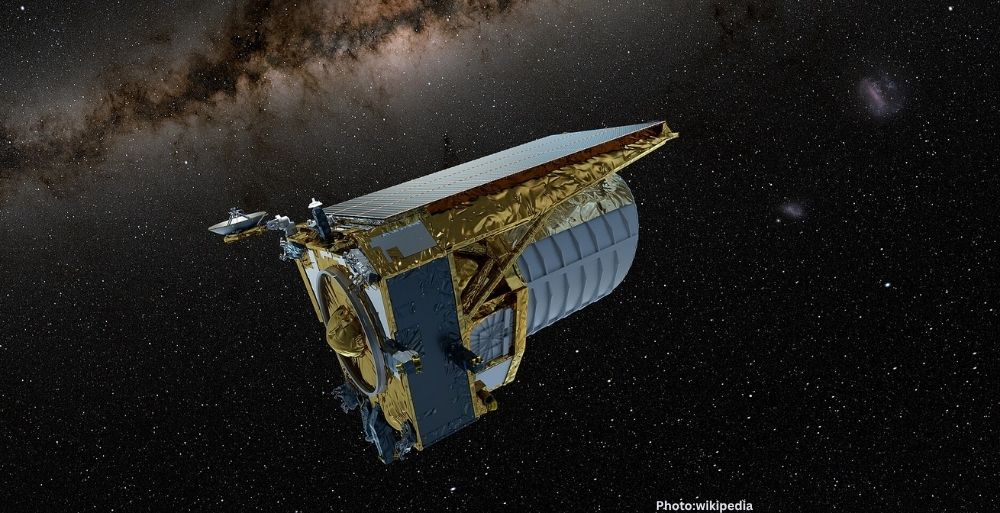
The European Space Agency’s Euclid spacecraft has produced the largest and most detailed image of the Milky Way’s central region, revealing over 60 million stars and aiding in the search for exoplanets.
In a significant milestone for astronomical research, the European Space Agency’s (ESA) Euclid spacecraft has captured the largest and most detailed image of the Milky Way’s galactic bulge. This unprecedented achievement took place over a concentrated observational period of 26 hours on March 23, 2025, and showcases a staggering 60 million stars. The image is set to bolster the ongoing efforts of scientists in the search for extrasolar planets, commonly known as exoplanets, within this densely populated area of our galaxy.
Euclid, which is primarily tasked with investigating dark energy—the mysterious force that accelerates the universe’s expansion—possesses advanced capabilities allowing it to discern individual stars in the central bulge of the Milky Way. This is particularly noteworthy given that other telescopes often struggle with this endeavor due to the overwhelming brightness and density of stars in this region.
Understanding Microlensing and Its Importance
The galactic bulge is considered an optimal location for observing microlensing events, a crucial phenomenon in exoplanet detection. According to team leader Jean-Philippe Beaulieu from the Institut d’Astrophysique de Paris, observing crowded parts of the sky is essential for capturing microlensing events. He explained, “To catch microlensing, you need to observe parts of the sky that are crowded with stars, such as close to the center of our galaxy.” Microlensing occurs when massive objects, such as stars or planets, warp space around them, causing light from distant sources to bend. This bending effect can reveal hidden objects, including exoplanets, that would otherwise remain undetected.
Beaulieu elaborated on the effectiveness of microlensing, noting, “During the last twenty years, almost 300 exoplanets have been discovered using this technique, all with ground-based telescopes and all towards the center of our galaxy.” The newly acquired image from Euclid features 51 known planetary systems, which will not only facilitate deeper studies of these systems but also help in identifying new planets that may be discovered in the future.
The Future of Exoplanet Detection
While Euclid’s imaging efforts are promising, it is important to note that no microlensing events were detected during the initial observations. Detecting such events typically requires a monitoring period of around 20 days. Future telescopes, particularly the upcoming Nancy Grace Roman Space Telescope, are expected to collaborate with the data provided by Euclid. Natalia Rektsini, a team member from the Institut d’Astrophysique de Paris, remarked, “In 24 hours, Euclid has already captured the stars involved in all the future microlensing events that the Roman space telescope will detect, but before the stars and planets involved have aligned.” This future collaboration is anticipated to enhance our understanding of stellar movements and the potential existence of exoplanets.
The data collected by Euclid will serve as a historical reference for upcoming observations, allowing scientists to measure stellar motion over time and confirm the presence of planets based on gravitational influences. This capability is particularly significant for detecting smaller, cooler planets located further from their host stars, contrasting with other methods that tend to identify larger, hotter exoplanets closer to their stars.
Broader Implications for Astronomy
The implications of Euclid’s findings extend well beyond the realm of exoplanet research. Valeria Pettorino, Euclid Project Scientist at ESA, stated, “This result shows what a relatively small, dedicated team can achieve within a large international mission. That’s why this Euclid data will be a time reference for past and future missions and enable studies of exoplanets and their masses.” The data gathered can also enhance our understanding of various astronomical phenomena, including the nature of brown dwarfs, binary star systems, and the distribution of interstellar dust across our galaxy.
As the scientific community continues to analyze the extensive data generated by this ambitious project, the potential for groundbreaking discoveries regarding the Milky Way and its contents remains vast. The intersection of cutting-edge technology and collaborative international efforts in space exploration is expected to yield further insights into the fundamental mysteries of our universe.
In summary, the Euclid spacecraft’s capabilities and the data it has collected could redefine our understanding of the Milky Way’s structure and the potential for exoplanet discovery. The ongoing integration of these findings into future research will undoubtedly impact the field of astronomy for years to come, highlighting the importance of innovative technologies in unlocking the secrets of our galaxy.





No Comment! Be the first one.