






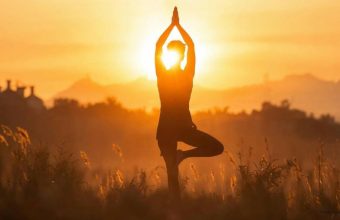
In the realm of yoga, the concept of tapas embodies the discipline and commitment that practitioners cultivate through poses like Tree Pose (Vrksasana), which challenges both physical endurance and mental focus.
Published on August 14, 2026, this article delves into the principles of yoga, particularly the significance of tapas, as highlighted in the foundational texts of yogic philosophy. The practice of yoga, whether through Hatha Yoga or meditation, initiates a transformative journey that confronts psychological barriers and self-doubt.
Understanding Tapas
In yogic philosophy, tapas is one of the five niyamas, or observances, outlined by the ancient sage Patanjali in the Yoga Sutras. These niyamas, essential for anyone embarking on a yoga journey, include tapas (self-discipline), svadhyaya (self-study), and ishvara pranidhana (surrender to the divine). Tapas, often translated as ‘austerity,’ carries a deeper meaning akin to ‘burning desire.’
B.K.S. Iyengar, a renowned yoga teacher, articulates this by stating that tapas represents a profound aspiration to purify both body and senses. He asserts, “Tapas is usually translated as ‘austerity,’ but its meaning is better expressed as ‘burning desire.’” This desire fuels the dedication required to maintain a consistent practice.
The Science of Will in Hatha Yoga
Iyengar describes Hatha Yoga as “the science of will,” emphasizing the physical and mental strength developed through postures. As articulated by Mabel Todd in her book, The Thinking Body, the act of balancing in yoga poses necessitates a heightened awareness of one’s physical and mental state. Todd notes that standing still, as in Tree Pose, is more demanding than walking due to the intricate coordination required among various body parts.
In balancing poses, such as Vrksasana, the effort of will becomes paramount. A beginner’s journey into Tree Pose often reveals that it is not merely the standing leg that falters first; instead, it is the mind that succumbs to doubt. This mental wavering can lead to a physical collapse, a phenomenon that underscores the interconnection of body and mind in yoga practice.
Physiological Foundations of Tree Pose
The physical foundation of Vrksasana primarily relies on the inner thigh muscles. Weakness in these muscles can lead to instability, prompting the pelvis to drop and the weight to shift towards the outer edges of the foot. Therefore, enhancing awareness and strength in the inner thighs is critical before attempting to hold the pose.
To begin practicing Tree Pose, practitioners are encouraged to start in Tadasana (Mountain Pose), placing a wooden block between the thighs. This exercise promotes the engagement of the inner thigh muscles, fostering a connection that supports the spine’s alignment. Iyengar’s methodology emphasizes the importance of not merely squeezing the thighs but lengthening them to cultivate stability.
Guidance for Practicing Tree Pose
For those struggling with balance in Vrksasana, using a wall for support can provide additional stability. Standing in Tadasana with the heels close to the wall allows practitioners to maintain proper alignment while lifting the right knee into the air. The correct positioning of the foot against the inner thigh, along with the careful alignment of the arms and spine, is essential for achieving the pose’s full benefits.
Moreover, variations of Tree Pose that utilize wall support can further refine the actions of the bent leg and enhance the practitioner’s understanding of pelvic alignment. Iyengar’s teachings encourage individuals to observe how the body responds to each adjustment, cultivating a deeper awareness of physical sensations and alignment.
Application of Inner Thigh Engagement
The principles learned through Vrksasana extend beyond this pose to all standing postures in yoga practice. For instance, in Warrior II (Virabhadrasana II) and Extended Side Angle Pose (Utthita Parsvakonasana), the engagement of the inner thigh is crucial for maintaining the integrity of the pose and ensuring proper alignment of the knees over the heels.
In balancing poses such as Half Moon Pose (Adha Chandrasana), the inner thigh of the standing leg must move downward to enhance balance and stability. Practitioners are also advised to engage with props, such as sandbags, to build strength and awareness in the feet and ankles.
Throughout the practice, the concept of tapas serves as a guiding principle. Engaging in yoga is seen not as a form of punishment but as a nourishing discipline that encourages self-discovery and inner peace. The clutter of daily life can distract from one’s true nature, and through the practice of yoga, individuals can learn to let go of unnecessary burdens.
Conclusion: The Transformative Power of Yoga
Ultimately, the practice of Tree Pose and the broader principles of yoga embody a journey toward greater self-awareness and stability. As C.G. Jung describes the cosmic tree, practitioners aim to be “rooted in this world and growing up to heaven.” By embracing tapas and cultivating discipline, individuals can discover a path that not only enhances physical well-being but also promotes mental clarity and emotional resilience.




No Comment! Be the first one.