





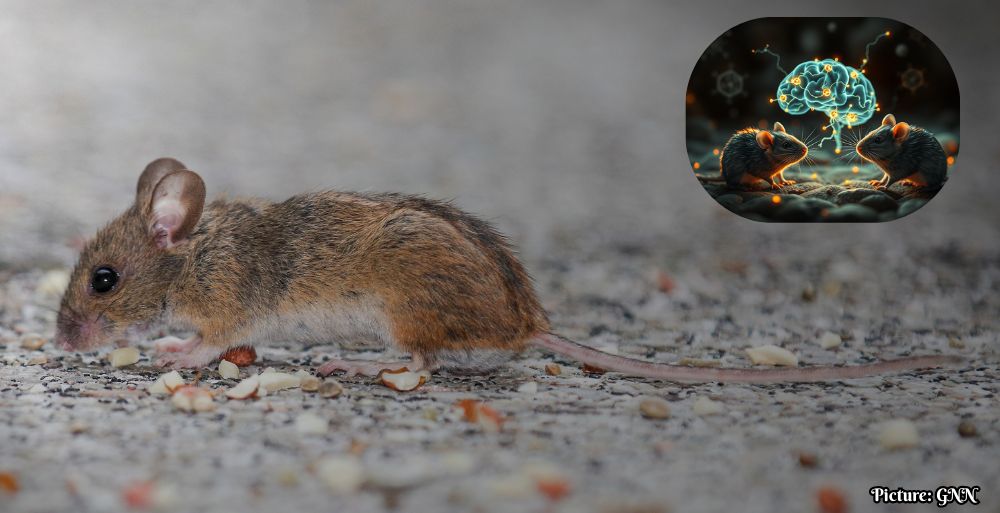
A study from Stanford Medicine and the Arc Institute reveals that age-related memory loss may be influenced by gut bacteria, suggesting new avenues for cognitive preservation.
A recent study published in the journal Nature by researchers at Stanford Medicine and the Arc Institute in Palo Alto, California, explores the connection between gut microbiota and cognitive aging. This research challenges traditional views that age-related memory decline is primarily a brain-centric issue, suggesting instead that the gut may play a crucial role in influencing cognitive functions.
For decades, the scientific community has understood memory loss associated with aging as a phenomenon that originates within the brain. However, the findings from this study indicate that alterations in the gut microbiome—the vast community of microorganisms residing in the intestines—can impair communication with the brain, particularly through signals transmitted via the vagus nerve, a major conduit linking the gastrointestinal system to the brain.
The Gut-Brain Connection
The research team discovered that as mice age, their gut bacteria undergo significant changes, which can disrupt the signals traveling along the vagus nerve. This disruption has been shown to weaken cognitive abilities, particularly in the hippocampus, the brain region crucial for memory formation and spatial navigation. When the researchers restored communication through the vagus nerve in older mice, these animals exhibited memory capabilities comparable to those of younger mice.
“Although memory loss is common with age, it affects people differently and at different ages,” said Christoph Thaiss, PhD, assistant professor of pathology and one of the senior authors of the study. “We wanted to understand why some very old people remain cognitively sharp while others see significant declines beginning in their 50s or 60s.” Thaiss emphasized that memory decline is not predetermined but is actively modulated by physiological factors, particularly those originating from the gastrointestinal tract.
Research Findings and Methodology
To investigate the impact of gut microbiota on cognitive function, the researchers conducted experiments on two groups of mice: young (2-month-old) and old (18-month-old). They found that certain bacterial species become more prevalent as the mice age, while others decline. This imbalance triggers immune responses that lead to inflammation, ultimately disrupting the vagus nerve’s signaling to the hippocampus.
When the vagus nerve activity in older mice was stimulated, their ability to recognize new objects and navigate mazes improved substantially, reflecting the performance of younger mice. Thaiss remarked, “The degree of reversibility of age-related cognitive decline in the animals just by altering gut-brain communication was a surprise.”
In an innovative twist, the study also found that young mice exposed to the microbiomes of older mice exhibited impaired cognitive performance, suggesting that gut bacteria not only affect older mice but can also detrimentally influence younger animals sharing an environment.
Exploring Germ-Free Environments
The researchers further examined the cognitive functions of mice raised in a germ-free environment—meaning neither young nor old mice had gut bacteria. Remarkably, the young mice retained their memory capabilities. Only when they were exposed to the microbiomes of older mice did they show cognitive declines similar to those of older animals.
Further investigations identified a specific bacterium, Parabacteroides goldsteinii, which became more abundant in older mice and was directly linked to cognitive impairment. When young mice were introduced to this bacterium, their cognitive performance declined dramatically. In contrast, treatment with a molecule that activates the vagus nerve enabled older mice to regain memory function comparable to that of younger mice.
Broader Implications for Human Health
The implications of this study extend beyond animal research. The researchers posit that similar mechanisms may exist in humans, potentially contributing to age-related cognitive decline. The vagus nerve stimulation technique, already FDA-approved for treating conditions such as depression and epilepsy, could be repurposed to mitigate cognitive decline in aging populations.
“Our hope is that ultimately these findings can be translated into the clinic to combat age-related cognitive decline in people,” Thaiss stated. The study received funding from various sources, including the National Institutes of Health and the Burroughs Wellcome Fund, underscoring the significance of this research in understanding cognitive health.
Understanding Interoception and Cognitive Aging
The study highlights the role of interoception—signals from within the body that inform the brain about its internal state—compared to exteroception, which pertains to external sensory signals. Thaiss noted, “Exteroception is basically how we perceive the outside. We have a lot of detailed knowledge about how this works. But we know much less about how the brain senses what is going on inside the body.” This gap in knowledge underscores the novelty of the current research, which seeks to unravel the complexities of how internal processes influence cognitive aging.
Future Research Directions
Moving forward, the researchers aim to explore whether similar pathways involving the gut microbiome and brain activity exist in humans, and how these could contribute to cognitive decline. They are also investigating noninvasive methods to monitor and potentially control the activity of peripheral neurons that influence memory formation and cognition.
This groundbreaking research not only enhances our understanding of the complex interplay between gut health and cognitive function but also suggests practical interventions that could help preserve memory as individuals age. The findings emphasize the gut as a critical regulator of cognitive health, highlighting the potential benefits of nurturing gut health to maintain cognitive functions in older adults.





No Comment! Be the first one.