





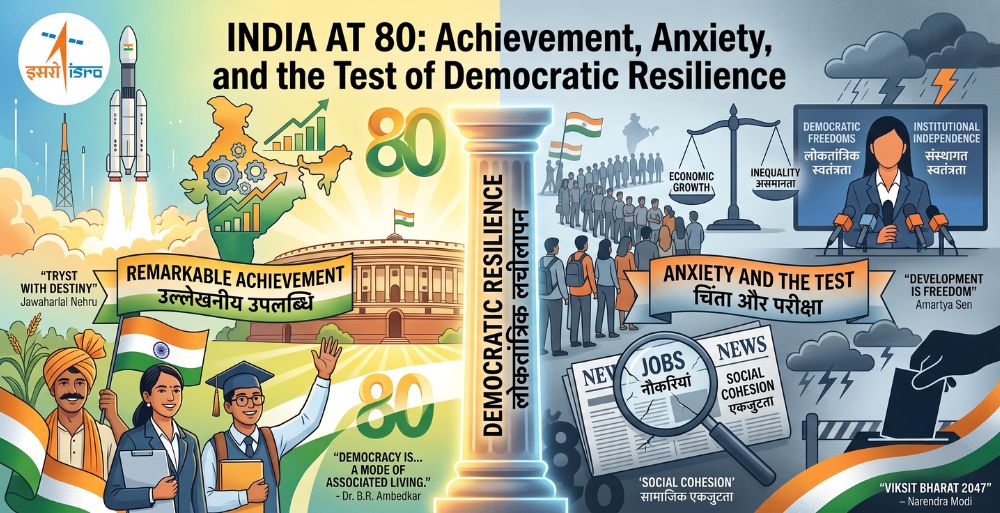
From a “Tryst with Destiny” to a Search for Direction
As India approaches its 80th year of independence, it stands at a pivotal moment in its history. Born amid the violence of Partition, burdened by poverty, illiteracy, and colonial exploitation, India has emerged as the world’s largest democracy, one of its largest economies, a nuclear power, and a leading force in technology and global diplomacy. Its rise from food shortages and foreign aid dependency to space missions and digital innovation is among the most remarkable stories of nation-building in modern history.
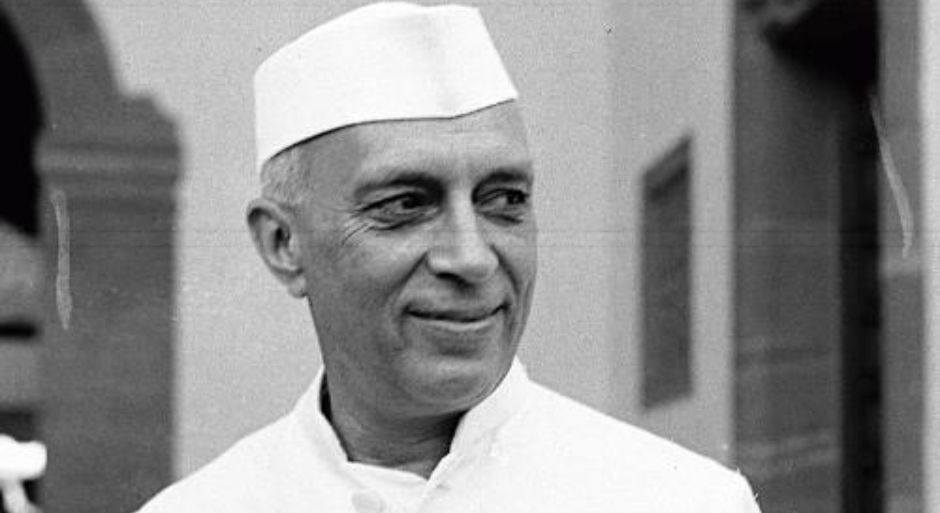
Jawaharlal Nehru’s famous declaration that India had made a “tryst with destiny” remains one of the defining statements of modern India. Nehru envisioned a nation that would combine democracy, scientific temper, and social justice. The extent to which contemporary India has fulfilled that vision remains a subject of debate.
India’s journey remains a work in progress. Economic growth coexists with higher unemployment rates and inequality. Technological achievement contrasts with educational and healthcare deficits. Political stability has been accompanied by growing debates about democratic freedoms and institutional independence.
Prime Minister Narendra Modi has framed India’s future through the vision of Viksit Bharat 2047, stating that, “If 140 crore Indians move forward with one resolve, we can overcome every challenge and achieve the goal of a Viksit Bharat by 2047.” The challenge for India at 80 is whether it can combine economic success with democratic vitality, social cohesion, and inclusive development.
Democracy: India’s Most Remarkable Achievement
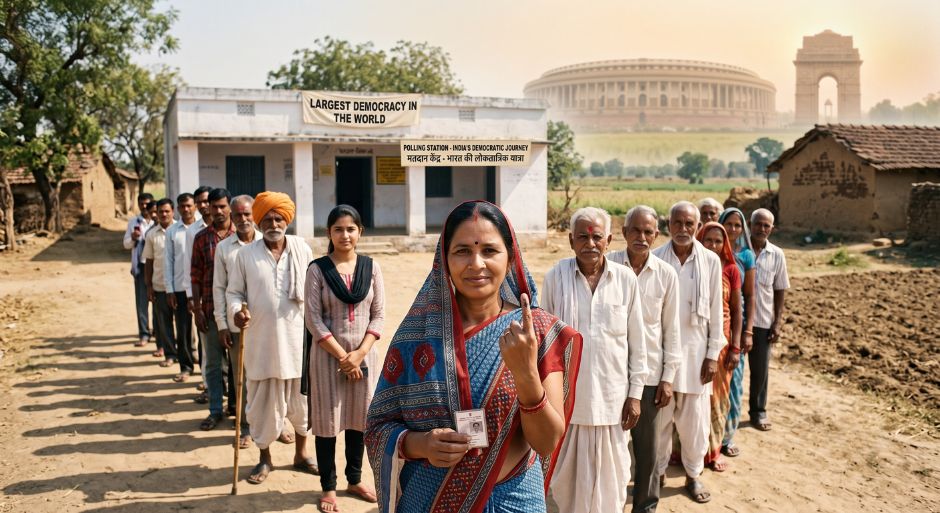
Among India’s many accomplishments, the survival of democracy may be the most remarkable. At independence, many scholars doubted whether a poor, highly diverse society with deep linguistic, religious, and caste divisions could sustain democratic governance. Few expected India to remain democratic while many other post-colonial states succumbed to military rule or authoritarianism.
The first general election of 1951-52 remains a defining moment. More than 170 million citizens became eligible to vote, many of whom were illiterate. Ballot boxes were carried across mountains, deserts, rivers, and forests. The election became a powerful affirmation that democracy belonged not only to elites but to ordinary citizens.
President Droupadi Murmu recently reaffirmed this constitutional legacy: “The ideals of justice, liberty, equality, and fraternity enshrined in our Constitution define our republic.”
At the same time, India’s constitutional architect, B.R. Ambedkar, offered a warning that remains relevant: “Democracy is not merely a form of government. It is primarily a mode of associated living.”
His caution reminds India that democratic institutions require constant renewal, accountability, and public trust.
Economic Transformation: From Scarcity to Growth
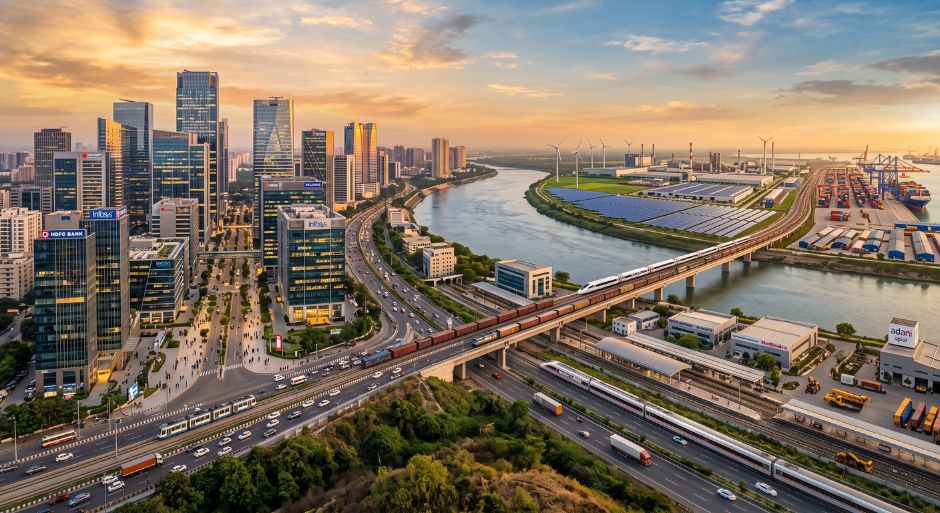
India’s economic transformation has been extraordinary. The country that once symbolized poverty and food insecurity is now among the world’s largest economies. The World Bank notes that India’s economy has nearly quadrupled in real terms since 2000 and that per-capita income has almost tripled. Extreme poverty has declined dramatically over the past two decades.
The turning point came in 1991. Faced with a severe balance-of-payments crisis, India was forced to pledge gold reserves to avoid default. The subsequent reforms dismantled many restrictions, opened the economy, and transformed India into a global destination for investment, services, and entrepreneurship.
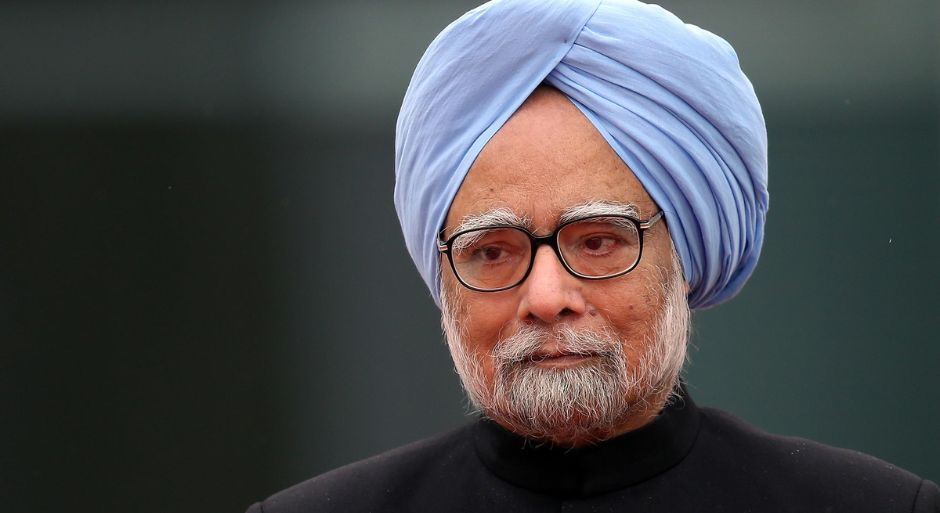
Architect of the 1991 reforms and former Prime Minister Manmohan Singh famously remarked: “No power on earth can stop an idea whose time has come.” The statement became synonymous with India’s economic opening and integration into the global economy.
Former Prime Minister Atal Bihari Vajpayee similarly argued that economic growth and national confidence were closely linked, often emphasizing that India’s rise would depend on infrastructure, education, and technological modernization.
Reflecting the optimism generated by this transformation, Ratan Tata once observed: “I have always been very confident and very upbeat about the future of India.”
Today, Indian companies operate globally, and cities such as Bengaluru, Hyderabad, and Pune have become centers of technological innovation. The country is now an important player in pharmaceuticals, software services, manufacturing, and finance.
Science, Technology, and the Digital Revolution
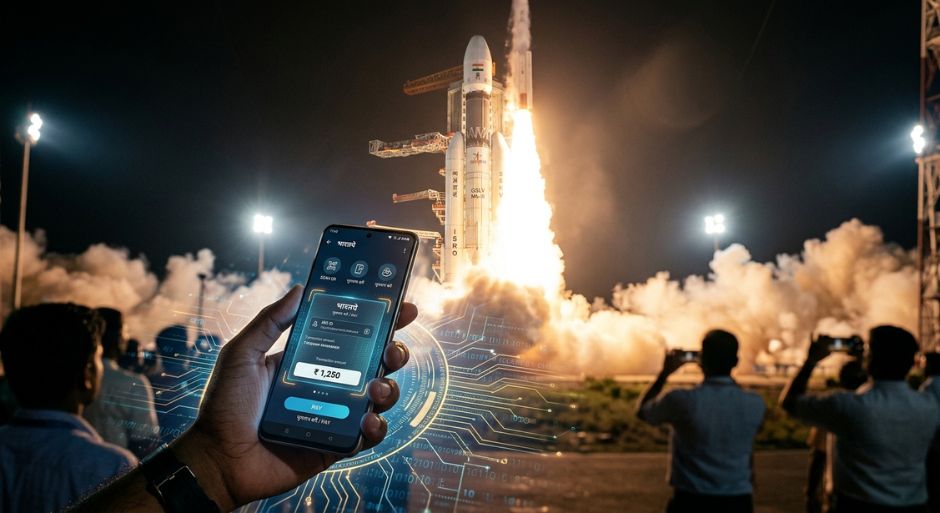
India’s scientific achievements have become a major source of national pride. The Green Revolution eliminated chronic food shortages. The space program, led by ISRO, has demonstrated world-class capabilities at comparatively low cost. Missions to the Moon and Mars have showcased India’s technological sophistication.
Former President A.P.J. Abdul Kalam captured this spirit when he declared: “Dream, dream, dream. Dreams transform into thoughts and thoughts result in action.”
Speaking about national development, Kalam also stated: “Dream is not that which you see while sleeping; it is something that does not let you sleep.”The remark captures the aspirational character of India’s scientific and technological achievements.
Equally significant has been India’s digital transformation. Aadhaar, UPI, and digital public infrastructure have expanded financial inclusion and transformed government service delivery. These innovations are increasingly studied by governments across the world.
Nandan Nilekani, one of the architects of India’s digital revolution, argues that technology can address inequality at scale: “These issues of economic inequity cannot be solved in a traditional way. We have to do a lot more with a lot less money and achieve a big impact.” Looking ahead, Nilekani believes India can become: “The AI use-case capital of the world.”
India’s Rising Global Influence
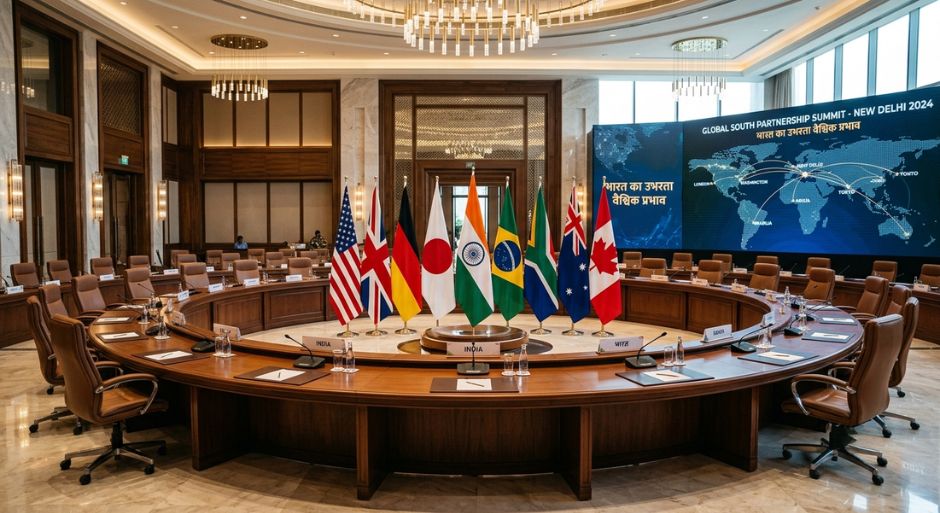
Over the past decade, India’s international standing has grown significantly. As a member of the G20, BRICS, Quad, and numerous multilateral forums, India increasingly influences global conversations on trade, climate, technology, and security.
India’s successful presidency of the G20 in 2023 showcased its ability to shape global conversations on development, climate change, digital public infrastructure, and reform of international institutions. India has also strengthened strategic relationships with the United States, Europe, Japan, Australia, and countries in the Middle East while maintaining a tradition of strategic autonomy.
While the Modi government has significantly enhanced India’s global visibility through the G20, Quad, BRICS, and stronger ties with major powers, its foreign policy has also faced notable limitations. The most significant challenge has been China. Despite high-profile summits and diplomatic engagement, relations deteriorated sharply following the 2020 Galwan Valley clash, exposing the persistence of border tensions and China’s growing strategic influence in South Asia.
The government’s “Neighborhood First” policy has achieved mixed results. Relations with Nepal, the Maldives, and other neighbors have periodically encountered tensions, while China has expanded its economic and strategic footprint across the region.

India has also failed to secure its long-sought permanent seat on the United Nations Security Council despite greater global recognition. Critics further argue that concerns about media freedom, democratic institutions, and civil liberties have affected India’s international democratic image.
External Affairs Minister S. Jaishankar has described this changing position succinctly: “The rise of India will be determined by India. It will be determined by our strength, not by the mistakes of others.”
This confidence reflects a nation that no longer sees itself merely as a developing country but increasingly as a global power with strategic autonomy and international influence.
The Unfinished Agenda: Jobs, Inequality, and Human Development
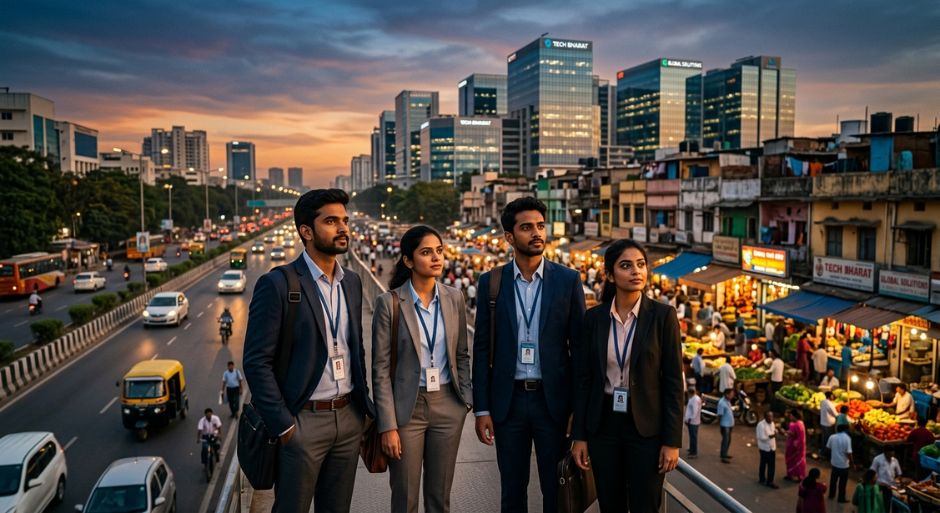
Despite impressive growth, India continues to face major structural challenges. The most pressing concern is employment. Economic growth has not always translated into adequate job creation.
Millions of young Indians enter the labor market annually, yet many struggle to find secure and well-paying employment. Even international institutions note that a large portion of India’s workforce remains in informal or low-productivity jobs.
The spectacle of highly educated graduates competing for a handful of government positions has become a recurring symbol of the employment crisis.
At the same time, inequality has become increasingly visible. India has created extraordinary wealth, but the benefits have not been distributed evenly. Critics point to the growing concentration of wealth among corporations and billionaires while millions of Indian continue to face economic insecurity.
Economist Amartya Sen’s observation remains relevant: “Development is freedom.” His emphasis suggests that true development must expand opportunities in education, healthcare, employment, and social mobility rather than focus solely on growth statistics.
The Modi Era: Achievement and Controversy
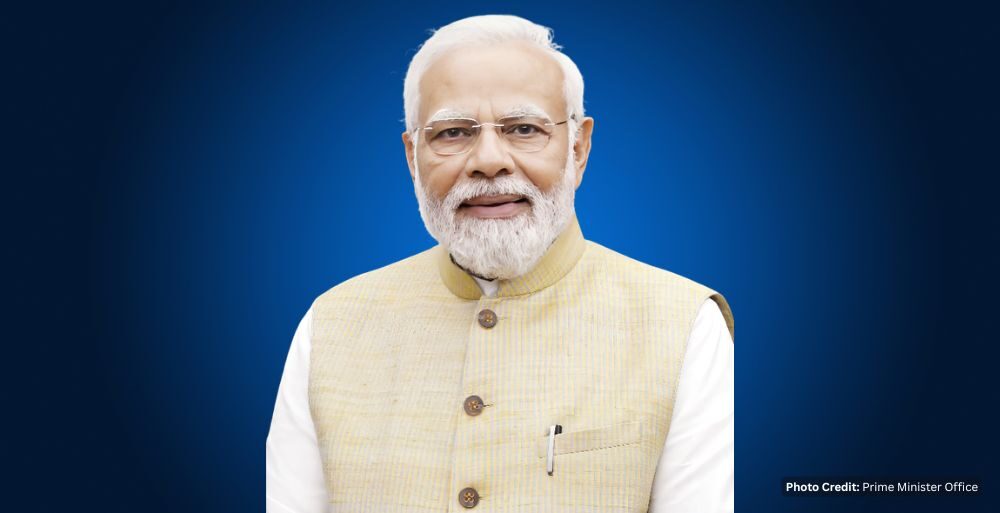
Narendra Modi’s rise to power in 2014 marked one of the most significant political shifts in contemporary India. His government has delivered major infrastructure projects, welfare programs, digital governance initiatives, rural electrification, and an assertive foreign policy. Supporters argue that these achievements have modernized the state and accelerated development. However, critics argue that the government’s record is more mixed.
Political analyst Yogendra Yadav has argued that the key governance question in contemporary India is no longer conventional corruption but the growing opacity surrounding political finance, corporate influence, and decision-making processes.
The Employment Question
One of Modi’s central promises was large-scale job creation. Yet unemployment, particularly among youth, remains a major concern. Critics argue that flagship initiatives such as Make in India have not generated employment at the scale originally envisioned.
Former Reserve Bank Governor Raghuram Rajan has consistently cautioned that India’s challenge is not merely achieving growth but creating sufficient “good jobs” for a young and increasingly educated population.
Demonetization
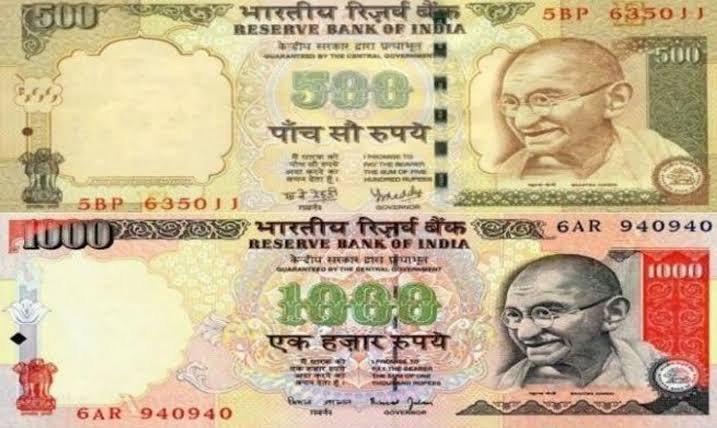
The 2016 demonetization policy remains one of the defining and most controversial episodes of the Modi era. Supporters praised it as a bold strike against corruption and black money. Critics argued that it imposed significant costs on small businesses, informal workers, and rural communities while yielding limited long-term gains.
Corruption, Transparency, Electoral Bonds, and Minority Rights
The Modi government has largely avoided the large-scale corruption scandals that characterized some earlier administrations. However, concerns have emerged regarding transparency, political financing, and corporate influence.
The Electoral Bonds Scheme became the most prominent controversy in this area. Critics argued that anonymous donations weakened transparency and increased the influence of large donors. The Supreme Court eventually struck down the scheme, emphasizing citizens’ right to know the sources of political funding.
Former Chief Election Commissioner S.Y. Quraishi, a frequent advocate of electoral transparency, has argued that democracy functions best when political funding is open to public scrutiny. In this context, Justice Louis Brandeis’s famous observation remains particularly relevant: “Sunlight is said to be the best of disinfectants.”
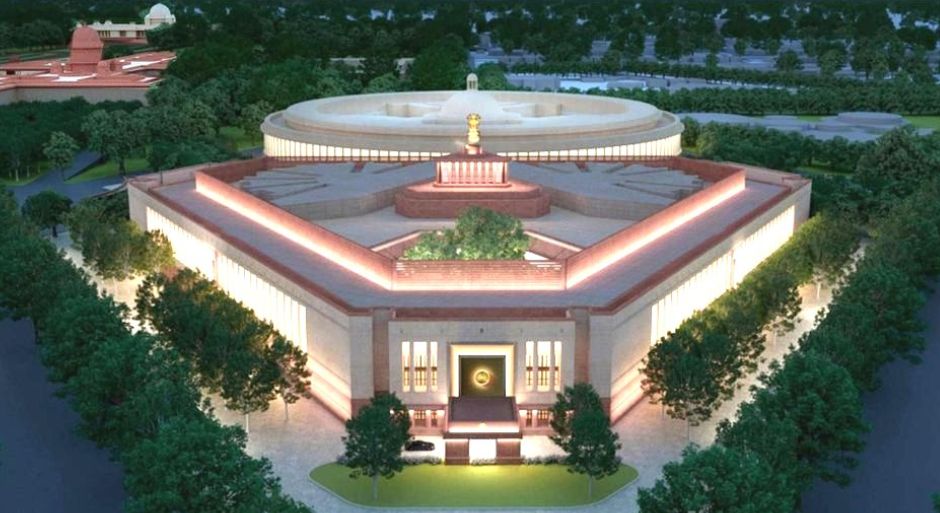
Human-rights advocate Harsh Mander has warned that social cohesion cannot be taken for granted and that protecting pluralism remains one of the republic’s most important democratic responsibilities.
Opposition parties and independent analysts have also raised concerns about alleged crony capitalism. They argue that a small number of powerful business groups have disproportionately benefited from government policies, privatization initiatives, and infrastructure projects. Supporters reject these allegations, arguing that large corporations are essential for economic modernization and international competitiveness.
Another area of criticism involves the perceived use of investigative agencies against political opponents. Critics claim that institutions such as the Enforcement Directorate (ED) and Central Bureau of Investigation (CBI) are sometimes used selectively, while the government maintains that these agencies are simply enforcing laws against corruption and financial misconduct.
Critics further argue that religious and social polarization has intensified during the Modi years. Questions regarding minority rights, communal tensions, and the preservation of India’s secular traditions have become central themes in both domestic and international debates about the country’s future direction.
Democracy, Media Freedom, and Institutional Concerns
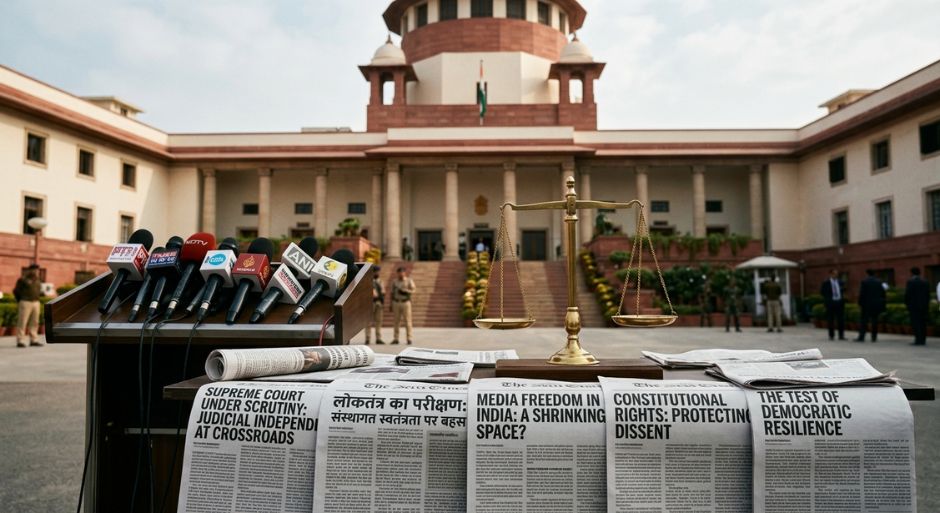
Perhaps the strongest criticism of the Modi government concerns democratic institutions. Concerns about democratic institutions have become one of the most debated aspects of the Modi era. International democracy-monitoring organizations have reported declines in indicators related to civil liberties, media independence, and institutional checks on executive power.
Former Prime Minister Atal Bihari Vajpayee once described democracy as: “A system where criticism is not merely tolerated but welcomed.”
For critics of the current government, this principle represents an important benchmark for evaluating democratic health. For supporters, India’s vibrant elections, active social media discourse, and competitive politics remain evidence that democracy is functioning robustly.
The Varieties of Democracy (V-Dem) project has reported declines in indicators relating to media independence, civil liberties, and institutional checks on executive authority. V-Dem has continued to classify India as an “electoral autocracy,” though the government and many scholars dispute that characterization.
Political scientist Christophe Jaffrelot has argued that India is witnessing a gradual transformation from a liberal democracy toward a more majoritarian political model, raising concerns about minority rights, institutional autonomy, and constitutional safeguards.
Reporters Without Borders has repeatedly expressed concern about increasing pressures on journalists, concentration of media ownership, and the use of legal and regulatory mechanisms against independent media voices.
Media freedom has similarly become a contested issue. Journalist Kalpana Jain has argued that: “Under Modi, media freedom in India has come under serious threat.”
Critics cite pressure on journalists, media concentration, and growing self-censorship. Supporters respond that India’s media remains noisy, diverse, and intensely competitive.
Historian Ramachandra Guha has warned that “the concentration of power in one individual and one party is not healthy for any democracy.” His concern reflects a broader debate about the balance between strong leadership and institutional autonomy.
Conclusion: The Next Twenty Years
At 80, India is undeniably one of the great success stories of the modern era. It has preserved democracy, reduced poverty, achieved food security, built advanced scientific capabilities, transformed its digital landscape, and emerged as a major international power.
Yet India also faces significant challenges. Persistent unemployment, rising inequality, environmental pressures, educational shortcomings, and concerns about institutional independence continue to affect the country’s development.
Former Supreme Court judge Madan Lokur has argued that democratic institutions require “constant vigilance” and that constitutional bodies must remain independent of political influence if public confidence is to be maintained.
Many of the defining questions of its future remain unresolved. Can economic growth generate sufficient employment? Can inequality be reduced while maintaining competitiveness? Can democratic institutions remain strong amid political centralization? Can India preserve its tradition of pluralism while navigating growing social polarization?
President Murmu has emphasized that India possesses the world’s largest youth population and immense talent. The future of the republic will depend on whether that talent can be translated into opportunity, innovation, and civic participation.
The question facing India at 80 is not whether it will rise, but whether it can rise while remaining democratic, inclusive, and faithful to the constitutional ideals upon which the republic was founded.
That caution remains especially relevant as India enters its ninth decade as an independent republic. The durability of India’s success will depend not only on economic performance but on its willingness to preserve the democratic and constitutional values that have historically distinguished it from many other post-colonial states. As India moves toward the centenary of independence in 2047, its success will depend not only on economic growth but also on its ability to ensure inclusive development, strengthen democratic institutions, reduce inequality, and preserve the pluralistic values that have defined the republic since 1947.






No Comment! Be the first one.