





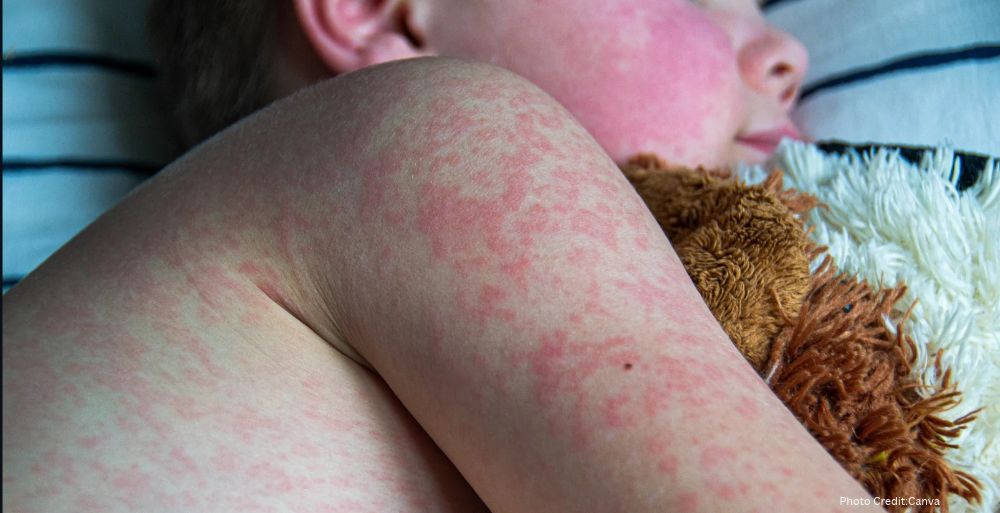
The CDC has confirmed six measles-related deaths in 2026, indicating a significant resurgence of the disease, with over 5,400 cases reported nationwide.
The Centers for Disease Control and Prevention (CDC) announced on Thursday that the United States has recorded six measles-related deaths in 2026, marking a concerning resurgence of this highly contagious disease. This year’s fatalities have already doubled the total number from 2025, underscoring a troubling trend as the nation grapples with its most severe measles outbreak since 1991. The outbreak has seen over 5,400 cases documented across the country, according to data provided by the Johns Hopkins University International Vaccine Access Center tracker.
Pennsylvania has emerged as the state most heavily impacted by the outbreak, reporting six measles-associated deaths. Additionally, a child died from the disease on election day in New York, followed by the tragic death of an infant in Wisconsin shortly thereafter. Active measles outbreaks have been identified in nearly every state across the country, indicating a widespread public health crisis.
The Wisconsin Department of Health Services confirmed the infant’s death, while New York reported its first measles-related fatality in over thirty years. However, the CDC did not specify which states were included in its official count of the six reported deaths.
Changes in Reporting Methodology
The increase in reported fatalities coincides with a significant change in how the CDC, under the leadership of U.S. Health Secretary Robert F. Kennedy Jr., tracks measles mortality. The agency has shifted to utilizing data from the National Center for Health Statistics (NCHS) to monitor mortality trends over time. This methodological adjustment was noted in a September 4 publication on the CDC’s website.
In a controversial move, Kennedy expressed skepticism regarding the attribution of two of the deaths reported in Pennsylvania, suggesting without evidence that they might not be attributable to measles. He reportedly instructed Erica Schwartz, the CDC’s director, to exclude these fatalities from the official tally. The following day, the CDC altered its data source for recording measles-related deaths, reflecting an ongoing debate within the agency concerning the accuracy and reliability of health data reporting.
Vaccine Efficacy and Public Health Implications
Measles is a preventable disease, with the measles, mumps, and rubella (MMR) vaccine offering approximately 97% protection after two doses. Despite the existence of effective vaccination programs, the United States is now on the brink of losing its measles elimination status, a development that could have significant ramifications for public health policy and vaccine initiatives across the nation.
The potential loss of measles elimination status would align the U.S. with countries such as Canada and numerous nations in Europe and Asia, where measles was previously eradicated before experiencing a resurgence. This shift could further define Kennedy’s controversial legacy regarding vaccine policies, as his administration has faced criticism for its handling of vaccination strategies amidst rising case numbers.
The ongoing outbreak, along with the associated fatalities, underscores the urgent need for heightened public health measures and vaccination efforts to combat the spread of preventable diseases. Health officials emphasize that maintaining high vaccination rates is essential for safeguarding public health and preventing further outbreaks. As public health experts continue to analyze the outbreak, they highlight the importance of education and outreach to encourage vaccination among communities that may be hesitant.
Historical Context of Measles in the U.S.
Measles was declared eliminated in the United States in the year 2000, a significant public health achievement attributed to widespread vaccination efforts. However, the decline in vaccination rates in recent years, partly due to misinformation regarding vaccine safety, has led to a resurgence of the disease. The CDC has noted a correlation between vaccine hesitancy and rising cases, highlighting the need for ongoing education to address concerns and misinformation.
The implications of this outbreak are far-reaching, not only affecting public health but also the functioning of healthcare systems that must respond to the increased demand for medical care associated with measles cases. The CDC, along with state health departments, is likely to face increased scrutiny as communities grapple with the consequences of this outbreak.
As the nation confronts this outbreak, the situation serves as a stark reminder of the importance of vaccination and the role of public health initiatives in preventing the spread of infectious diseases. It is crucial for health officials to work collaboratively with communities to rebuild trust in vaccines and ensure that all individuals, especially children, are protected against preventable diseases.



No Comment! Be the first one.