


Functional Fitness Experts Advocate Foundation of Bodyweight Resistance Training to Address Sarcopenia and Enhance Muscular Longevity

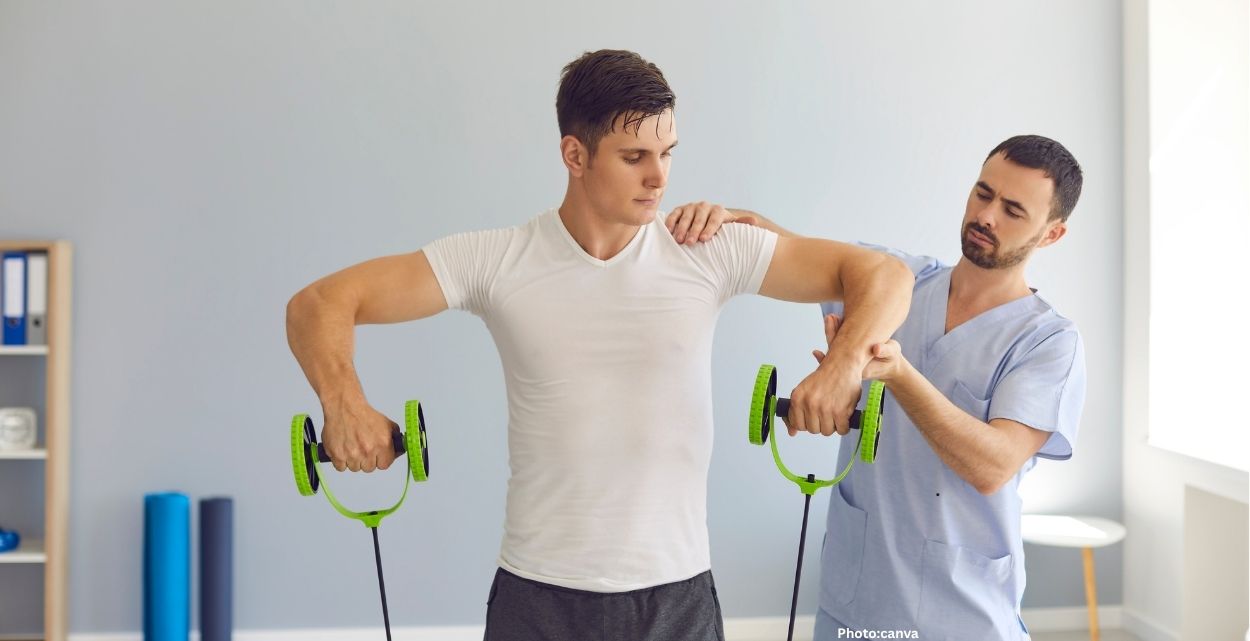
Public health officials and clinical exercise physiologists are increasingly emphasizing foundational calisthenics as a primary intervention against age-related muscle degeneration and metabolic decline. Rather than prioritizing complex weightlifting machinery or high-impact training regimens, contemporary sports medicine data suggests that mastering four fundamental bodyweight movements—the squat, the straight-arm crunch, the leg raise, and the push-up—provides the neuromuscular coordination and core stability required for lifetime functional independence. By focusing on progressive overload and proper biomechanical alignment under the guidance of elite practitioners like Iconoclast Fitness founder Ngo Okafor, individuals can build a sustainable physical foundation that prevents chronic joint injuries and enhances systemic health.
NEW YORK — As public health entities confront a rising incidence of sedentary-related chronic illnesses and orthopedic injuries across the national workforce, fitness practitioners and sports medicine researchers are staging a coordinated return to physiological fundamentals. In an era dominated by high-intensity interval training (HIIT) trends and complex gym machinery, leading human performance experts argue that the modern fitness consumer is frequently skipping the critical developmental phases required to establish joint integrity and core stability.
According to global epidemiological assessments, a failure to establish a sound movement foundation before introducing heavy external resistance is a leading catalyst for acute lumbar strains, shoulder impingement syndromes, and knee tendinopathies. To address this structural deficit, exercise physiologists are highlighting a streamlined, bodyweight-only resistance protocol designed to rebuild foundational human movement patterns. The strategy centers on four specific movements: the squat, the straight-arm crunch, the leg raise, and the push-up.
This calisthenic framework serves a dual purpose within public health programming. For sedentary beginners, it operates as a low-barrier entry point to resistance training, mitigating the physiological intimidation frequently associated with commercial fitness centers. For advanced athletes, a single sequence of these movements functions as a comprehensive, dynamic warm-up designed to activate deep core stabilizers, elevate core body temperature, and prime the central nervous system for complex multi-joint lifting.
The Biomechanics of Progressive Resistance and Core Integration
To understand the systemic value of calisthenic mastery, it is necessary to examine the principles of progressive overload and structural adaptation. The human musculoskeletal system adapts specifically to the demands placed upon it—a principle known as SAID (Specific Adaptation to Imposed Demands). When an individual introduces heavy external loads via barbells or machines without possessing adequate baseline stability, the body utilizes compensatory movement patterns, forcing smaller, non-primary muscles to bear the stress.
Ngo Okafor, a prominent celebrity trainer and the founder of New York-based Iconoclast Fitness, recently detailed this phenomenon during an instructional forum with fitness media, emphasizing that strength must be built from the ground up.
“Strength training, as with everything in life, should be built on a solid foundation,” Okafor stated in a deliberate, measured tone while demonstrating proper postural alignment in his facility. “That means there are some fundamental exercises that you should master before progressing—and even returning to if you skipped ahead. These are the bedrock on which you will build the rest of your routine.”
The baseline prescription advocated by Okafor and supported by clinical sports medicine guidelines involves executing three distinct sets of 10 repetitions for each foundational exercise. Once an individual achieves technical mastery—defined as completing all repetitions through a full range of motion without a breakdown in structural form—the routine can be scaled up to ensure continued neuromuscular adaptation. This scalability is achieved through two primary mechanisms: volume manipulation (increasing reps or sets) or the introduction of targeted external resistance, such as utilizing dumbbells, resistance bands, or ankle weights.
Analytical Matrix of Foundational Calisthenic Movements
The following structural matrix breaks down the specific anatomical targets, mechanical demands, and progressions for the four primary movements required to establish a functional physical foundation.
| Exercise | Primary Muscular Targets | Joint Actions Involved | Mechanical Progression |
| 1. Standard Squat | Quadriceps, Glutes, Hamstrings, Transversus Abdominis | Hip Flexion/Extension, Knee Flexion/Extension | Goblet Squat, Barbell Back Squat |
| 2. Straight Arm Crunch | Rectus Abdominis (Upper), Deep Core Stabilizers | Thoracic Spine Flexion | Weighted Overhead Crunch |
| 3. Extended Leg Raise | Iliopsoas (Hip Flexors), Lower Rectus Abdominis | Hip Flexion, Isometric Lumbar Stabilization | Hanging Leg Raise, Added Ankle Weights |
| 4. Traditional Push-Up | Pectoralis Major, Anterior Deltoids, Triceps Brachii | Horizontal Adduction, Elbow Extension | Deficit Push-Up, Weighted Vest Push-Up |
Detailed Protocol and Biomechanical Execution
I. The Squat: Restoring Lower-Body Functional Architecture
The standard bodyweight squat is the definitive movement pattern for assessing lower-body mobility and pelvic stability. It directly replicates essential daily motions, such as rising from a seated position or lifting objects from the floor.
To execute the movement, an individual stands with feet positioned shoulder-width apart, ensuring weight is evenly distributed across the heel, first metatarsal, and fifth metatarsal—a structural alignment known as the foot tripod. After engaging the deep core musculature to stabilize the pelvis, the movement is initiated by driving the hips backward while simultaneously bending the knees. The torso must remain as upright as possible, preventing excessive forward lean that shifts the load to the lumbar spine.
The descent continues until the thighs reach a position parallel to the floor, or as deep as individual joint mobility safely tolerates. Returning to the upright starting position requires a powerful, coordinated contraction, driving force through the heels to engage the glutes and quadriceps.
[Proper Squat Mechanics]
Stand Shoulder-Width -> Engage Core -> Hips Back/Knees Bend -> Thighs Parallel -> Drive Through Heels
                                                                              (Glute/Quad Activation)
Okafor highlights the multi-faceted nature of the movement, noting its systemic impact:
“Squats are one of the best functional lower-body exercises because they strengthen the legs, glutes, and core simultaneously, while improving balance, mobility, and overall athleticism,” he explained.
II. The Straight-Arm Crunch: Isolating Spinal Control
While traditional abdominal crunches frequently suffer from poor execution—often involving the trainee pulling forward on the cervical spine—the straight-arm crunch shifts the lever arm to isolate the upper rectus abdominis while protecting the neck.
The individual lies supine on a flat surface with knees bent at a 90-degree angle and feet placed flat on the floor to stabilize the pelvis. The arms are extended straight overhead, parallel to the ears. Before initiating the movement, the trainee must actively press the lower back into the floor, a cue that forces the activation of the deep transversus abdominis and eliminates lumbar lordosis (excessive arching).
The movement is performed by reaching directly toward the ceiling, lifting only the scapulae (shoulder blades) off the floor through controlled thoracic flexion. The cervical spine remains neutral throughout the contraction. The descent must be executed slowly and with deliberate resistance, fighting gravity on the eccentric (lowering) phase.
Okafor notes that this specific mechanical path is critical for internal trunk control:
“This movement strengthens the core while encouraging spinal control and abdominal engagement,” Okafor noted, emphasizing the elimination of momentum.
III. The Leg Raise: Developing Lower Abdominal and Hip Flexor Stability
The leg raise targets the lower portion of the rectus abdominis, the iliopsoas, and the deep core stabilizers responsible for preventing anterior pelvic tilt.
The exercise begins in a fully supine position with legs extended straight and held together. As with the crunch, the initial step requires pressing the lower back firmly against the floor to lock the pelvis into a neutral position. The individual then raises both legs upward simultaneously, maintaining extension at the knee joint, continuing until the legs reach a vertical angle or as high as the individual’s hamstring flexibility permits.
The critical phase of the leg raise occurs during the eccentric lowering of the legs. As gravity pulls the extremities toward the floor, the hip flexors and lower abdominals must exert tremendous isometric force to prevent the lower back from arching off the ground. If the lumbar spine lifts, the tension shifts from the abdominal wall to the lumbar vertebrae, increasing injury risks.
Okafor points out the preventative value of this control:
“Leg raises strengthen the lower abdominal region and improve core control and stability,” Okafor stated during a technical review of the movement.
IV. The Push-Up: The Definitive Upper-Body Pushing Mechanism
The traditional push-up remains the gold standard for assessing upper-body relative strength and horizontal pushing power. It functions essentially as a moving plank, requiring full-body integration from head to heels.
To assume the correct starting position, the individual places hands slightly wider than shoulder-width apart on the floor, stepping the feet back to create a straight kinetic line. The glutes and quadriceps must be actively squeezed to prevent the hips from sagging, which would compromise the lumbar spine.
As the individual lowers the chest toward the floor by bending the elbows, the shoulder blades should naturally retract (move together). The elbows must be kept at roughly a 45-degree angle relative to the torso, avoiding an outward flare that places dangerous shear stress on the rotator cuff tendons. Once the chest approaches the floor, the individual drives upward through the palms with power, extending the arms completely while maintaining a rigid core.
For individuals unable to maintain proper alignment, modifications such as elevating the hands on a bench or performing the movement from the knees are recommended to preserve biomechanical integrity.
“Push-ups develop upper-body pushing strength and core stability using bodyweight resistance,” Okafor concluded.
Mitigating Sarcopenia and Enhancing Public Health Outcomes
The clinical implications of widespread calisthenic adoption are substantial, particularly concerning aging populations and the prevention of sarcopenia—the age-related decline in skeletal muscle mass and functional capacity. Longitudinal medical data indicates that after the age of 30, individuals lose an average of 3% to 5% of their muscle mass per decade if they do not engage in regular resistance training. This loss of muscle mass directly correlates with a reduction in metabolic rate, impaired glucose tolerance, and an elevated risk of balance disorders and debilitating falls in later life.
By focusing on a non-equipment-based protocol featuring squats and push-ups, public health programs can effectively circumvent the financial and logistical barriers that frequently prevent individuals from adopting a physical fitness routine. These movements force the recruitment of large muscle groups, stimulating the release of human growth hormone and testosterone, which are essential for tissue repair and bone mineral density preservation.
Furthermore, the emphasis on isometric core bracing throughout these four exercises trains the deep abdominal wall to manage intra-abdominal pressure effectively. This structural conditioning acts as a protective shield for the spine during everyday tasks, such as lifting heavy packages, climbing stairs, or recovering from sudden balance disruptions on uneven terrain.
Ultimately, the consensus among sports medicine physicians and elite trainers like Okafor is that physical longevity is directly tied to movement mastery rather than the sheer volume of weight lifted. Prioritizing bodyweight competency ensures that the joints, tendons, and ligaments develop the structural resilience required to support heavier resistance over time, establishing a safe, sustainable pathway toward lifelong physical independence.



No Comment! Be the first one.