




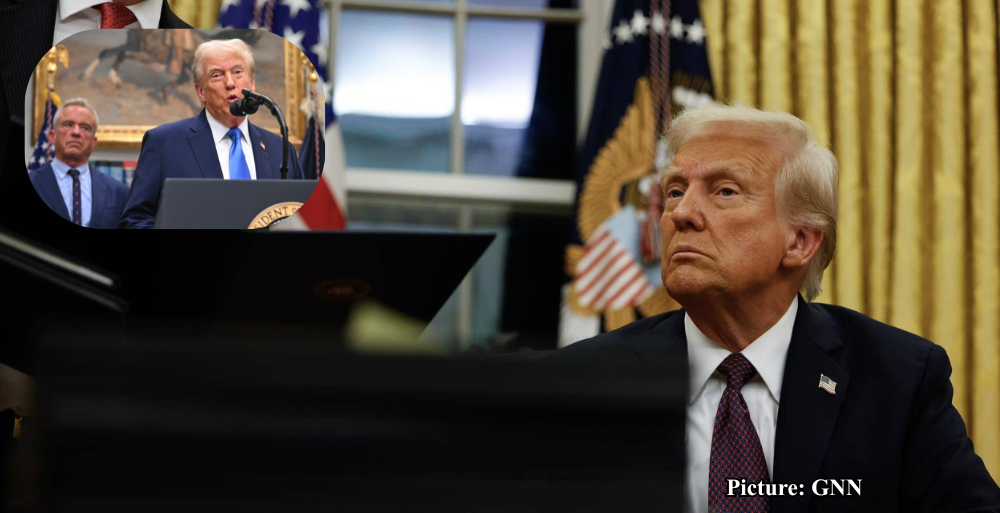
A U.S. judge has definitively dismissed Donald Trump’s defamation lawsuit against the Wall Street Journal concerning a letter allegedly sent to Jeffrey Epstein, concluding a legal dispute that raises significant questions about media accountability and the rights of public figures.
A U.S. District Court judge has dismissed former President Donald Trump’s defamation lawsuit against the Wall Street Journal, concluding a legal challenge that has drawn public attention and highlighted broader issues of media accountability. Judge Darrin P. Gayles issued the ruling on Saturday, stating that the case is dismissed with prejudice. This designation means that Trump cannot amend or refile the lawsuit.
The legal dispute originated from a Wall Street Journal article published on July 17, 2025, which reported that Trump had sent a “bawdy” letter to Jeffrey Epstein for his 50th birthday in 2003. The article included a letter purportedly signed by Trump, igniting controversy and prompting the former president to deny its authenticity, claiming that it had been fabricated.
Details of the Dismissal
Trump’s lawsuit faced an initial dismissal in April 2025, allowing him the opportunity to revise his complaint. However, upon reviewing the amended complaint, Judge Gayles determined that it still did not meet the legal standard of “actual malice.” This standard requires public figures, like Trump, to demonstrate that the allegedly defamatory statements were made with knowledge of their falsity or with reckless disregard for the truth.
In his ruling, Judge Gayles articulated that “as President Trump has not plausibly alleged that each Defendant made defamatory statements with actual malice, the Amended Complaint must be dismissed.” This underscores the rigorous legal threshold public figures must navigate when pursuing defamation claims, particularly in an increasingly polarized media landscape.
Wall Street Journal’s Defense
The Wall Street Journal, along with its parent company Dow Jones, defended its reporting practices, asserting that they adhered to journalistic standards. Representatives from the Journal argued that they had made efforts to contact Trump for his response prior to the article’s publication and that they included his denials within the piece. A spokesperson for Dow Jones expressed satisfaction with the court’s ruling, emphasizing that it validated their commitment to accurate journalism.
Following the dismissal, a spokesperson for Trump’s legal team reiterated their commitment to holding media organizations accountable for what they termed “Fake News,” stating, “President Trump will continue to press forward in his powerhouse lawsuit against the Wall Street Journal and all of the other defendants.” This statement reflects Trump’s broader strategy of leveraging legal action against media entities that he perceives as misrepresenting his actions or character.
Context and Implications
The legal proceedings are particularly noteworthy due to the involvement of Rupert Murdoch, the media tycoon and owner of the Wall Street Journal, who was named among the defendants. Murdoch’s relationship with Trump has been complex; he has been both a supporter and a target of Trump’s criticism. The inclusion of Murdoch in the lawsuit underscores the intertwining of media influence and political power, particularly in the context of Trump’s contentious relationship with the press.
The subject of the letter, Epstein, was a convicted sex offender whose connections to various public figures have raised ongoing ethical questions and concerns regarding accountability. The Wall Street Journal article highlighted how Epstein received a variety of letters from friends in celebration of his birthday, with Trump’s note included among them. Although the Journal did not initially publish an image of the letter, it was later released by the House Oversight Committee in September, providing further public scrutiny of the document.
Broader Impacts on Media and Public Figures
The dismissal of Trump’s lawsuit is emblematic of the ongoing tension between public figures and the media, particularly as it pertains to accusations of defamation. As social media continues to reshape the landscape of public discourse, the implications of this ruling could extend to future defamation cases involving prominent individuals and media outlets. The ruling may serve as a precedent, influencing how similar cases are adjudicated in the future.
Moreover, the case reflects broader societal concerns regarding the accountability of public figures and the role of the media in holding them accountable. In an era where misinformation can spread rapidly, maintaining journalistic integrity while upholding the rights of individuals to protect their reputations remains a contentious issue.
Conclusion
The conclusion of Trump’s lawsuit against the Wall Street Journal signals a significant moment in the ongoing dialogue about the intersection of media practices and public figure defamation. As the legal frameworks governing such cases evolve, the implications of this ruling may resonate throughout the media landscape, shaping future interactions between public figures and the press.



No Comment! Be the first one.