





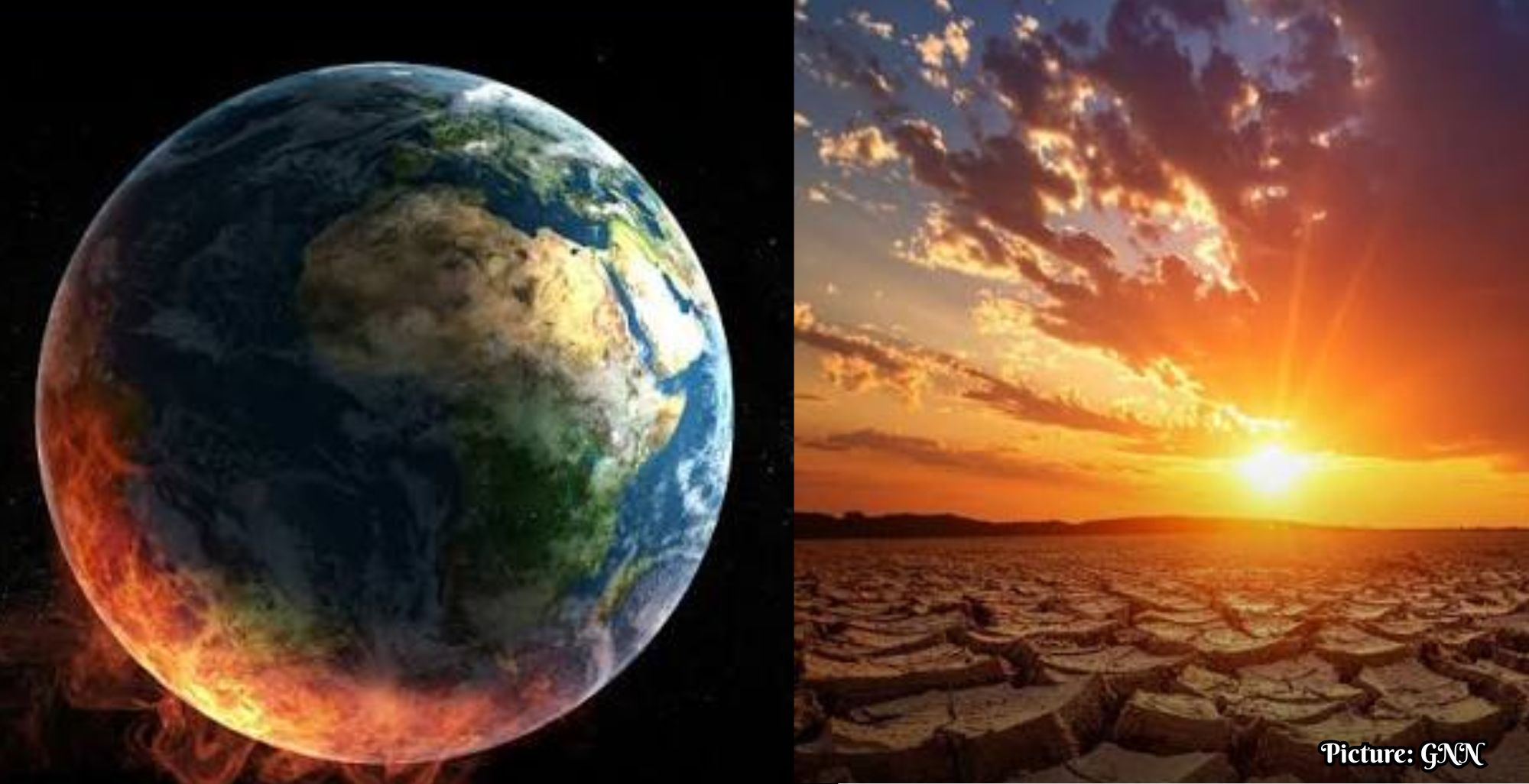
Recent discussions among scientists highlight significant existential threats to humanity, focusing on the Sun’s inevitable evolution and the urgent challenges posed by climate change, exacerbated by human activity.
In a compelling exploration of existential risks, scientists have raised alarms about two critical factors that could threaten the future of humanity: the long-term evolution of the Sun and the pressing implications of climate change. Brian Cox, an esteemed physicist and broadcaster, articulated these concerns in his BBC program “Empire of the Sun,” emphasizing the future trajectory of our solar system and the life it sustains.
The Sun, a near-perfect sphere of blazing plasma at the heart of our solar system, comprises approximately 75% hydrogen and 24% helium. NASA scientists estimate that the Sun is currently halfway through its lifecycle, which spans approximately 10 billion years. At present, it converts about 600 million tonnes of hydrogen into helium every second, a process that transforms four million tonnes of matter into energy, thereby sustaining life on Earth.
The Sun’s Inevitable Transformation
Cox explains that the Sun will remain stable for at least another five billion years. However, this stability is not permanent. Once the Sun exhausts its hydrogen fuel, its core will undergo a catastrophic collapse. “The Sun will swell into a red giant, consuming everything in its path,” Cox cautioned. He elaborated that during this phase, the Sun’s outer layers will expand to a size 200 times greater than its current dimensions, potentially engulfing Mercury and posing a severe threat to Earth.
As the Sun enters this red giant phase, it will momentarily become approximately 2,000 times brighter than it is today. However, this intensity will be short-lived. Eventually, the Sun will shed its outer layers, leaving behind a cooling core. This transformation signifies the conclusion of a roughly 10 billion-year cycle that has provided the energy necessary for life on Earth, ultimately leading to the disappearance of the light and auroras that have illuminated our planet.
Immediate Concerns: Climate Change
While the Sun’s eventual transformation represents a distant threat, Dr. Rolf Schmidt, a researcher at the Invertebrate Palaeontology Melbourne Museum in Australia, warns that humanity faces more immediate dangers stemming from climate change. In his appearance on Amazon Prime’s “The Next Extinction Event,” Schmidt emphasized the urgent risks posed by current climatic trends.
Schmidt highlighted the well-documented correlation between atmospheric carbon dioxide levels and climate change. He noted that while carbon dioxide is not always the initial trigger for climate change, its fluctuations are highly associated with significant climatic transitions. Factors such as massive volcanic eruptions or variations in the Earth’s orbit can also influence temperature changes, leading to rapid shifts in climate.
“If carbon dioxide levels exceed what we refer to as the background extinction rate, we begin to observe clear indicators of mass extinction,” Schmidt warned. He elaborated that the current pace of environmental change may outstrip the ability of many species to adapt, a situation that differs from historical mass extinctions often triggered by singular catastrophic events, such as asteroid impacts.
A Perfect Storm of Environmental Threats
Schmidt underscored the notion of a “perfect storm” of conditions that threaten biodiversity. He remarked, “It’s not solely climate change induced by human activity; we are also contending with deforestation, urban sprawl, and habitat fragmentation. All of these factors hinder species from adapting quickly enough to survive in a rapidly changing environment.”
This perspective illuminates the complex interplay between various environmental factors and their impacts on global biodiversity. As climate change accelerates, combined with other anthropogenic pressures, many species may face insurmountable challenges for survival. The current trajectory indicates that the rate of change may exceed the natural adaptive capabilities of various species.
Policy Implications and Urgent Action
The insights provided by Cox and Schmidt emphasize the pressing need for immediate and robust action to address climate change and its multifaceted effects on biodiversity. The potential for widespread extinction and ecological collapse necessitates a reevaluation of global priorities. As humanity grapples with these dual existential threats, the implications for policy become increasingly clear. Efforts to reduce greenhouse gas emissions, protect habitats, and promote sustainable practices are critical in mitigating the imminent risks posed by climate change.
Moreover, international cooperation and commitment to environmental sustainability are essential to address these challenges effectively. Historical precedents indicate that collective action can yield significant progress in combating environmental degradation. However, the window for effective intervention is narrowing.
Conclusion
While the Sun’s eventual transformation into a red giant remains a concern for future generations, the immediate challenges posed by climate change and human activities are pressing and critical. As experts advocate for increased awareness and action, it is evident that addressing these dual threats is paramount for the preservation of biodiversity and the future of humanity on Earth. The interplay between these long-term and short-term threats underscores the urgency for comprehensive strategies to safeguard our planet.






No Comment! Be the first one.