





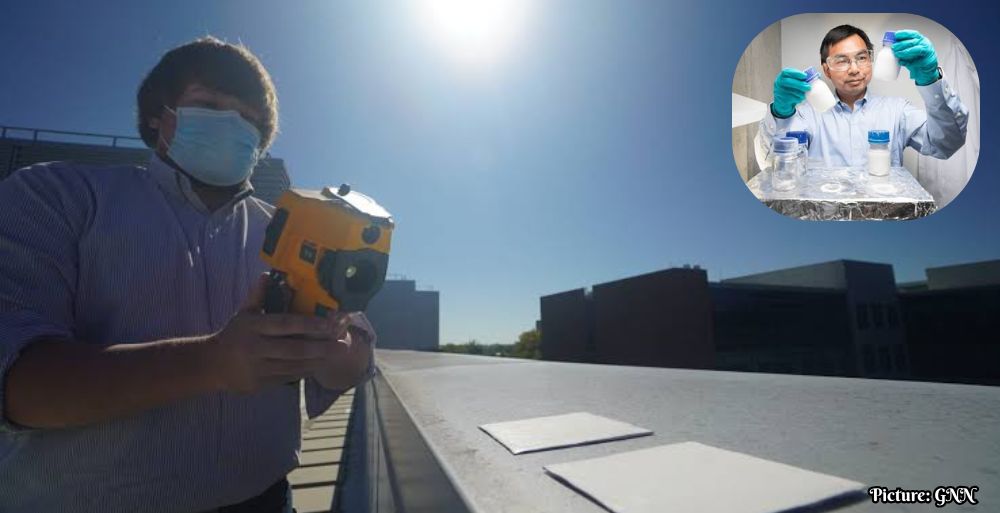
A team of engineers at Purdue University has developed an exceptionally reflective white paint that reflects 98.1% of sunlight, potentially reducing reliance on air conditioning in buildings and addressing rising energy costs and greenhouse gas emissions.
WEST LAFAYETTE, IN — Researchers at Purdue University have unveiled a groundbreaking solution to the growing challenge of building cooling as global temperatures rise and the demand for air conditioning escalates. This innovative paint, which reflects an impressive 98.1% of sunlight, aims to keep buildings cooler while reducing energy consumption and greenhouse gas emissions.
The need for effective cooling solutions has become increasingly urgent as cities experience higher temperatures, leading to an uptick in energy costs associated with air conditioning. While traditional cooling systems provide comfort, they also contribute significantly to electricity consumption and environmental challenges. As a result, scientists are exploring passive cooling methods that work in harmony with natural processes.
Advancements in Reflective Technology
The new paint developed by Purdue engineers is designed to prevent buildings from absorbing heat by reflecting nearly all incoming solar energy. Laboratory tests indicate that this paint surpasses the performance of conventional white exterior paints, which typically reflect between 80% and 90% of sunlight. The team’s previous experimental version of the paint was already notable, but this latest iteration has achieved a significant leap in reflectivity.
The research was published in the journal ACS Applied Materials & Interfaces, showcasing the paint as one of the highest-performing single-layer radiative cooling coatings to date. According to the study, the paint’s exceptional solar reflectance combined with strong infrared emission offers a practical solution for maintaining cooler building surfaces.
The Science Behind the Paint
Creating such a highly reflective paint required more than just adding white pigment. The researchers chose barium sulfate as the primary ingredient after evaluating numerous naturally white substances. Barium sulfate is commonly used in various products, including cosmetics and photographic paper, due to its bright appearance and effective sunlight scattering properties.
Moreover, the researchers optimized the paint’s particle sizes by mixing different diameters together. This strategy allows the paint to effectively reflect a broader spectrum of sunlight, improving overall performance. The team faced challenges in balancing reflectivity with durability, ensuring that the paint remains functional over time without cracking or peeling.
Significant Cooling Effects
Outdoor testing has demonstrated that the paint can significantly reduce surface temperatures compared to conventional coatings. Under direct sunlight, surfaces coated with the new paint remained approximately 4.5°C cooler than the surrounding air. When tested after sunset, the paint showed an even greater cooling effect, with temperatures dropping around 10.5°C below ambient air temperature.
In colder weather conditions, the paint maintained significantly lower surface temperatures, indicating its effectiveness across varying climates. The researchers estimate that covering a roof area of about 1,000 square feet with this paint could provide a cooling effect equivalent to approximately 10 kilowatts, exceeding the cooling capacity of many residential air conditioning systems. However, actual performance will depend on local climate conditions and building design.
A Long Journey to Innovation
The development of this ultra-reflective paint was the result of six years of extensive research and experimentation. The Purdue team evaluated over 100 potential materials before narrowing down their options. Each candidate underwent numerous formulation changes to strike the right balance between optical performance and manufacturability.
Previously, the team had experimented with calcium carbonate, a common material found in rocks and seashells, which demonstrated promising cooling capabilities. However, the switch to barium sulfate allowed for enhanced sunlight reflection while still utilizing a manufacturing process compatible with commercial paint production.
Real-World Applications and Future Potential
The researchers designed this paint with practical applications in mind. The formulation can be produced using existing techniques familiar to the paint industry, enhancing the likelihood of commercial development. Preliminary tests suggest that the paint can endure outdoor exposure comparable to traditional architectural paints.
Purdue University has filed patent applications for the innovative formulation through its technology commercialization office, indicating a commitment to bringing this product to market.
This passive cooling technology could play a crucial role in reducing energy demand for various types of buildings, including homes, offices, and warehouses, particularly in regions with hot climates. Although this paint may not entirely replace air conditioning systems—especially during extreme heat or high humidity periods—it offers a promising alternative to decrease overall mechanical cooling requirements.




No Comment! Be the first one.