





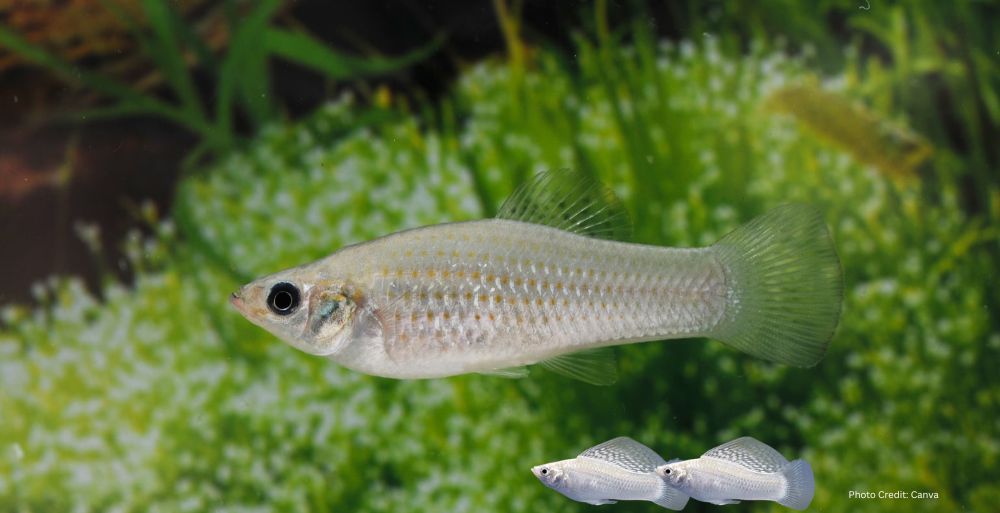
The Amazon molly, a unique fish species that reproduces without males, has survived for approximately 100,000 years, challenging established theories about asexual reproduction and genetic health.
In the rivers of Mexico and southern Texas, the Amazon molly, a small fish species, thrives in an environment where it should not exist, according to conventional evolutionary theories. This all-female species reproduces through a process known as gynogenesis, wherein it uses male sperm solely to trigger the development of its eggs, discarding the male’s DNA and producing only female offspring. This biological phenomenon has raised questions among scientists about how the Amazon molly has persisted for around 100,000 years, despite the prevailing belief that asexual species are inherently at risk of extinction due to genetic decay.
The Challenge of Asexual Reproduction
Traditionally, evolutionary theory posits that sexual reproduction offers significant advantages, primarily through genetic diversity and the elimination of harmful mutations. Edward Ricemeyer, a computational biologist at Ludwig Maximilian University of Munich and co-author of a recent study on the Amazon molly, notes that sexual reproduction, while costly and complex, allows for the mixing and shuffling of genes. This genetic recombination enhances the survival potential of a species by creating a diverse genetic pool.
Conversely, asexual reproduction may seem advantageous as it allows for the direct passing of all genetic material to offspring. However, asexual species are often thought to accumulate harmful mutations over time, leading to a gradual decline in genetic health—a concept known as Muller’s ratchet. According to Dave Speijer, an evolutionary biologist at the University of Amsterdam, the overwhelming majority of life—99.9%—relies on sexual reproduction. Yet, the Amazon molly’s long-term survival prompts a reevaluation of this understanding.
Rethinking Genetic Longevity
Researchers have begun to explore how certain asexual species, like the Amazon molly, manage to defy these evolutionary expectations. Speijer suggests that the absence of sexual reproduction does not necessarily equate to an inevitable decline. Instead, these species may employ alternative strategies to mitigate the risks associated with genetic inheritance. A notable example is the bdelloid rotifer, another all-female species that has thrived without males for tens of millions of years, raising similar questions about their mechanisms for survival.
Recent studies on the Amazon molly have revealed that gene conversion—a form of genetic repair—plays a crucial role in its ability to sustain genetic health. Gene conversion allows for the correction of DNA damage by utilizing one copy of a gene as a template to repair another, effectively functioning as a “copy-and-paste” system. This process appears to be more active in the Amazon molly than in many sexual species, thus helping to limit the accumulation of deleterious mutations.
Genetic Insights and Implications
Ricemeyer and his team conducted whole-genome sequencing of the Amazon molly across generations, observing that specific regions of its DNA were frequently “overwritten” through gene conversion. This finding highlights a potential mechanism for maintaining genetic integrity in the absence of sexual reproduction. The Amazon molly’s genetic lineage can be traced back to a hybridization event approximately 100,000 years ago, when a female Atlantic molly mated with a male sailfin molly. This hybridization provided the Amazon molly with a diverse genetic background, thus enhancing its ability to cope with genetic mutations.
Interestingly, the gene conversion appears to target the most harmful mutations within the genome, indicating a sophisticated level of genetic maintenance. Ricemeyer states, “The kinds of mutations that you expect to be the worst, the most dangerous, the most deleterious, those are the exact places in the genome where we see gene conversion happening the most often.”
Broader Implications for Biology
The implications of these findings extend beyond the Amazon molly and into the realm of human biology. Understanding how this and similar species manage genetic errors could provide insights into the mechanisms of mutation in all organisms, including humans. As Ricemeyer notes, “Cancer is a disease of mutations,” and any advancements in understanding genetic mutation strategies could hold significant long-term benefits for medical research.
While the Amazon molly challenges long-held beliefs about asexual reproduction, researchers continue to investigate whether this species has indeed developed a stable alternative to the genetic advantages of sexual reproduction. The question remains open as to how long gene conversion can effectively counteract Muller’s ratchet and whether similar mechanisms are at play in other asexually reproducing organisms.
The Amazon molly serves as a remarkable case study, illustrating that nature may offer multiple routes to resilience and survival, even in the absence of sexual reproduction.






No Comment! Be the first one.