




Nvidia Claims New AI Cooling Technology Could Alleviate Data Center Water Use Challenges

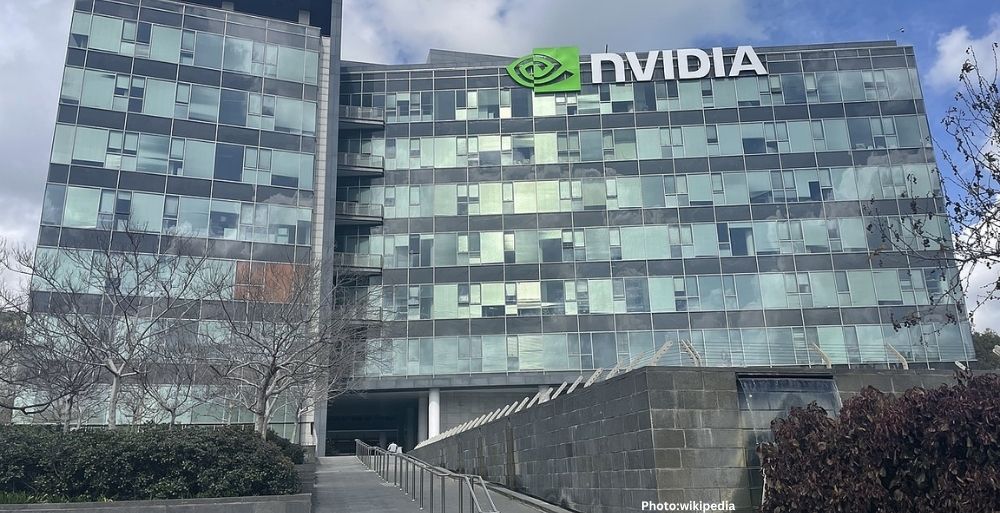
A top Nvidia executive asserts that the company’s next-generation AI infrastructure can largely mitigate water consumption challenges associated with data centers, a significant claim amid rising scrutiny of the environmental impacts from tech giants.
Nvidia, a leading company in the semiconductor industry, announced on Monday during London Climate Week that its latest artificial intelligence (AI) system has the capability to be fully cooled using a liquid at temperatures that significantly reduce reliance on traditional cooling methods. This development comes at a crucial time when data centers are increasingly under scrutiny for their energy and water consumption, particularly as the demand for AI technology surges.
Josh Parker, Nvidia’s Chief Sustainability Officer, stated in an interview prior to the event, “The water consumption challenge for data centers is largely solved.” This assertion underscores Nvidia’s confidence in its technological advancements, which are designed to directly address environmental concerns raised by local communities and regulatory bodies across the globe.
Context of the Announcement
The announcement follows a period of heightened criticism directed at major tech companies, including Google and Amazon, regarding their water usage practices in data centers. These companies have faced local opposition as communities express concern over the environmental impact of AI infrastructure growth. In this context, Nvidia’s claim represents a significant step in a broader industry effort to present data centers as more environmentally responsible.
Nvidia’s new cooling system utilizes a recirculated liquid mixture containing both water and propylene glycol—a substance often used in automotive antifreeze—capable of operating at temperatures as high as 113 degrees Fahrenheit. This characteristic allows for a reduction or even elimination of traditional chilling equipment, which typically consumes large amounts of energy and water. According to Steve Solomon, Microsoft’s Vice President of Data Center Engineering, this advancement could potentially remove the need for mechanical chillers in many climates, including arid regions like Arizona.
Implications for the Industry
While Nvidia’s cooling technology could significantly reduce the amount of water used in data center operations, experts caution that this does not entirely eliminate water-related concerns. Many existing data centers will continue to rely on older cooling technologies for the foreseeable future. Nvidia has not disclosed specific costs associated with its new systems, and the pace of adoption may hinge on financial incentives for operators of facilities designed to accommodate fully liquid-cooled AI infrastructure. Nevertheless, Nvidia asserts that its technology will ultimately result in cost savings for data center operators.
It is also important to consider that water use within data centers represents only one facet of a larger discussion about the environmental footprint of AI technology. The electricity required to power these data centers can also entail substantial water consumption, particularly depending on the source of that electricity. For instance, power generation methods like coal and natural gas may require significant water quantities for cooling processes, which exacerbates water stress in regions where resources are already limited.
Future Prospects and Challenges
Nvidia’s innovative technology is positioned to enhance the efficiency of AI computing units, but the company acknowledges that these improvements are intended to facilitate further growth rather than reduce overall demand. Parker remarked in a blog post, “AI workloads are not getting lighter.” He emphasized that without enhancements in efficiency, the energy required for AI operations would continue to escalate in line with rising demand.
As Nvidia’s technology enters the market, it remains to be seen how effectively it can balance the dual objectives of reducing water and energy consumption while supporting the ongoing expansion of AI infrastructure. The potential for efficiency gains to decrease the resources needed for each AI system is promising, yet these same advancements could inadvertently accelerate the growth of AI infrastructure, leading to an increased overall environmental footprint.
Furthermore, while Nvidia’s cooling system may represent a significant step forward, the broader implications for sustainability in the tech industry remain complex. The adoption of these new cooling methods will require substantial investment and time, as many data centers are built on older infrastructure that may not easily accommodate these advancements. The transition to new technologies is often slow, and many facilities may not have the financial capacity to implement such changes swiftly.
The conversation surrounding data center sustainability, particularly in the context of AI, is ongoing. As companies navigate the complexities of technological advancement and environmental stewardship, Nvidia’s latest claims will likely serve as a focal point for discussions about the future of data infrastructure and its impact on the planet. Industry stakeholders, including policymakers and environmental advocates, will be closely monitoring how these developments unfold and whether they lead to tangible improvements in sustainable practices.
As the AI sector continues to expand, the pressure to innovate sustainably will intensify. Nvidia’s announcements may set a precedent for other tech companies, compelling them to invest in similar technologies that address environmental concerns. The outcome of these efforts will be pivotal in shaping the future of AI and its compatibility with environmental sustainability.






No Comment! Be the first one.