





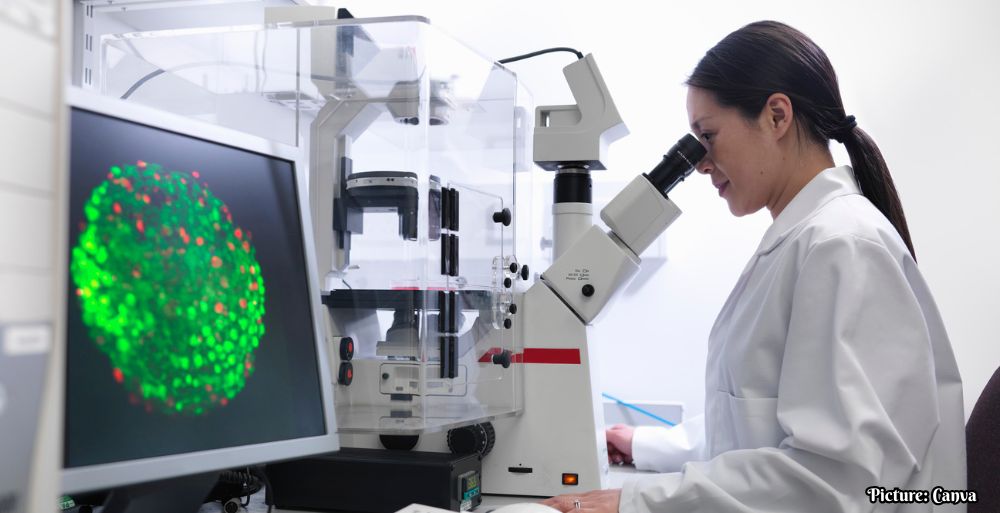
A recent study from the Perelman School of Medicine at the University of Pennsylvania reveals that the TRF2 protein, known for protecting chromosome ends, is crucial for maintaining muscle stem cell functionality and facilitating tissue regeneration, with potential implications for muscular dystrophy and cancer biology.
The Perelman School of Medicine at the University of Pennsylvania has published a significant study in the journal Science Advances, which highlights a dual role for the TRF2 protein. While traditionally recognized for its function in safeguarding chromosome ends, the research indicates that TRF2 is also vital for the activity and regeneration of muscle stem cells. This discovery opens new avenues for research related to muscular dystrophy and offers insights into cancer biology.
Understanding the Role of TRF2
Historically, TRF2 has been studied primarily for its function at telomeres—protective DNA structures at the ends of chromosomes that prevent chromosomal degradation and misidentification by cellular repair mechanisms. However, the new findings suggest that TRF2’s role extends beyond mere chromosomal protection; it is integral to the regeneration of muscle tissue throughout an individual’s life.
Dr. Foteini Mourkioti, the senior author of the study and an associate professor of Orthopedic Surgery at Penn Medicine, stated, “For years, TRF2 has been viewed as a protein whose primary job is protecting the ends of chromosomes from damage or corruption. But rather than simply protecting DNA, TRF2 seems to be key to regenerating muscle throughout life.” This statement underscores the evolving understanding of how TRF2 contributes to cellular health and repair mechanisms.
Experimental Insights into TRF2 Functionality
The research team undertook a series of laboratory experiments to analyze the role of TRF2 in muscle stem cells. They observed that TRF2 levels exhibit a carefully coordinated fluctuation as muscle stem cells transition through various states: dormancy, tissue repair, and self-renewal. These fluctuations suggest that TRF2 is pivotal in orchestrating the regenerative processes necessary for muscle recovery.
In a critical phase of the study, researchers genetically modified laboratory mice to remove TRF2 from their muscle stem cells. Initially, the muscle tissues of the animals appeared normal. However, over time, the number of functioning muscle stem cells diminished. Contrary to expectations that the cells would perish, the absence of TRF2 led to a loss of the unique molecular characteristics essential for muscle stem cell functionality.
This loss of identity had dire consequences. Following injuries, instead of regenerating healthy muscle, the damaged areas were replaced by fat and scar tissue. Dr. Mourkioti remarked, “This completely changes how we think about TRF2’s role in these cells. The loss of identity has severe implications for whether recovery from injury is even possible.” These findings emphasize the importance of TRF2 in muscle cell identity and regeneration.
Implications for Duchenne Muscular Dystrophy
The study also explored the implications of TRF2 in a mouse model of Duchenne muscular dystrophy (DMD), a severe genetic disorder characterized by progressive muscle degeneration. When TRF2 was absent from muscle stem cells in these models, researchers noted a marked acceleration in disease progression, with more pronounced muscle deterioration and significantly reduced lifespans for the affected mice.
Further investigations revealed that TRF2 not only functions at the ends of chromosomes but also interacts with regulatory regions throughout the genome that are essential for maintaining muscle stem cell identity. Many of these regions contain G-quadruplexes, secondary DNA structures currently being studied for their potential as targets for cancer therapies. Dr. Mourkioti elaborated, “We found that TRF2 works through these secondary DNA structures to preserve the identity of muscle stem cells and keep them capable of repairing damaged muscle.” This unexpected role of TRF2 could have significant implications for future therapeutic strategies.
Exploring the Connection Between Muscle Regeneration and Cancer
The findings from this study elucidate a biological mechanism that enables muscle stem cells to retain their regenerative properties. Moreover, the influence of this mechanism on the progression of Duchenne muscular dystrophy suggests a potential link between muscle regeneration and cancer biology. Despite skeletal muscle’s remarkable regenerative capacity, cancers originating in muscle tissue are relatively rare, prompting researchers to investigate how TRF2’s distinct functions may mitigate cancer risks.
Understanding how muscle stem cells utilize TRF2 differently from other cell types could lead to innovative approaches for stimulating tissue repair while minimizing the risk of cancerous growths. The research team, led by Dr. Mourkioti, is now focused on determining whether the unique role of TRF2 can pave the way for new therapeutic strategies for muscular dystrophy and provide further insights into cancer biology in tissues more susceptible to malignancies.
This research was supported by several grants from the National Institutes of Health, including R01 DK123356, R01s CA174904, GM101149, and FDN-143330. The findings underscore the critical need for continued research into the multifaceted roles of proteins like TRF2 in cellular health, disease progression, and potential therapeutic avenues.





No Comment! Be the first one.