





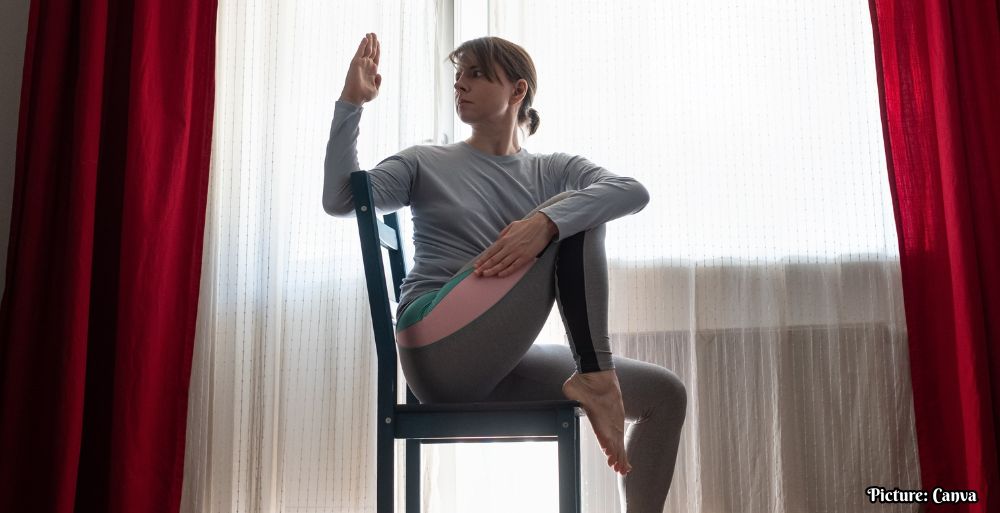
As individuals age, maintaining balance becomes increasingly vital for overall health and functional independence. Chair-based exercises offer a practical approach for seniors to improve balance while minimizing the risk of falls.
As people age, the ability to maintain balance becomes crucial for preventing falls and ensuring overall independence. According to health experts, integrating balance training into daily routines is essential for seniors, particularly those over the age of 65. Portia Page, a Balanced Body Educator and Nationally Certified Pilates Teacher (NCPT), emphasizes that balance training should be a priority in workout regimens for older adults. She explains that one does not need specialized equipment or classes to achieve significant improvements in balance; instead, simple chair exercises can yield substantial benefits.
“One of the biggest advantages of chair-based balance training is that the chair provides security without removing the opportunity to challenge the body. For someone who is afraid of falling, has already experienced a fall, is deconditioned, or simply doesn’t feel confident balancing unsupported, asking them to immediately stand on one leg can create more fear than benefit,” Page notes. The fear of falling can lead to a cycle of inactivity, which further diminishes balance and strength, making chair exercises a valuable tool for combating these fears.
Understanding Balance and Its Components
Page highlights that balance is not a singular ability but rather a complex interplay of several systems in the body. These systems include the vestibular system, which governs spatial orientation; the visual system, which helps interpret visual cues; and the somatosensory system, which provides information about body position. Effective balance relies on adequate mobility, strength, coordination, confidence, and reaction time.
“Chair exercises can address several of those components while reducing the immediate fear of losing balance,” she adds. Progression is also a key advantage of chair exercises, allowing individuals to gradually increase their challenge level. Page suggests that a typical progression might start with individuals seated, then gradually moving to standing with support, and finally engaging in more complex standing exercises.
The Importance of Balance Training
Research indicates that falls are one of the leading causes of injury among older adults, with the Centers for Disease Control and Prevention (CDC) reporting that falls led to over 34,000 deaths in the United States in 2019 alone. As individuals age, their risk of falling increases due to various factors, including decreased muscle strength, poor vision, and medical conditions that affect balance. Consequently, developing effective balance skills is not only beneficial but essential for maintaining quality of life.
Furthermore, balance training can significantly enhance physical function and reduce the risk of falls. A study published in the Journal of Aging and Physical Activity found that balance exercises effectively lowered the incidence of falls among seniors, highlighting the importance of incorporating such exercises into their routine.
Five Effective Chair Exercises
Here are five chair exercises recommended by Page that can significantly enhance balance for seniors:
Sit-to-Stand
This exercise strengthens the hips, glutes, thighs, and core, which are essential for daily activities. To perform:
- Begin seated at the front of a sturdy chair with your feet planted firmly on the ground.
- Lean forward slightly.
- Try to stand up without using your hands or any additional support (if needed, you can use your hands on the chair).
- Control your descent back to the sitting position.
Aim for 2 to 3 sets of 8 to 12 repetitions. This exercise mimics the everyday action of getting up from a chair, reinforcing the functional independence that seniors strive to maintain.
Seated Marching
This exercise challenges trunk stability and coordination while mimicking the action of walking. To perform:
- Start seated with your feet hip-width apart.
- Engage your core and lift one knee to hip height.
- Hold briefly, then lower and repeat with the other knee.
Complete 2 to 3 sets of 10 to 20 alternating marches. This movement not only strengthens the legs but also improves the coordination necessary for walking.
Seated Heel-to-Toe Raises
This exercise focuses on strengthening the ankles and calves, which play a critical role in balance. To perform:
- Sit tall with feet hip-width apart.
- Shift back onto your heels, lifting your toes off the ground, then pause.
- Shift forward onto the balls of your feet, lifting your heels.
Try 10 to 15 repetitions of each movement, incorporating variations for added difficulty. This exercise enhances proprioception, which is the body’s ability to sense its position in space—a fundamental aspect of balance.
Seated Weight Shifts and Reaches
This exercise promotes the ability to shift weight safely. To perform:
- Begin seated with feet on the floor.
- Shift your weight toward one side, then return to center.
- Repeat on the opposite side, and progress by reaching with one arm in various directions.
Perform 5 to 8 controlled reaches on each side. This exercise simulates various daily movements, such as reaching for objects, fostering greater body awareness and control.
Supported Standing Weight Shift to Single-Leg Balance
This exercise bridges seated and unsupported standing balance work. To perform:
- Stand behind a sturdy chair, holding the back for support.
- Shift your weight onto one leg, lightly lifting the opposite foot.
- Hold briefly before switching sides.
Complete 5 to 10 repetitions per side, gradually reducing support as balance improves. This exercise builds the leg strength and balance needed for everyday activities like walking and climbing stairs.
Conclusion
Incorporating these chair exercises into a regular routine can significantly enhance balance and reduce the fear of falling among seniors. Page advocates for the inclusion of such exercises as part of a comprehensive fitness program, which may also include other forms of physical activity like yoga to create a well-rounded approach to wellness. Given the rising concerns about falls among older adults, these chair exercises serve as an accessible and effective means of improving balance, ultimately helping seniors maintain their independence and quality of life.



No Comment! Be the first one.