





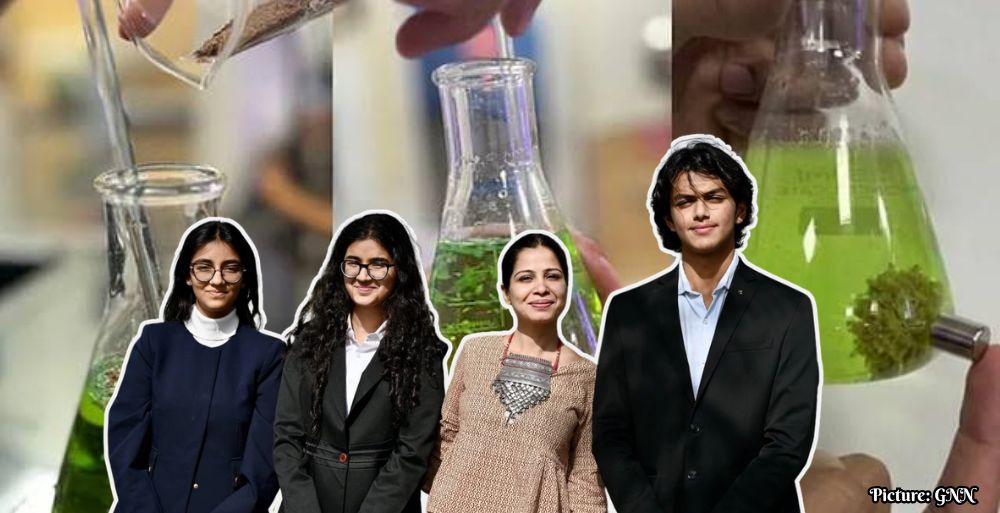
Three teenagers from India have developed Plas-Stick, a biodegradable powder made from tamarind seeds, which effectively cleans microplastics from water, earning them a global environmental award.
In a significant achievement for youth-led environmental innovation, three 16-year-olds from India have won a prestigious global award for their invention, Plas-Stick. This novel, eco-friendly water-cleaning powder, made from tamarind seeds—a common agricultural byproduct—has the potential to help communities tackle the pervasive issue of microplastic pollution in water sources.
The recognition came after a competitive voting process held on May 29, where approximately 23,000 ballots were cast to select regional champions. The team, consisting of Vivaan Chhawchharia, Ariana Agarwal, and Avyana Mehta, became the first from India to claim The Earth Prize’s global top honor, which emphasizes the importance of youth-led initiatives in addressing environmental challenges.
Understanding Plas-Stick
Plas-Stick operates by being introduced into contaminated water, where it binds with microplastics to form clumps that can be easily removed using a handheld magnet. This innovative solution eliminates the need for complex filtration systems or electricity, making it particularly useful in regions with limited access to advanced water treatment technologies.
The inspiration for this project stemmed from the students’ visits to rural communities where families often kept drinking water in shared plastic containers. Observing the widespread issue of microplastic contamination, they aimed to create a simple yet effective product to address this problem in resource-limited settings.
Recognition and Funding
The journey of Plas-Stick began when the trio secured victory in the Asia category of The Earth Prize, which provided them with $12,500 to further develop their invention. Their success culminated in winning the global award, which features a total funding pool of $100,000 distributed among young innovators aged 13 to 19. The Earth Prize serves as a platform to promote environmental solutions conceived by the youth, highlighting their potential to drive change.
The Significance of Microplastic Pollution
Microplastics—small plastic fragments or fibers that result from the breakdown of larger plastic items—pose severe health and environmental risks. According to the World Health Organization (WHO) and UNICEF, around 2.1 billion people lack access to safely managed drinking water, a situation exacerbated by the presence of microplastics in various regions. While Plas-Stick specifically targets the removal of microplastics, it does not address other water contaminants such as bacteria, viruses, or heavy metals. Experts caution that this invention should complement existing water treatment methods rather than serve as a standalone solution.
Community Outreach and Educational Impact
The students have taken proactive steps to share their invention with a broader audience, conducting workshops and demonstrations that have reached over 8,000 students and educators. Under the guidance of Dr. Rajesh Khandelwal, who has advised the team during the testing and refinement processes, the project has progressed toward real-world application. Their outreach efforts emphasize the importance of educating communities about microplastic pollution and the potential for sustainable solutions.
Future Plans and Local Production
Looking ahead, the team intends to establish decentralized production hubs, particularly in rural areas across India. This strategy aims to reduce transportation needs, transform agricultural waste into valuable products, and create sustainable local supply chains. Such an approach could significantly contribute to both environmental sustainability and economic resilience in these communities.
Challenges and Considerations
Despite their commendable achievements, further validation is necessary before Plas-Stick can be considered a reliable household solution. Current public information regarding the product lacks detailed independent testing results, including specific removal rates, the sizes of particles captured, and whether any residues remain in the water after treatment. Without this information, the efficacy of Plas-Stick remains somewhat uncertain.
Moreover, while innovations like Plas-Stick represent a significant step toward addressing plastic pollution, experts advocate for a multifaceted approach to combat environmental degradation. Reducing plastic usage through alternatives, such as reusable containers, remains vital in addressing the root causes of pollution.
Looking Forward
The students expressed their hope that their recognition will facilitate the further scaling of Plas-Stick, with Peter McGarry, founder of The Earth Foundation, praising the project as “scientifically grounded, environmentally responsible, and accessible.” As the global community continues to face increasing environmental challenges, initiatives like Plas-Stick highlight the potential of youth-led innovation in creating impactful solutions for a sustainable future.
In conclusion, the development of Plas-Stick by these young innovators not only addresses a pressing environmental issue but also underscores the role of youth in shaping sustainable practices. Their journey reflects a growing recognition of the importance of grassroots solutions to global challenges, reinforcing the idea that innovation can emerge from even the most unexpected places.





No Comment! Be the first one.