




Public Health and Technological Breakthroughs Revolutionize Treatments for Sensorineural and Conductive Hearing Loss


Rapid advancements in medical technology, surgical devices, and biopharmaceuticals are transforming the landscape of auditory care for millions of individuals suffering from conductive, sensorineural, and mixed hearing loss. From digital signal processing in removable hearing aids and direct-drive middle ear implants to landmark, fully funded gene therapies like lunsotogene parvec-cwha (Otarmeni), patients now have access to targeted interventions designed for specific anatomical deficits. Public health officials and clinical audiologists emphasize that selecting the appropriate therapeutic approach requires comprehensive diagnostic evaluation, balancing acoustic amplification against surgical invasiveness, cost, and underlying genetic etiology.
WASHINGTON — Across the United States and globally, hearing loss remains one of the most widespread chronic health conditions, impacting interpersonal communication, workplace productivity, and long-term cognitive health. However, recent breakthroughs in medical engineering and genomic medicine have initiated a paradigm shift in how clinical audiologists and otolaryngologists manage auditory impairment.
Rather than relying on one-size-fits-all amplification, contemporary treatment protocols are precisely calibrated to the specific physiological mechanism and location of a patient’s hearing deficit. Clinical interventions now span a spectrum ranging from accessible, highly customizable digital removable hearing aids to sophisticated middle ear implants, bone-anchored skull-conduction systems, cochlear prosthetics, and disease-modifying gene therapies that address root molecular causes.
Removable Acoustic Amplification: Analog vs. Digital Architecture
For the vast majority of patients presenting with mild to severe hearing loss, removable hearing aids serve as the primary line of non-invasive treatment. These devices function by capturing ambient acoustic waves, amplifying specific sound frequencies, and directing enhanced signals toward the tympanic membrane and inner ear structures.
Acoustic technologies are broadly divided into two architectural classes:
- Analog Hearing Aids: Analog systems convert incoming sound waves into continuous electrical signals, which are subsequently amplified and routed into the ear canal. Operating similarly to a traditional microphone connected to an audio amplifier, analog devices can be pre-programmed by clinicians with distinct settings for varying environments, such as quiet indoor rooms or noisy public venues. While offering a cost-effective solution, analog devices amplify all incoming sounds uniformly across the frequency spectrum.
- Digital Hearing Aids: Digital devices convert acoustic sound waves into binary mathematical code before processing. This digitized code can be algorithmically manipulated to amplify only the exact frequencies where a patient exhibits documented decibel loss, effectively filtering out ambient background noise and managing acoustic feedback. While digital architectures command higher retail prices, they provide superior signal processing, environmental adaptivity, and customized acoustic profiling.
Form factor selection dictates both acoustic performance and user ergonomics:
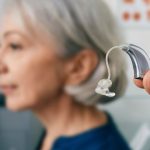
- Behind-the-Ear (BTE): Best suited for mild to severe hearing loss, BTE devices house processing electronics in a durable plastic case resting behind the auricle, routing sound through an ear mold inserted into the outer ear. Their larger physical profile allows for larger batteries and robust amplification circuitry.
- Open-Fit Devices: Placed behind the ear, these models relay amplified sound through a micro-tubing line into the ear canal. By leaving the ear canal largely unobstructed, open-fit devices eliminate the occlusion effect (a hollow or “plugged-up” perception of the user’s own voice), reduce earwax accumulation damage, and offer a discreet aesthetic.
- In-the-Ear (ITE): Custom-molded to fit entirely within the outer ear bowl, ITE devices assist mild to severe hearing loss. Many ITE units incorporate a telecoil—a small magnetic induction coil that interfaces directly with telephone receivers and public induction sound loops installed in auditoriums, places of worship, transit hubs, and classrooms. Due to continuous ear growth, ITE models are generally not recommended for young pediatric patients.
- In-Canal (ITC / CIC): Engineered for mild to moderately severe hearing loss, in-canal models reside within the ear canal, making them nearly invisible to observers. However, their miniature footprint limits battery longevity, precludes telecoil integration, and presents dexterity challenges for elderly patients adjusting volume controls.
Surgical Interventions: Middle Ear and Bone-Anchored Technologies
When removable acoustic aids fail to deliver sufficient speech clarity, or when structural anomalies prevent their use, surgical options provide alternative pathways for sound transmission.
Middle ear implants represent a significant technological advance for individuals with moderate-to-severe sensorineural hearing loss. During surgery, a specialist attaches a miniature mechanical transducer directly to one of the ossicular bones (the malleus, incus, or stapes) in the middle ear cavity. Rather than simply boosting acoustic air pressure in the canal, the device directly drives the ossicles, delivering clean mechanical vibrations to the inner ear. Because the canal remains completely open, these devices eliminate acoustic feedback and can remain worn during aquatic activities, depending on the specific model.
For patients suffering from conductive hearing loss, chronic middle ear infections, ear canal atresia (malformed canals), or single-sided deafness, bone-anchored hearing systems offer a proven biological workaround. These devices utilize direct bone conduction: an externally worn sound processor captures environment audio and converts it into mechanical vibrations sent through a titanium implant integrated into the cranial bone behind the ear. The skull directly conducts these acoustic vibrations to the functioning inner ear cochlea, bypassing the outer and middle ear structures entirely.
For adults with profound sensorineural deafness and pediatric patients born with severe inner ear hair cell damage, cochlear implants represent the gold standard of restorative technology. Unlike standard hearing aids that merely amplify sound, cochlear implants bypass non-functioning cochlear hair cells altogether.
An external sound processor worn behind the ear captures acoustic signals and transmits them across the skin via radiofrequency to an internal receiver. The receiver then signals an array of delicate micro-electrodes surgically inserted into the cochlea, directly stimulating the spiral ganglion cells of the auditory nerve. While patients require post-operative auditory rehabilitation to train the brain to interpret these direct electrical signals, cochlear implants reliably restore environmental awareness and foundational language acquisition in deaf children.
Genomic Medicine: Etiology-Targeted Gene Therapy
The frontier of otolaryngology expanded dramatically with the advent of targeted biopharmaceuticals capable of treating the root biological causes of genetic sensorineural hearing loss. A prime example is lunsotogene parvec-cwha (marketed commercially as Otarmeni), a prescription gene therapy approved for pediatric and adult patients suffering from severe-to-profound hearing loss caused by biallelic mutations in the OTOF gene.
The OTOF gene encodes the protein otoferlin, which is essential for synaptic vesicle exocytosis in inner hair cells—the precise chemical mechanism that enables sensory hair cells to transmit electrical signals to the auditory nerve. Prior to the clinical authorization of lunsotogene parvec-cwha, patients with OTOF-related deafness had no disease-modifying medical options available, relying solely on acoustic amplification (which offers minimal benefit given the synaptic disconnect) or invasive cochlear implant surgery.
In a major public health milestone, biotechnology firm Regeneron announced in July 2026 that it would provide lunsotogene parvec-cwha at no financial cost to eligible patients across the United States. Delivered via a precise intra-cochlear micro-injection, the adeno-associated viral vector delivers a functional copy of the human OTOF gene directly into target inner hair cells, enabling native otoferlin protein synthesis and restoring functional auditory signal transmission without permanent external hardware.
“We are witnessing a historical transition in otology from purely mechanical compensation to genuine biological restoration,” noted Dr. Aris Thorne, a researcher in molecular otolaryngology. “By repairing genetic cellular mechanisms at the molecular level while simultaneously refining digital prosthetic hardware, the medical community is moving closer to eradicating irreversible profound deafness.”
With multiple additional gene therapy candidates currently undergoing advanced phase clinical trials, public health experts emphasize that early screening, genetic testing, and timely otolaryngological consultation remain vital to matching patients with the most effective, life-changing auditory treatments.





No Comment! Be the first one.