




Trump Orders 9,000 Additional Troops to Middle East as Escalation Warnings Threaten Post-Midterm Strategy

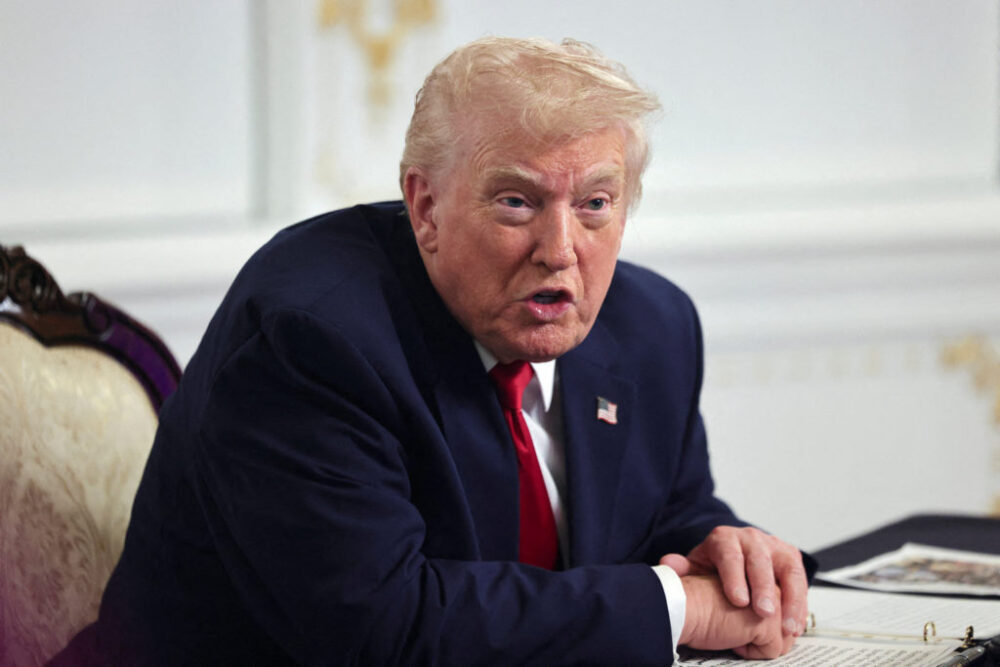
The United States military is deploying approximately 9,000 additional personnel alongside a carrier strike group and an amphibious readiness group to the Middle East. The strategic buildup elevates the total U.S. naval footprint in the region to more than 20,000 sailors and Marines, signaling a potential expansion of military operations following the upcoming congressional midterm elections. As President Donald Trump threatens a renewed air campaign against Iranian targets and investigates alleged asymmetric state links to recent international security incidents, lawmakers and foreign policy analysts are raising concerns regarding the campaign’s evolving scope, its broader geopolitical ramifications, and its potential impact on domestic political stability.
Expanded Naval Deployment Signals Prolonged Regional Conflict
WASHINGTON — The Department of Defense has initiated the movement of roughly 9,000 military personnel aboard a specialized naval task force destined for the Middle East, a senior U.S. defense official confirmed on Thursday. The reinforcement fleet includes the nuclear-powered aircraft carrier USS Theodore Roosevelt, operating alongside the guided-missile cruiser USS Chosin, as well as the USS Makin Island amphibious readiness group, which incorporates the landing platform docks USS John P. Murtha and USS Anchorage.
The arrival of these capital assets by late October will temporarily assemble a three-carrier strike footprint in regional waters, joining the USS George H.W. Bush and the USS George Washington, both currently deployed in the Arabian Sea alongside the USS Boxer amphibious readiness group. Defense analysts note that while task force overlaps occur periodically during operational handoffs—specifically as the Theodore Roosevelt prepares to relieve the George Washington, which was diverted to replace the extended tour of the USS Abraham Lincoln—the combined presence pushes total U.S. naval personnel in the region past 20,000 service members alongside hundreds of land and carrier-based combat aircraft. This concentration mirrors force levels not witnessed since early 2003, highlighting an escalating military commitment.
Speaking to reporters outside the West Wing of the White House, President Donald Trump underscored that military option sets remain active. When queried on whether the administration was preparing a major post-election aerial offensive against Iranian infrastructure, the President offered a direct assessment of ongoing planning. “Oh, they’ll be hit very hard, don’t worry,” Trump remarked, addressing reporters in an informal press briefing. “You just ask them. They know what happened. They’ll be hit very hard.”
Investigating Asymmetric Threats and Aviation Security Incidents
The posture shift coincides with active intelligence investigations into potential asymmetric operations linked to Iranian security services. Administration officials are currently reviewing data regarding an in-flight security crisis aboard a FlyDubai passenger aircraft traveling from the United Arab Emirates to Tel Aviv, Israel. According to flight records and emergency telemetry, the flight’s co-pilot stabbed the commanding captain mid-flight in an attempt to breach the flight deck control systems and force the Boeing 737 aircraft into a dive before being subdued by crew and passengers.
When asked directly whether federal intelligence agencies had established definitive links connecting the co-pilot to operational directors in Tehran, President Trump stated that initial findings suggest a connection, though formal verification remains ongoing.
“I would say the answer, based on what I’m hearing, is ‘yes,’ but we’re working on it right now,” Trump stated, refraining from detailing specific intelligence streams while reaffirming that established state sponsorship would trigger direct military retaliation.
In a parallel interview, Israeli Prime Minister Benjamin Netanyahu cautioned that while forensic analyses indicate the suspect had undergone “radical indoctrination,” investigators are still establishing the degree of formal state coordination. Simultaneously, British security services in London arrested a 27-year-old dual U.K.-Iranian national under anti-terrorism statutes following an attempted security breach near RAF Fairford—a strategic military installation actively utilized by U.S. Air Force heavy bomber squadrons participating in strikes against regional targets.
Strategic Rejections, Diplomacy, and Domestic Political Strains
In a wide-ranging interview published by Time magazine, President Trump confirmed he had explicitly rejected a recent ceasefire and truce framework submitted by Iranian intermediaries. Despite earlier public assurances that the administration’s military campaign would achieve its operational objectives within six to eight weeks, the conflict has entered its seventh month, driven by expanding war aims and insistence on unconditional nuclear concessions.
Trump cited specific gaps in the proposed diplomatic text, noting that Iranian offers to restore commercial navigation through the Strait of Hormuz offered no meaningful concessions, given that U.S. naval blockades have already neutralized Iranian naval surface assets and secured commercial transit corridors for allied Gulf partners. “Things that I wouldn’t have approved a year ago I wouldn’t have today,” Trump noted during the interview.
The persistent escalation poses complex political dynamics as both major parties prepare for the upcoming national midterm elections. Pressed on whether an expanding, protracted military campaign might jeopardize congressional majorities, Trump acknowledged the potential electoral volatility before reframing the issue around long-term national security imperatives.
“It’s possible,” Trump acknowledged regarding potential political headwinds. “It should help, because Iran will not have a nuclear weapon. One hundred percent of the people [oppose Iran having nuclear weapons capabilities]. So, when you say it that way, it would help. If you don’t say that, it could hurt.”



No Comment! Be the first one.