





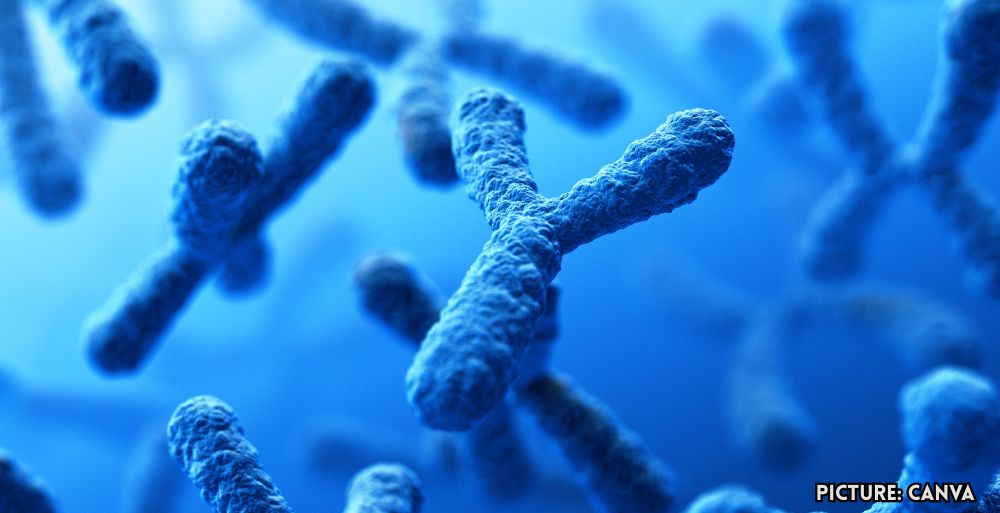
This study suggests that the loss of the Y chromosome in normal-appearing tissue adjacent to tumors may be an important biomarker for early cancer detection in men, although the causal relationship remains unclear.
In a groundbreaking study published in JCI Insight, researchers from the University of Arizona Cancer Center have discovered a potential marker for early cancer development in men: the loss of the Y chromosome in cells that appear normal. This research presents a new perspective on how cancer may manifest at the cellular level, indicating that changes in Y chromosome integrity could precede observable malignancies.
The study, led by Dan Theodorescu, director of the University of Arizona Cancer Center, analyzed 1,000 archived tissue samples from 405 male patients, including those with various types of cancer and healthy controls. The researchers utilized fluorescence in situ hybridization (FISH) techniques to visualize the X and Y chromosomes across more than 4.3 million cell nuclei, allowing them to quantify the extent of Y chromosome loss in different tissue samples.
Research Findings and Methodology
The results revealed a notable gradient of Y chromosome loss: healthy tissue from men without cancer exhibited the strongest Y chromosome signals, while normal-looking tissue adjacent to tumors showed a significantly weaker signal. Tumor tissues themselves displayed the weakest Y chromosome presence. This pattern holds significant implications for understanding cancer biology, as it suggests that chromosomal abnormalities may be more widespread than previously thought.
Specifically, among the examined tissues, colorectal tumors showed the highest levels of Y chromosome loss. The study encompassed samples from men with bladder cancer, prostate cancer, and other malignancies, providing a comprehensive view of how Y chromosome integrity may correlate with cancer presence.
Theodorescu emphasized the surprising nature of these findings, stating, “What surprised us most was that Y chromosome loss was not confined to the cancer itself.” This observation indicates that even adjacent cells, which visually appear normal, might already exhibit early signs of chromosomal loss.
Age and Y Chromosome Loss
The researchers noted that older age was associated with increased Y chromosome loss in normal tissues from men with cancer, although this correlation did not extend to cancer-free men. Importantly, the study found that the age factor alone could not fully account for the observed loss, particularly in tissues next to tumors.
The implications of this research extend beyond mere observation. Theodorescu acknowledged the need for further investigation to establish whether the loss of the Y chromosome actively contributes to cancer onset or if it is merely a byproduct of cancer-related conditions that favor such chromosomal changes. He stated, “Our study suggests an association between Y chromosome loss and cancer development, but it does not by itself prove cause and effect.” This distinction is crucial as it sets the stage for future research designed to explore the causal mechanisms behind these observations.
Potential for Early Detection
One of the most promising aspects of this research lies in its potential application for early cancer detection. Theodorescu suggested that if a biopsy conducted on seemingly normal tissue adjacent to a tumor reveals Y chromosome loss, it could serve as an important indicator for clinicians to investigate further. However, he cautioned that this notion remains a hypothesis that requires rigorous testing before it can be implemented in clinical practice.
The study’s findings are particularly relevant in light of the ongoing challenges in cancer diagnostics. Traditional methods may fail to detect small tumors, leading to late-stage diagnoses. By identifying chromosomal changes in adjacent tissues, medical practitioners may have a new tool to aid in earlier detection.
Next Steps in Research
While this study provides a significant foundation for understanding the relationship between the Y chromosome and cancer, there remains much to learn. Future research will need to investigate whether inducing Y chromosome loss in cells increases their likelihood of becoming cancerous or if preventing such loss could reduce cancer risk. Theodorescu noted that these experiments would be essential in establishing a causal link between Y chromosome loss and cancer development.
Moreover, the current study faced limitations, as only 1,000 of the 2,917 samples collected met the quality standards necessary for analysis. Additionally, the study relied on archived samples, which may not fully represent the dynamic changes occurring during cancer progression.
In summary, while the findings from this study offer a promising glimpse into the potential relationship between Y chromosome loss and cancer, further research is necessary to validate these results and explore practical applications in early diagnosis and treatment strategies.




No Comment! Be the first one.