






Hot, Flash & Furious
The Meno-logues:
Nobody warned me menopause would make me feel like a browser with 74 tabs open. One is frozen. One is playing Arijit songs. One contains unpaid school fees. And one is just silently screaming.
Meanwhile the fan is too loud, somebody is chewing nearby, and I have suddenly become aware of every single human being breathing in my vicinity. Honestly? The nervous system has basically checked-out.
I used to multitask beautifully. At one point in life I could, cook dinner, answer emails, manage a Sugar Art Academy, supervise homework, remember passwords, emotionally support three people + one narcissistic ginger cat and locate missing socks simultaneously.
Now, if two people ask me questions at once, my brain behaves like an overworked government website during tax season. Everything crashes.
I recently walked into a room holding my phone flashlight looking for my phone. Not my finest neurological performance.
And yet so many women continue saying: “I’m just stressed.”
No. You are mentally overstimulated after decades of operating at emotional Olympic level without proper recovery.
And science is finally validating what women have quietly joked about for years. Research now shows fluctuating estrogen can affect serotonin, dopamine, working memory, emotional regulation, concentration, and stress tolerance. Studies suggest nearly 60% of menopausal women report cognitive changes like forgetfulness, mental fatigue, anxiety, poor focus, and what researchers now clinically call “brain fog.”
Brain fog sounds adorable. Like weather.
In reality it is standing inside a supermarket unable to remember, why you came, what you needed, whether you already bought coriander yesterday, three times.
Nobody talks enough about how belittling it feels. Women who once managed entire households, careers, crises, and complicated family ecosystems suddenly forget words mid-sentence and begin questioning their competence over things as simple as replying to emails.
At one point I forgot the word “microwave” and called it: “the food hot thingy”
Which honestly still feels technically correct.
The emotional symptoms shocked me more than anything else. Not sadness exactly. More like reduced tolerance for nonsense.
Tiny nonsense. Medium nonsense. Advanced nonsense.
Suddenly I could no longer tolerate, WhatsApp voice notes longer than 42 seconds, motivational LinkedIn posts written by men named Rajiv who wake up at 4 am voluntarily, people talking during TV shows, or anyone asking, “What’s for dinner?” every day until the heat death of the universe.
Menopause is realizing estrogen was buffering your reactions like emotional customer service. And once she resigns? Every inconvenience arrives directly to management.
The hardest part is many women think they are becoming “too emotional.” But often they are simply overstimulated, under-rested, mentally overloaded, and exhausted from carrying invisible responsibilities for decades.
Women become experts at functioning while depleted. We normalize, emotional exhaustion, decision fatigue, mental clutter, poor sleep, constant vigilance, and never truly switching off.
Meanwhile the nervous system is running Windows 95 with 19 tabs open and somebody keeps downloading stress.
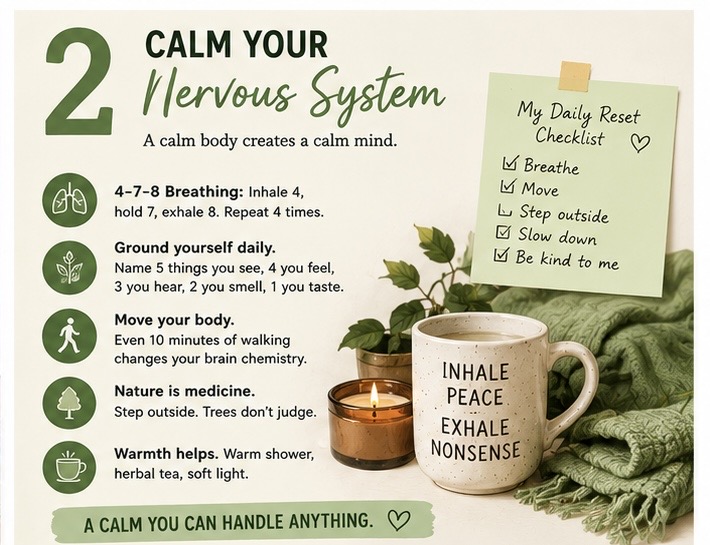
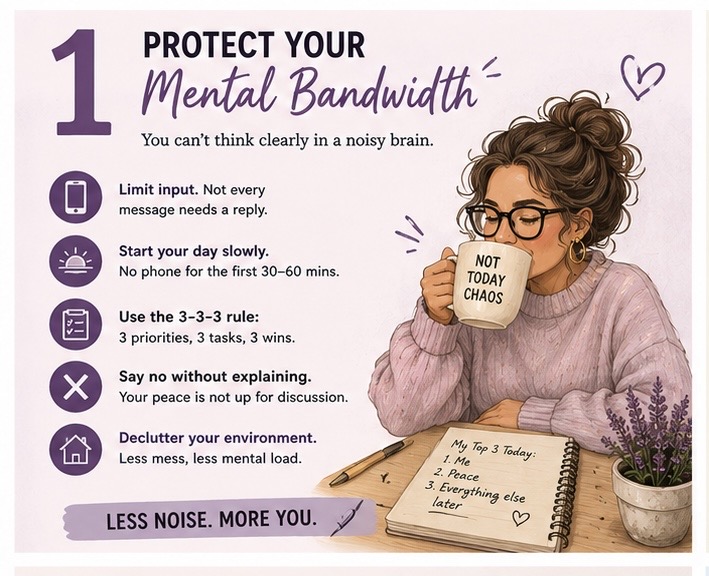
One of the biggest changes I made was realizing my brain no longer responds well to chaos. Earlier I believed productivity solved everything. Now I understand peace is infrastructure. So I started protecting my nervous system like it was premium luggage.
I stopped checking my phone first thing in the morning. Because nothing says “good morning” like, twelve school updates, three medical conspiracy forwards, and somebody asking for a payment reminder before your frontal lobe has loaded.
I also stopped overexplaining myself. This was revolutionary. No dramatic speeches. No guilt essays.
Just: “No, I am busy”
Middle-aged women deserve the spiritual freedom of incomplete sentences.
I also became deeply protective about silence. Not luxury spa silence. Real silence. Car-parking silence. Early-morning tea silence. Everyone-is-finally-asleep silence.
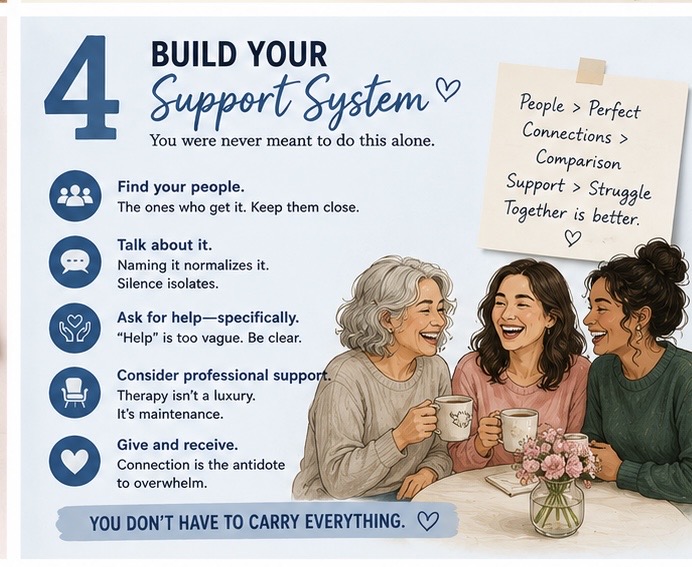
I now sit in my car for five extra minutes before entering the house because apparently that is where mental healthcare lives now.
Another surprising thing? Routines became less boring and more life-saving. Repeating meals. Earlier bedtimes. Writing things down. Reducing decisions. Walking without podcasts. Lowering noise where possible. Because during menopause the brain no longer wants intensity. It wants predictability.
Researchers now believe consistent routines and nervous-system regulation can significantly improve mood stability, emotional resilience, sleep quality, and cognitive function during menopause.
Which means my 9:30 bedtime is no longer “boring.” It is neurological strategy.
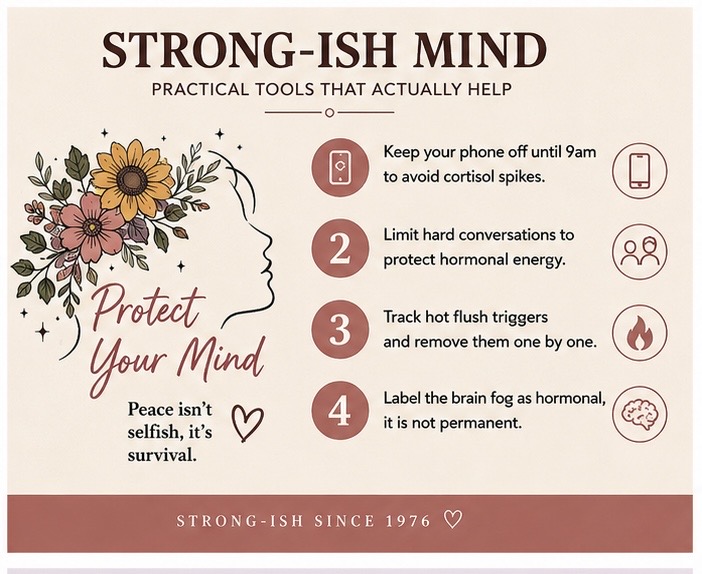
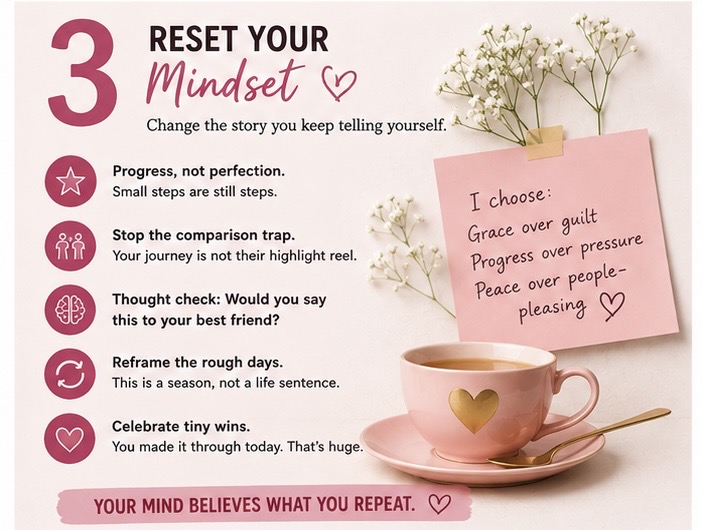
I also learned, not every thought deserves attention, not every invitation deserves attendance, and not every family problem requires me to become unpaid crisis management staff. Honestly? Growth.
And perhaps the strangest thing menopause teaches women is this, your body eventually stops cooperating with the life that is exhausting you.
The anxiety. The tears. The overwhelm. The rage at hearing somebody chew almonds too loudly.
Sometimes these are not signs of weakness. Sometimes they are nervous-system protest letters.
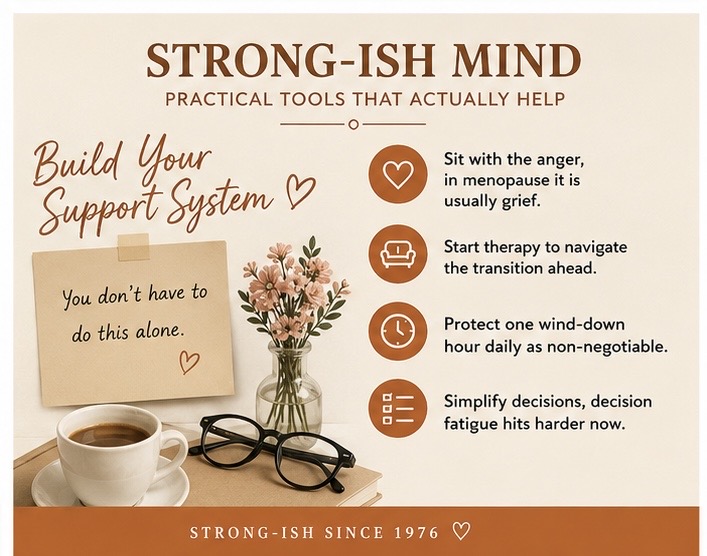
So now when I forget names mid-sentence, misplace my glasses while wearing them, or stand in the kitchen staring into the pressure cooker like it might eventually offer me emotional clarity, I don’t immediately declare a personal collapse.
That used to feel like evidence. Of failure. Of “something slipping.”
Now it reads differently. My mind takes longer to load. Simple things don’t retrieve themselves on command anymore. I can walk into a room with intent and leave with nothing but vague suspicion that I came for something important and possibly life-sustaining.
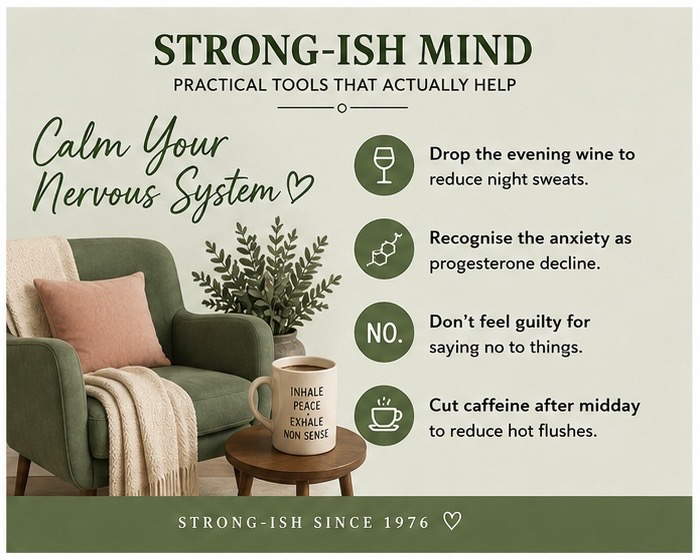
Nothing is “wrong” in the dramatic sense. But something is definitely changing in the quieter, less negotiable way. My brain is no longer operating on urgency and over-efficiency. It’s negotiating. It’s filtering. It’s refusing to perform constant availability like a badly paid employee on permanent overtime.
This isn’t breakdown behaviour. It’s downgrade-of-tolerance behaviour. Subtle, but decisive.
So I’ve started adjusting my language before I adjust my life.
I pause before I accuse myself of being scattered. I stop treating confusion as character failure. I give myself slightly more time than I think I deserve. I check the obvious places first, keys, glasses, dignity.
And when I’m standing in the kitchen buffering beside a pressure cooker, I don’t rush to fix the moment. I just return to it. Gently. Without commentary.
Because sometimes the most practical intervention is not speed. It’s softness with structure.
A reminder. A list. A breath that isn’t performative. Name the task again, out loud. Reduce the number of tabs open in your head, not just your browser. Drink water before you declare yourself unreliable.
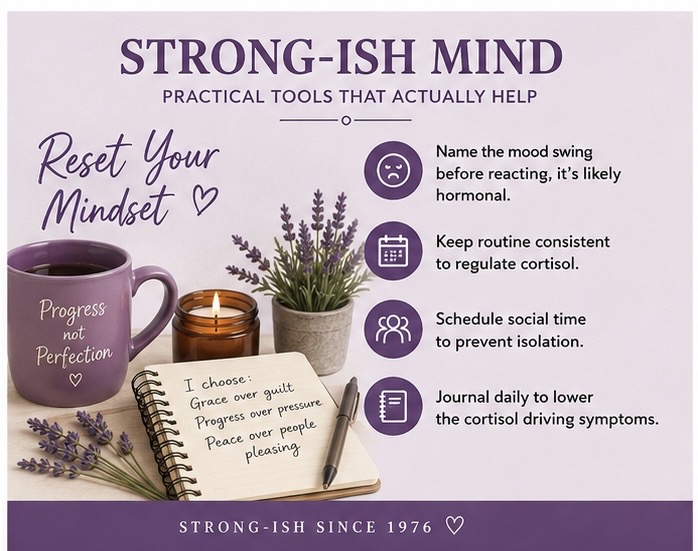
And then, this is the important part, I stop narrating myself as if I am failing a test I never agreed to take.
Because this version of me is not collapsing.
She is recalibrating.
Slower, perhaps. Softer, definitely. Less willing to tolerate nonsense masquerading as urgency.
And that is not decline dressed up as philosophy.
That is refinement.
That is Strongish Since 1976.
And honestly, it doesn’t feel like becoming less.
It feels like becoming impossible to ignore, by myself included.
About the Author:

Ancy James is a health and wellness writer, certified functional fitness and nutrition coach, internationally trained cake artist, and former television producer based in Bengaluru. She holds certifications from AFAA, NASM, ACE, and TFA, bringing a unique blend of scientific knowledge, real-world experience, and practical wisdom to her work.
With more than 25 years of professional experience spanning media, leadership, storytelling, entrepreneurship, and wellness, Ancy spent 17 years with NDTV before stepping away from her media career to focus on raising her daughter and redefining life on her own terms. That journey of reinvention now informs much of her writing.
Her columns explore the realities of modern womanhood, including menopause, motherhood, resilience, identity, fitness, family life, and midlife transformation. Combining evidence-based research with lived experience as a mother, runner, caregiver, entrepreneur, and woman navigating midlife, she offers readers practical, relatable insights that go beyond trends and quick fixes.
Ancy is passionate about helping people build sustainable health habits that fit into real lives. Through her writing, she translates complex wellness concepts into actionable strategies that empower readers to improve their physical health, mental well-being, and overall quality of life. Her work focuses on habit formation, healthy ageing, stress management, resilience, and the often-overlooked mental load carried by modern women.
Beyond her writing, Ancy leads a growing pan-India wellness community through running groups, online accountability circles, and annual health challenges for the Indian Cake Artists community. Over the past five years itself the community has helped many individuals especially women and young adults, develop healthier lifestyles through consistency, community support, and her practical 21-day habit-building framework.
Known for her sharp observations, honest storytelling, self-deprecating humour, and evidence-based approach, Ancy writes for thoughtful readers seeking realistic solutions rather than perfection. Her mission is simple: to help people live stronger, healthier, and happier lives—one small habit at a time.
When she is not writing, you will find her running slowly and lifting heavy, creating towering gravity-defying cakes and intricate sugar flowers, interviewing fascinating people, or learning life lessons the hard way so her readers do not have to.



No Comment! Be the first one.