




European Space Agency Adopts ARRAKIHS Mission to Explore Faint Structures Surrounding Galaxies

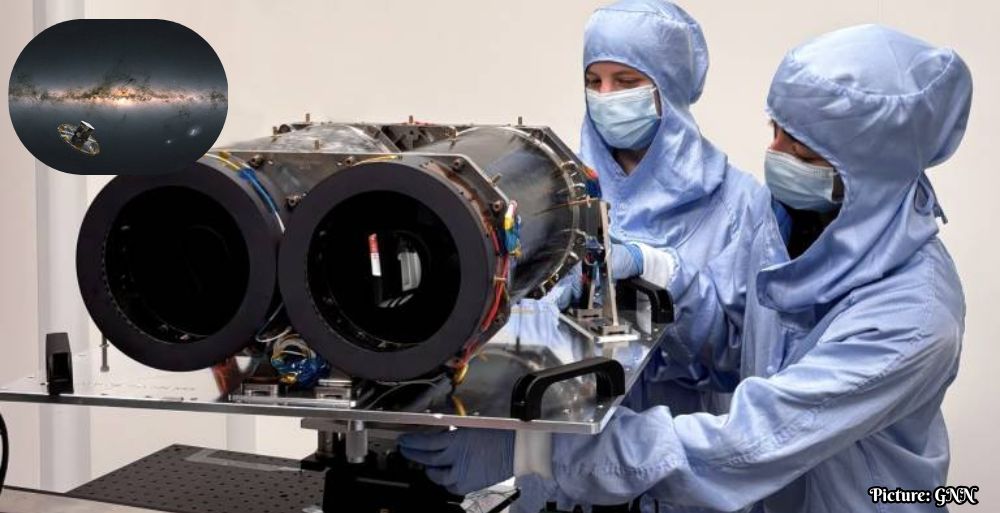
The European Space Agency has officially adopted the ARRAKIHS mission, an innovative project aimed at revealing the faint outer regions of galaxies, which are crucial for understanding their formation and evolution.
The European Space Agency (ESA) has officially approved the ARRAKIHS mission, a pioneering initiative led by the University of Portsmouth. This mission, which stands for A RAdio and Optical survey to Reveal the hidden History of galaxies, represents a significant advancement in European astrophysics as it is the first dedicated space mission to explore the extremely faint structures surrounding galaxies. Scheduled for launch in 2030, ARRAKIHS is set to investigate one of the last largely uncharted territories of the universe.
Mission Overview and Objectives
Professor Enrique Gaztañaga, a leading scientist from the University of Portsmouth’s Institute of Cosmology and Gravitation (ICG), has been instrumental in the mission’s development. He served as the Science Coordinator from early 2024 until late 2025 and now holds the position of co-Chair of the mission’s Science Committee. Gaztañaga emphasized the importance of the ARRAKIHS mission, stating, “The adoption of ARRAKIHS by ESA is a landmark moment for European astronomy. This mission will allow us to study parts of galaxies that have remained almost completely invisible until now, preserving the fossil record of how galaxies assembled over billions of years.”
The primary aim of the ARRAKIHS mission is to investigate the faint structures that envelop galaxies, particularly the outer regions that are believed to hold vital information regarding their formation processes over billions of years. These structures are critical for understanding galaxy evolution and their interactions with dark matter, which is one of the most elusive components of the universe. By examining these outer regions, the mission hopes to provide insights not only into how galaxies formed but also into the conditions that existed shortly after the universe’s birth, potentially reshaping existing theories in astrophysics.
Technological Innovations and Methodology
To accomplish its objectives, ARRAKIHS will utilize advanced observational technology, employing four highly sensitive cameras that can operate simultaneously across four different wavelengths—ultraviolet, visible, and infrared light. This innovative multi-wavelength filter system, developed with significant input from the University of Portsmouth, enables comprehensive sky observations that are difficult, if not impossible, to achieve with ground-based telescopes.
Professor Gaztañaga elaborated on the mission’s capabilities, stating, “This unique space-based capability will allow ARRAKIHS to detect signatures of star formation as well as black hole accretion in faint galactic structures—measurements that are extremely difficult, or impossible, to achieve from ground-based observatories.” This advancement is expected to provide unprecedented data on the lifecycle of galaxies, including our own Milky Way, and will contribute to a more nuanced understanding of galactic evolution.
Broader Implications for Astrophysics
The launch of ARRAKIHS is anticipated to have profound implications for the field of astrophysics. Historically, the outer regions of galaxies have remained largely unexplored due to the limitations of current observational technologies. By focusing on these areas, ESA is positioning Europe at the forefront of astronomical research, particularly in the study of dark matter and cosmic evolution.
Research into the faint structures surrounding galaxies could yield critical insights that challenge or support existing models of galaxy formation. As these observations are made, they may prompt a reevaluation of current theories and inspire new lines of inquiry in the field. The findings from ARRAKIHS could not only enhance scientific knowledge but also inspire future generations of astronomers and scientists, providing them with a clearer understanding of the universe’s complexities.
International Collaboration and Future Prospects
The ARRAKIHS mission represents a significant collaborative effort among various European institutions, showcasing the importance of international partnerships in addressing some of the most profound questions about our universe. The University of Portsmouth’s leadership in this project highlights its commitment to advancing research in cosmology and gravitation. This collaboration underscores the collective effort to push the boundaries of our understanding in astrophysics.
As the ARRAKIHS mission moves toward its 2030 launch date, anticipation within the scientific community continues to grow. The potential discoveries that ARRAKIHS may yield promise to enrich human understanding of the cosmos and our place within it. By preparing for this pioneering journey into the depths of galactic formation and evolution, the mission stands as a testament to the ongoing pursuit of knowledge in the field of astronomy.
Conclusion: A New Frontier in Galactic Exploration
The adoption of the ARRAKIHS mission marks a new frontier in astronomical exploration, providing a unique opportunity to investigate regions of galaxies that have previously eluded observation. With its advanced technological capabilities and ambitious scientific goals, ARRAKIHS is poised to transform our understanding of galaxy formation, dark matter, and the conditions that existed in the early universe. As researchers prepare for this monumental endeavor, the mission embodies the spirit of discovery that drives scientific inquiry and opens new avenues for exploration in the cosmos.





No Comment! Be the first one.