





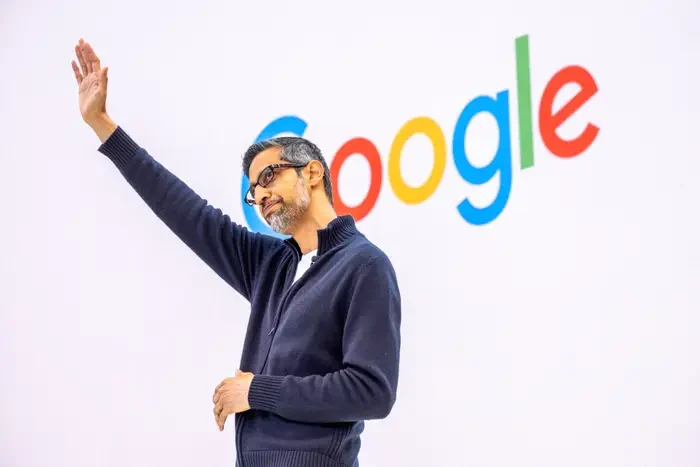
Sundar Pichai, CEO of Google, addressed Stanford University graduates, highlighting the importance of resilience and adaptability over rigid career planning, drawing from his own experiences as a student.
Stanford University, CA – In a commencement speech delivered earlier this month, Sundar Pichai, the CEO of Google, conveyed a powerful message to the graduating class, urging them to prioritize flexibility and resilience in their career paths. Through personal anecdotes and reflections on his educational journey, Pichai encouraged young professionals to move beyond the pressures of immediate job placements and conventional success metrics.
Pichai’s remarks were rooted in his own experiences as a Stanford student, where he often felt the weight of academic expectations and future career prospects. He recounted a pivotal moment that altered his perspective on success and life choices. During his time at Stanford, a spontaneous road trip to Las Vegas with a classmate led him to reassess the significance of his worries. He recalled, “For the first time, I realized the world won’t end if I relaxed a little,” emphasizing that some decisions, while seemingly critical, may not hold the weight we attribute to them.
Lessons from Experience
In his address, Pichai reflected on the nature of decision-making and the pressures faced by recent graduates. He acknowledged that certain life choices—such as selecting a partner, deciding to start a family, or making a significant career pivot—are indeed critical. However, he reassured graduates that many other decisions do not carry the same level of consequence. “Very few of them are make or break,” he noted, encouraging the audience to discern the “signal through the noise” when navigating their careers.
This perspective resonates strongly in the context of Generation Z, who are often confronted with unique challenges in a rapidly changing economic landscape. In an era marked by technological advancements and evolving workplace dynamics, many young professionals feel immense pressure to secure immediate success. Pichai’s message serves as a reminder that setbacks and deviations from a planned path can lead to unexpected opportunities and personal growth.
Support from Industry Leaders
Pichai’s sentiments are echoed by other prominent business leaders who advocate for a similar philosophy regarding career development. Amazon CEO Andy Jassy, during a recent episode of Capital Group’s Power of Advice podcast, emphasized the importance of starting from the ground up. Jassy stated, “If you aren’t willing to start at the bottom and pay your dues, it’s unlikely that you’re going to ever be successful.” He further highlighted that genuine success often stems from a willingness to learn and adapt in the face of challenges.
Jamie Dimon, the CEO of JPMorgan Chase, reinforced this message during an event in Davos, Switzerland, where he delivered a more blunt warning to young professionals. Dimon remarked, “There’s going to be a grunt part to every part of a job. Get over it.” He cautioned against the temptation to job-hop as a means of avoiding discomfort, advising, “Do not get a new job. Some people are always thinking, and they’re ruining their lives because they should just enjoy what they’re doing.”
Expanding Career Perspectives
The narrative of embracing a non-linear career path is not confined to corporate executives. Fox News anchor Dana Perino shared her own experiences in a recent interview with Fortune, where she discussed how her career flourished once she stopped trying to create a perfect trajectory. “Once I focused and stopped trying to do everything, all the other opportunities came at the right time,” she stated, echoing Pichai’s message that young professionals should not obsess over finding the perfect first step. Her advice resonated with Pichai’s overarching theme: “Just start working—wherever it is. It doesn’t mean you have to stay there for two years.”
This collective wisdom from industry leaders serves to empower a new generation of professionals, encouraging them to embrace the unpredictability of their career journeys. In a labor market that is constantly evolving, characterized by shifting economic conditions and technological innovations, the emphasis on resilience and adaptability is particularly pertinent.
Conclusion
Pichai’s address to Stanford graduates underscores a critical perspective for today’s emerging workforce: success is rarely a linear path, and the journey often involves navigating uncertainty and setbacks. As graduates step into the workforce, the lessons imparted by leaders such as Pichai, Jassy, and Dimon may provide valuable insights into fostering a mindset that prioritizes growth and adaptability. In an era where rigid career paths are increasingly challenged, embracing flexibility may be the key to achieving long-term fulfillment and success.






No Comment! Be the first one.