




US Ambassador Hails India as Vital Healthcare and Tech Ally, Reveals Bilateral Interim Trade Deal Nears Finalization

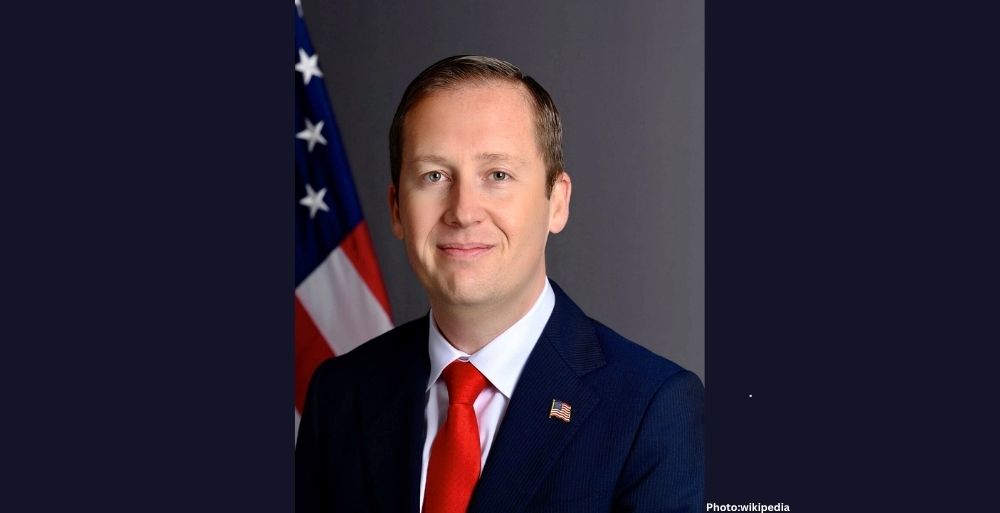
Speaking at a high-level bilateral research and innovation summit at the Indian Institute of Technology Delhi, United States Ambassador to India Sergio Gor delivered an expansive endorsement of the India-US strategic partnership, highlighting that the US now imports nearly 40% of its generic medicines from India due to systemic institutional trust. Gor outlined an exponential macroeconomic trajectory that has seen bilateral trade skyrocket from $20 billion to over $220 billion in just over two decades, fueled by historic capital deployments from tech conglomerates including Amazon, Microsoft, and Google. Crucially, the ambassador announced that the long-anticipated India-US interim trade agreement is entering its final operational phase, with only an estimated 1% of the treaty left to be concluded. This major diplomatic milestone follows a substantive state visit by US Secretary of State Marco Rubio and coincides with an American technical negotiating team arriving in New Delhi to resolve final sub-clauses on market access, customs facilitation, and non-tariff regulatory barriers.
NEW DELHI — United States Ambassador to India Sergio Gor on Friday delivered a sweeping validation of the rapidly deepening economic and technological alliance between Washington and New Delhi, defining the bilateral relationship as one of the most critical structural anchors of the 21st century. Speaking to an audience of academics, industry executives, and policymakers at the Indian Institute of Technology (IIT) Delhi, Gor positioned India as an indispensable, highly trusted partner within America’s restructured global supply chain framework.
The ambassador’s remarks arrived during the high-profile “Advancing Partnership in Research and Innovation” event, organized under the auspices of the US-India TRUST (Transforming the Relationship Utilizing Strategic Technologies) Initiative. Addressing the assembly with a deliberate, confident demeanor, Gor utilized detailed macroeconomic data to illustrate a fundamental transformation in bilateral relations. Rather than viewing the relationship through a purely geopolitical or transactional lens, the ambassador described a state of deep economic integration that spans critical life-saving pharmaceuticals, massive hyperscale digital infrastructure investments, and an imminent breakthrough in long-stalled international trade negotiations.
The Pharmaceutical Anchor: Sourcing Life-Saving Generics Through Institutional Trust
The most striking element of Ambassador Gor’s address focused on the critical reliance of the American domestic healthcare system on the Indian manufacturing sector. According to the ambassador, the United States now sources approximately 40% of its total generic medicine imports directly from India. This substantial reliance represents a deliberate, calculated policy choice by Washington to deepen supply line integration with democratic allies, moving away from more volatile or geopolitically contested manufacturing corridors.
“On pharmaceuticals, we import close to 40 per cent of our generics from India,” Ambassador Gor stated, maintaining an earnest tone as he addressed the room. “There is a reason the United States does that: it is because we trust India. These are critical life-saving ingredients that are needed in the United States.”
This open acknowledgment carries significant economic weight. Over the past decade, the global pharmaceutical landscape has faced severe supply chain shocks, regulatory bottlenecks, and frequent active pharmaceutical ingredient (API) shortages. By cementing its reliance on Indian laboratories and manufacturing plants, Washington is signaling long-term support for India’s domestic pharmaceutical sector, which has aggressively upgraded its compliance frameworks to meet strict US Food and Drug Administration (FDA) standards. This trust is further mirrored by shifting investment flows; according to recent embassy data, India has become one of the largest contributors to new US-bound investments, routing nearly $19 billion of a projected $20.5 billion capital pool directly into health-tech and biomedical research collaborations.
Trade Volume Transformation and the Final Mile of the Interim Agreement
To contextualize this pharmaceutical reliance, Ambassador Gor presented an overview of the broader trade trajectory between the two global powers. Over the span of just over twenty years, total bilateral trade in goods and services has expanded more than tenfold.
“In just over two decades, bilateral trade has grown from 20 billion dollars to over 220 billion dollars in goods and services,” Gor observed, emphasizing that this expansion reflects structural integration rather than simple inflationary growth. “That’s not just volume; it reflects deeper, broader engagement and stronger economic integration.”
The most immediate catalyst for further economic integration is a proposed interim trade agreement, which Gor revealed is on the verge of completion. The final phase of these sensitive negotiations follows a substantive four-day diplomatic tour by US Secretary of State Marco Rubio, which concluded on May 26 and sought to resolve long-standing trade frictions between the two administrations.
According to Ambassador Gor, the technical text of the treaty is remarkably close to a final signature, with only “1 per cent” of the deal remaining outstanding. To resolve these final sub-clauses, a high-level US trade delegation is scheduled to conduct intensive, closed-door negotiations in New Delhi from June 1 to June 4. The talks will focus on harmonizing reciprocal customs regulations, streamlining port-of-entry verification checks, and reducing non-tariff regulatory barriers.
“Our current interim trade agreement is on the table for us to finalise that will unlock prosperity for both of our countries,” Gor explained. “We fully expect that the trade deal will be signed over the next few weeks and months.”
Silicon Valley Floods the Subcontinent: Hyperscale Capital Infusions
Beyond state-to-state diplomatic accords, the ambassador pointed to a massive surge in direct capital investments from private American technology firms as definitive proof of India’s status as a safe, highly stable repository for global wealth. As multinational corporations actively pursue “friend-shoring” strategies to insulate their operations from supply chain disruptions, India’s stable legislative framework and tech-savvy talent pool have emerged as primary beneficiaries.
Gor highlighted specific multi-billion-dollar commitments from three of the world’s most valuable technology conglomerates:
- Amazon: The e-commerce and cloud computing giant has finalized a comprehensive plan to invest $35 billion in India by 2030. This capital deployment is specifically designed to bankroll AI-driven digitization initiatives, expand provincial logistics centers, and build out localized export networks aimed at creating hundreds of thousands of domestic jobs.
- Microsoft: Redefining the region’s computing capacity, Microsoft has committed $17.5 billion toward the rapid expansion of its hyperscale cloud infrastructure within India. This includes constructing next-generation data centers to meet the computational demands of South Asia’s expanding corporate artificial intelligence sector.
- Google: The search and infrastructure multinational has broken ground on a highly sophisticated subsea cable landing terminal project valued at approximately $15 billion. The project aims to permanently augment international data transmission speeds and link India’s domestic digital grid directly to global telecom highways.
“These are incredible things that we have seen just from a handful of companies,” Gor remarked, highlighting the scale of corporate confidence. He noted that the sheer size of these numbers frequently draws inquiries from international financiers navigating the halls of the US Embassy. “Many investors who visit the U.S. Embassy ask whether India is a safe destination for investment and partnership.” The ambassador answered that query with a definitive yes, citing India’s early inclusion in the Pax Silica initiative—a US-backed technology and supply chain network reserved exclusively for trusted, strategically reliable partners.
Geopolitical Realignment and Tech Collaboration
The economic momentum detailed by Ambassador Gor aligns closely with the broader objectives of the US-India TRUST Initiative, which was originally finalized during Prime Minister Narendra Modi’s state visit to Washington earlier this year. The initiative serves as a formal framework to bypass historical bureaucratic hurdles, particularly regarding sensitive export controls, allowing for the direct transfer of dual-use technologies, advanced defense systems, and semiconductor manufacturing equipment.
The ambassador hinted that the United States is actively recalibrating its long-standing export control frameworks to facilitate a more seamless flow of high-technology innovations to Indian research institutes. This technical synergy is already yielding practical results across multiple frontiers. In the aerospace sector, the recent launch of the collaborative NASA-ISRO Synthetic Aperture Radar (NISAR) mission and India’s formal integration into the upcoming Axiom-4 space station mission highlight a partnership that extends from deep-sea internet cabling to low-Earth orbit. Concurrently, both nations are coordinating efforts through India’s National Critical Minerals Mission to secure processing, recycling, and research partnerships for rare-earth elements, reducing their collective dependence on single-source foreign supply chains.
As the technical negotiating teams prepare for their crucial June rounds in New Delhi, the overarching message from the American diplomatic corps remains unambiguous. The relationship between the United States and India has transcended simple bilateral diplomacy to become a foundational pillar of global supply chain security. By blending India’s massive pharmaceutical and tech manufacturing scale with America’s deep capital reserves and consumer markets, both democracies are building an economic corridor designed to survive macroeconomic volatility well into the middle of the century.





No Comment! Be the first one.