




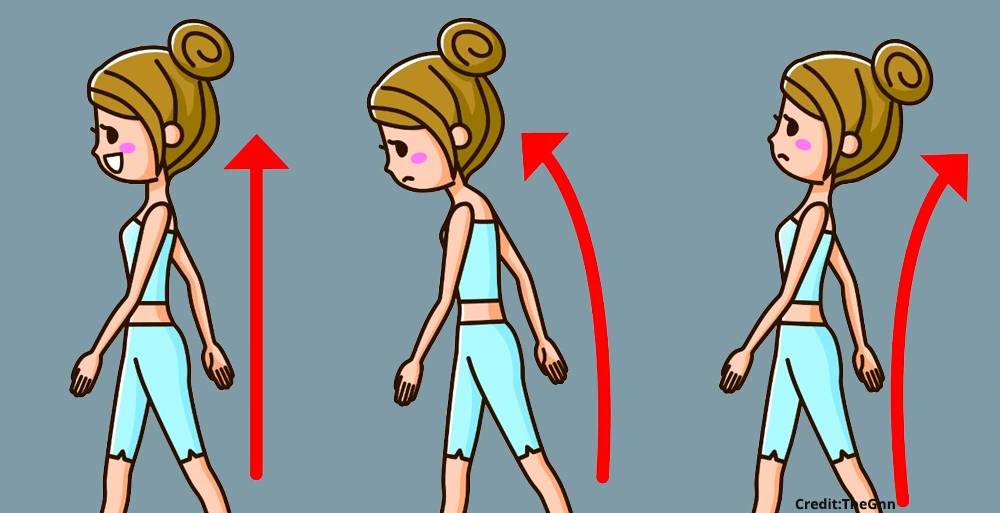
Research suggests that various aspects of walking, gait, and posture can provide significant insights into an individual’s health status and personality traits.
Walking, a seemingly ordinary activity, is a complex process that engages multiple systems in the body, from the musculoskeletal structure to brain function. Recent studies indicate that the way a person walks—encompassing stride length, gait, and posture—can reveal crucial information about their physical and mental health.
Correlation Between Walking Speed and Longevity
Research focusing on individuals aged 65 and older has highlighted a positive correlation between walking speed and longevity. Specifically, those who exhibit a natural inclination towards a quicker pace tend to experience longer lifespans. However, experts caution that this does not imply that forcing oneself to walk faster will yield similar benefits. Instead, a slower walking pace may indicate underlying health issues that could impact overall longevity.
Impact of Anxiety on Gait
Emotional well-being also plays a role in walking patterns. Studies have shown that heightened anxiety can lead to noticeable deviations in gait. For instance, individuals who feel stressed may demonstrate erratic walking behaviors, such as drifting off target when walking blindfolded. This phenomenon is likely the result of increased activity in the right hemisphere of the brain, which is responsible for managing stress and anxiety.
Mechanical Issues Indicated by Walking Style
In children, toe-walking is often observed as they learn to walk upright. However, if this behavior persists into later childhood, it may suggest mechanical issues, such as a shortened Achilles tendon or conditions like cerebral palsy or muscular dystrophy. Toe-walking is also commonly seen in children diagnosed with autism spectrum disorder, warranting further evaluation if it continues beyond the typical developmental stage.
Signs of Osteoarthritis and Other Conditions
Changes in walking patterns, such as favoring one leg or displaying a limp, can indicate more serious health concerns, including osteoarthritis. This degenerative joint condition is characterized by the gradual wearing down of cartilage, leading to pain and altered gait. Individuals experiencing these symptoms should seek medical evaluation to determine the underlying causes.
Alcohol Abuse and Gait Stability
Alcohol consumption can significantly affect an individual’s walking stability. The line-walking test, commonly administered by law enforcement to assess potential impairment, underscores the impact of alcohol on gait. Chronic alcohol abuse can lead to muscle weakness and impaired spatial orientation, resulting in a staggered or unsteady walk. Fortunately, many individuals experience improvements in their mobility after ceasing alcohol consumption, although recovery may take time.
Muscle Weakness and Its Manifestations
Foot drop, a condition that causes difficulty lifting the front part of the foot, can result in a distinctive walking pattern where individuals appear to be climbing invisible stairs. This condition may stem from nerve injuries or disorders affecting the muscles or spinal cord, such as muscular dystrophy or multiple sclerosis. Individuals experiencing these symptoms should consult a healthcare professional for diagnosis and potential treatment options.
Predicting Cognitive Decline Through Gait
Recent research has linked changes in walking speed to the early stages of cognitive decline, particularly in relation to Alzheimer’s disease. A gradual decrease in the speed of walking over time may serve as a predictive marker for the development of memory-related conditions. As the disease progresses, changes in gait may become more pronounced, highlighting the importance of early detection and intervention.
Influence of Menstrual Cycle on Walking
Interestingly, studies have suggested that a woman’s menstrual cycle may subtly influence her walking patterns. Research indicates that men perceive women as more attractive based on their gait during peak fertility phases, suggesting an evolutionary link between physical movement and reproductive signaling.
Indicators of Brain Injury
Individuals who sway or rock while walking may be exhibiting signs of a brain injury, particularly if they have experienced trauma to the head. Such symptoms are not uncommon among athletes engaged in contact sports, where concussions and other head injuries can lead to lasting effects on stability and coordination.
Back Pain and Its Effects on Posture
A herniated disc or strained muscle in the lower back can alter a person’s walking mechanics. Those suffering from back pain may exhibit altered arm and shoulder movements to compensate for discomfort, resulting in a distinctive walking style that diverges from typical biomechanics.
Parkinson’s Disease and Gait Changes
The presence of shuffling steps, particularly in men over the age of 60, may indicate early symptoms of Parkinson’s disease. This condition, characterized by a decrease in motor function, often leads to a specific gait known as the “Parkinson’s gait,” marked by slow, scraping footsteps and minimal arm movement.
Multiple Sclerosis and Gait Variability
Multiple sclerosis (MS) can present a variety of walking challenges, including stiff and awkward movements or difficulties maintaining balance. Affected individuals may exhibit symptoms like “scissoring” of the knees, which can complicate mobility and require targeted therapeutic interventions.
Depression’s Physical Manifestations
Finally, mental health conditions such as depression can have tangible effects on walking speed and posture. Research indicates that individuals experiencing depression may walk with shorter, slower steps. However, positive changes in mood can lead to improved mobility, and engaging in brisk walking has been shown to have uplifting effects on mental health.
In conclusion, the analysis of walking patterns, gait, and posture provides valuable insights into an individual’s overall health and well-being. As researchers continue to explore these connections, the potential for early detection and intervention in various health conditions becomes increasingly apparent.



No Comment! Be the first one.