





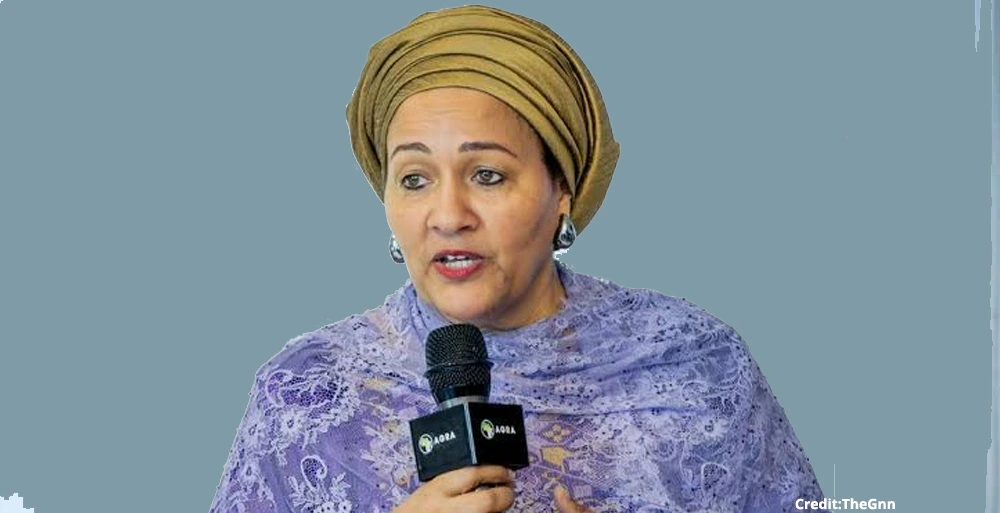
On the International Day for the Elimination of Violence against Women, UN Deputy Secretary-General Amina Mohammed called for urgent action to address the persistent failures in protecting women and girls from gender-based violence.
UNITED NATIONS – On November 24, 2023, Amina Mohammed, the UN Deputy Secretary-General, delivered a heartfelt message marking her last address on the International Day for the Elimination of Violence against Women. This event also heralded the beginning of the 16 Days of Activism against Gender-Based Violence, a campaign aimed at raising awareness and urging action to end violence against women globally. In her remarks, Mohammed acknowledged the progress made in recent years but stressed that the international community has “tolerated far too much failure” in addressing the systemic issues surrounding gender-based violence.
The event featured a poignant visual representation of the ongoing crisis, with 129 orange flags displayed—each flag symbolizing a woman or girl killed daily by an intimate partner or family member, according to alarming new data released by the United Nations. This statistic underscores the urgency for reform and the need for comprehensive action from governments and organizations worldwide.
Commitments and Accountability
Earlier this year, during the 70th session of the Commission on the Status of Women, member states agreed on a series of commitments aimed at enhancing access to justice for survivors of gender-based violence. These commitments include the repeal of discriminatory laws, thorough investigations into acts of violence, and the prosecution of offenders, including those who perpetrate violence online. Mohammed emphasized, “We must now deliver on those commitments so that women can rebuild their lives in safety and dignity,” highlighting that the responsibility to act lies not only with governments but also with the UN and technology companies.
One notable initiative in this regard is the Spotlight Initiative, a partnership between the United Nations and the European Union designed to eliminate all forms of violence against women by 2030. Mohammed noted that preliminary results from this initiative show that conviction rates for gender-based violence have doubled across 13 participating countries. However, she also pointed out that over one-third of women’s rights organizations surveyed reported having to suspend or close programs due to significant funding cuts, indicating that financial support remains a critical issue in the fight against gender violence.
The Role of Technology and Legislation
General Assembly President Khalilur Rahman reinforced the need for accountability in his own video message, outlining three priorities for member states: funding justice and protection, ensuring that technology serves justice rather than shielding abuse, and holding institutions accountable. He underscored that the law must extend protections to women and girls in both online and offline environments, urging technology companies to facilitate easier reporting mechanisms for abuse. Rahman stated, “Laws matter. Enforcement is the real test,” emphasizing the necessity of implementing existing legal frameworks effectively.
UN Women Executive Director Sima Bahous expressed concern that advances in digital technologies and artificial intelligence (AI) are outpacing the legal and justice systems designed to protect women. She noted that only one in five countries currently provides legal aid to women and that a staggering 89 percent of women’s rights organizations have reported reduced access to services due to budget cuts. Despite these challenges, Bahous highlighted progress, pointing out that the number of countries with domestic violence legislation has increased dramatically, from 12 in 1995 to 104 expected by 2025.
Engaging Men and Changing Norms
In a panel discussion that followed the formal addresses, French advocate David Pelicot emphasized the essential role that men must play in ending violence against women. He articulated that justice often fails when women hesitate to speak out, fearing they will not be believed. Sharing a personal story, Pelicot recounted how his mother, Gisèle Pelicot, waived her right to anonymity in a high-profile multiple rape case in 2024, where her former husband and 49 co-defendants were ultimately convicted. He concluded, “Justice starts when we believe in women,” underscoring the need for societal change in attitudes towards survivors.
The International Day for the Elimination of Violence against Women serves as a critical reminder of the ongoing struggles faced by women and girls worldwide. As the 16 Days of Activism against Gender-Based Violence begins, the urgent call for comprehensive action resonates louder than ever. The discussions and commitments made during this event set the stage for ongoing efforts to engage all sectors of society in the fight against gender-based violence, highlighting the need for collective action and accountability to ensure the safety and dignity of women and girls everywhere.





No Comment! Be the first one.