





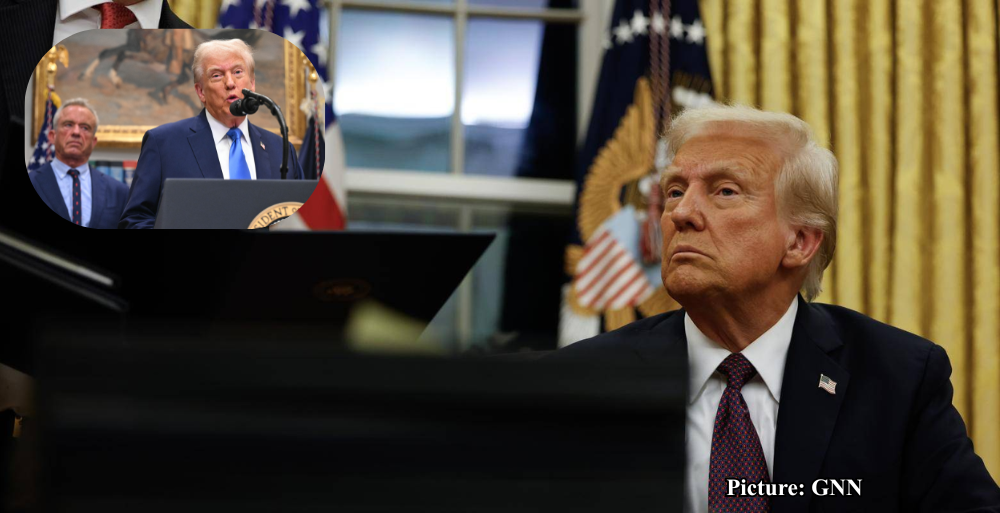
The Trump administration’s policies on research and higher education are criticized for prioritizing political agendas over scientific integrity, potentially harming both institutions and the nation’s global standing.
The Trump administration is increasingly scrutinized for its approach to science and higher education, with critics asserting that its policies prioritize political agendas over academic integrity. This trend, which some observers liken to historical authoritarian regimes, raises concerns about both the immediate and long-term implications for the United States’ position in global research and education.
Political Control Over Scientific Funding
Recent developments indicate a significant shift in how federal funding for scientific research may be allocated. Russell Vought, the director of the Office of Management and Budget, has initiated a rule change that would subject all federal grants to review by political appointees. Historically, such funding decisions have been made by experts in the field, ensuring that grants are awarded based on merit and scientific validity. Critics argue that this new measure could serve as a tool for political leverage, allowing the administration to threaten universities with funding cuts if they do not align with the administration’s priorities.
Vought’s initiative raises questions about the independence of scientific research in the United States. Observers worry that this shift could lead to a chilling effect on academic freedom, as institutions may feel pressured to conform to political expectations to secure funding. The implications of this could extend beyond immediate financial concerns, potentially stifling innovation and scientific inquiry in the long run.
Shifting Decision-Making Power
Michael Kratsios, Trump’s science advisor, has proposed shifting decision-making authority regarding scientific research from academic institutions to private corporations. This marks a departure from the post-World War II model that emphasized public investment in basic research. Kratsios argues that private companies, supplemented by advancements in artificial intelligence, are better positioned to identify breakthrough innovations. Critics assert that this approach prioritizes corporate interests at the expense of fundamental research that has historically benefited society as a whole.
By adopting this new strategy, the administration may inadvertently limit the types of research that receive funding, focusing instead on projects with immediate commercial viability rather than those that explore fundamental scientific questions. This could undermine the role of universities as centers of open inquiry and limit the advancement of knowledge across various fields.
Ideological Pressure on Higher Education
The administration’s stance on higher education reflects broader ideological trends, including a push for what some have termed “intellectual pluralism.” Linda McMahon, a prominent figure in the administration and former executive, has called on university presidents to publicly commit to promoting conservative viewpoints on campuses. This initiative echoes historical critiques of academia as being overly liberal, suggesting a desire to reshape higher education to align more closely with conservative values.
Such directives may compel academic institutions to adopt measures that restrict dissenting opinions and promote a narrow set of ideological perspectives. This could foster an environment where academic freedom is compromised, and the diversity of thought essential to a robust educational system is diminished.
Impact on International Collaboration
The administration’s policies also appear to target international collaboration in research. New visa regulations for international PhD students, limiting their stay to four years, pose significant challenges for scholars in fields requiring longer study periods. Additionally, potential extensions for visas now hinge on students’ compliance with the Department of Homeland Security, diverting their focus from research to administrative tasks.
Historically, international students have played a vital role in American research and education, contributing significantly to the nation’s innovation and economic growth. By restricting their opportunities, the administration risks alienating a key demographic that has traditionally bolstered the United States’ status as a leader in higher education and research.
Resistance from Within Congress
Despite these sweeping changes, members of Congress have shown some resistance to the administration’s proposed funding cuts for scientific research. Even among Republicans, there appears to be reluctance to support measures that would deprive their districts of scientific funding. This pushback indicates a recognition of the importance of maintaining robust funding for research and the potential consequences of undermining it.
However, the lack of a unified, principled defense of the postwar scientific model among Republican lawmakers raises concerns about the future of research funding. As funding negotiations continue, university leaders and scientific communities must remain vigilant against potential compromises that could undermine academic integrity and research autonomy.
Conclusion
The Trump administration’s approach to science and higher education has sparked significant debate regarding the role of political influence in academic research. Critics argue that the focus on political alignment over scientific merit could ultimately harm the United States’ reputation and efficacy in global research endeavors. As the landscape of higher education continues to evolve, it remains crucial for academic leaders to champion the values of academic freedom and integrity in the face of mounting ideological pressures.




No Comment! Be the first one.