





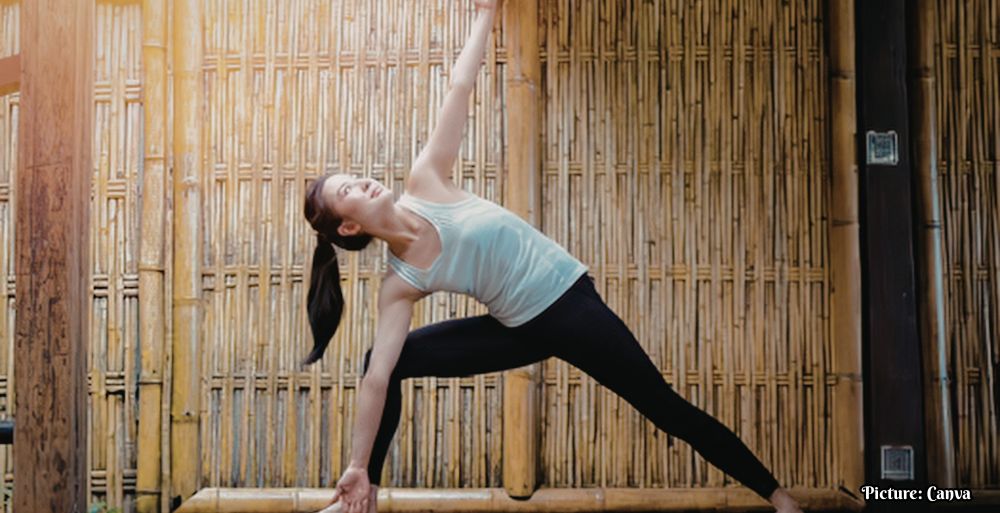
Triangle Pose, or Utthita Trikonasana, serves as a foundational posture in yoga, offering essential lessons on stability, movement, and interconnectedness that can enhance one’s overall practice.
Yoga enthusiasts and practitioners alike recognize the importance of foundational postures in establishing a well-rounded practice. Among these, the Triangle Pose, known as Utthita Trikonasana, holds a revered position. This asana, first popularized in the 1988 issue of Yoga Journal, is not just a basic standing pose but a multifaceted teacher that imparts crucial lessons applicable to various aspects of yoga and life.
Stability Through Leg Engagement
At the core of Triangle Pose’s teachings is the emphasis on the use of legs for stability. The pose requires practitioners to engage their quadriceps—the muscles in the front thigh—vigorously. This engagement serves a dual purpose: it stabilizes the knee against the gravitational pull and promotes proper alignment, preventing the overstretching of ligaments that could lead to injury. The sensation of being grounded and supported by one’s legs fosters a sense of confidence that extends beyond the yoga mat.
As practitioners learn to stabilize their stance in Triangle Pose, they gain a foundation that enhances their performance in other standing poses. This initial lesson in using one’s legs creates a ripple effect, helping students build confidence not only in their yoga practice but also in their daily lives. The ability to cultivate stability is a skill that translates well into various life circumstances, promoting resilience and self-assurance.
Moving from the Hips
Another pivotal lesson derived from Triangle Pose is the importance of hip movement over spinal movement. Many practitioners instinctively bend from the spine when attempting to achieve depth in various poses. Triangle Pose, however, encourages a different approach. By initiating movement from the hips, individuals can alleviate tension in the spine, allowing for a more nuanced and mindful practice.
This principle extends to the broader philosophy of yoga, highlighting the need for internal calm amid external distractions. As students practice Triangle Pose, they often find that when their bodies are undisturbed, their minds can more easily turn inward, fostering a deep sense of connection to their consciousness. This inward focus is essential for comprehending the greater teachings of yoga, making Triangle Pose a vital precursor to understanding more complex standing postures.
Interconnectedness of Movement
Triangle Pose also illustrates the interconnectedness of movements within the body. While executing the pose, practitioners notice the simultaneous actions occurring: the back leg roots into the ground with strength, the front leg extends outward, and the torso performs a delicate dance between forward and backward movement. This harmonious balance of forces reveals to students that all movement originates from a centered place, fostering a deeper awareness of bodily alignment and coordination.
As students become attuned to these dynamics, they experience a unique sense of balance and stillness, even amid the pose’s inherent dynamism. This multidimensional awareness is central to yoga practice and encourages individuals to explore their physical capabilities while remaining rooted in a sense of inner calm.
The Mystery of Practice
Despite the clear anatomical and philosophical lessons Triangle Pose imparts, it also embodies a certain mystery. The effectiveness of this asana transcends mere technique and understanding. As experienced yogis have observed, the essence of Triangle Pose lies in the practice itself. Renowned yoga teacher B.K.S. Iyengar’s demonstrations serve as a testament to this notion. Observing Iyengar’s evolving practice over the years underscores the idea that growth in yoga is not solely knowledge-based but is deeply rooted in consistent practice and dedication.
Engaging in Triangle Pose, as with all yoga, requires commitment and sincerity. The transformational power of this asana is accessible to all, irrespective of age, experience, or background, emphasizing that yoga is a universal practice designed to foster personal growth and self-discovery.
Practical Steps for Practicing Triangle Pose
For those looking to incorporate Triangle Pose into their routine, several practical steps can enhance the experience. First, find a spacious and well-ventilated area, ideally on a non-slip surface. Begin by standing with feet positioned wide apart, approximately three feet apart as suggested by Iyengar. Align the feet properly, turning one foot inward while the other faces outward at a 90-degree angle.
Next, extend the arms parallel to the floor and ensure correct alignment from shoulders to fingertips. As you begin to lower your torso toward the ground, maintain the engagement of the front thigh muscles and avoid collapsing the spine. With practice, students can explore variations of the pose, such as using blocks for added support.
Key Reminders for Effective Practice
Practitioners should keep several key points in mind while executing Triangle Pose: maintain a neutral spine without overarching, ensure the lower ribs are tucked in, and avoid excessive rotation of the upper arm. Furthermore, focus on the breath, allowing it to flow smoothly to enhance relaxation and alignment.
Ultimately, Triangle Pose serves as an excellent entry point into the practice of yoga. Its lessons in stability, movement, and interconnectedness provide a solid foundation for practitioners, fostering a deeper understanding of both yoga and oneself. As students engage in this asana, they are reminded that the journey of yoga is as much about the practice as it is about the insights gained along the way.




No Comment! Be the first one.