





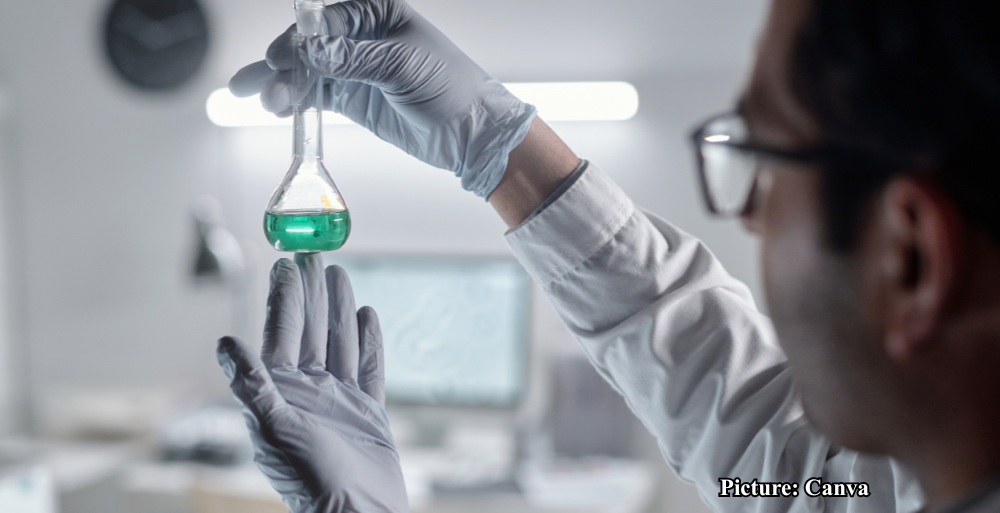
A recent study led by researchers from POSTECH and Stockholm University has uncovered a critical transition in supercooled water, potentially redefining our understanding of its unique properties and behavior.
POHANG, South Korea – A team of researchers from Pohang University of Science and Technology (POSTECH) and Stockholm University has made significant strides in understanding the unusual properties of water, a substance that has perplexed scientists for decades. Their findings, published in the journal Science, reveal the first direct observation of a liquid-liquid critical point (LLCP) in supercooled water, a transition that may explain why water behaves the way it does.
Water, a compound so fundamental to life and the environment, exhibits a range of peculiar behaviors, such as being most dense at 4°C (39.2°F). Despite being one of the most studied substances, its properties remain enigmatic, particularly why it can exist in two distinct liquid forms under certain conditions.
The Challenge of Observation
For many years, scientists have theorized that the LLCP of water lies within a range of deeply supercooled temperatures, specifically between approximately -40°C (-40°F) and -70°C (-94°F). This region, often referred to as ‘no-man’s-land,’ presents a significant challenge for researchers. At these temperatures, water tends to freeze rapidly, making it nearly impossible to study using traditional measurement methods.
The research team, led by Professor Kyung Hwan Kim from POSTECH’s Department of Chemistry, along with Professor Anders Nilsson from Stockholm University’s Department of Physics, employed an innovative approach to overcome these challenges. They utilized an X-ray free-electron laser (XFEL), a cutting-edge tool capable of producing extremely intense X-ray pulses that can capture molecular motion in extremely short time frames, specifically in increments as small as one ten-trillionth of a second.
Progress Over the Years
In 2017, the research team achieved a significant milestone by demonstrating that liquid water could be analyzed without freezing at temperatures as low as -45°C (-49°F). This groundbreaking work opened the door to exploring the previously inaccessible region of supercooled water. By 2020, the team had refined their experimental methods, using amorphous ice to extend their measurements down to -70°C (-94°F). These experiments provided the first evidence that water can exist as two distinct liquid forms at such low temperatures, garnering considerable attention within the scientific community.
Direct Observation of the Liquid-Liquid Critical Point
The latest findings represent a culmination of over a decade of research, providing the first direct observation of a liquid-liquid critical point at approximately -60°C (-76°F). At this specific temperature, the two separate liquid states of water merge into a single supercritical liquid, a discovery that sheds light on the underlying mechanisms contributing to water’s unique properties.
Professor Kyung Hwan Kim remarked on the significance of their findings, stating, ‘The intense debate in the scientific community, spanning many years, over water’s unusual properties and a liquid-liquid critical point has finally been brought to a close.’ He further noted that this discovery is expected to serve as a foundational starting point for further research into the essential roles water plays in biological systems and various natural phenomena.
Funding and Support
This research was made possible through support from the National Research Foundation of Korea (NRF), which provided funding through its Outstanding Young Scientist Grant program and the Leading Research Center Support Program. Additionally, support was provided by the Samsung Science and Technology Foundation.
Implications of the Research
The insights gained from this study not only deepen our understanding of water but may also have broader implications for the fields of chemistry, biology, and environmental science. Understanding the LLCP in water could lead to advancements in various scientific applications, including climate science, where the behavior of water in different states can impact weather patterns and ecological systems. Furthermore, this research may influence our understanding of life’s origins, as water is a fundamental component in biological processes. The findings could also inspire new approaches to studying and utilizing water in various scientific and practical applications.
As researchers continue to explore the complexities of this vital substance, the findings may prompt new questions and investigations. The study of water’s unique properties could lead to innovations in technology, such as improved cooling systems, more effective materials in various industries, and a better understanding of water’s role in climate change.
In conclusion, the recent research conducted by the team from POSTECH and Stockholm University represents a significant advancement in the field of physical chemistry, marking a turning point in our understanding of one of nature’s most essential compounds. The implications of this work will likely resonate across multiple disciplines, highlighting the importance of continued exploration into the fundamental nature of water.



No Comment! Be the first one.