





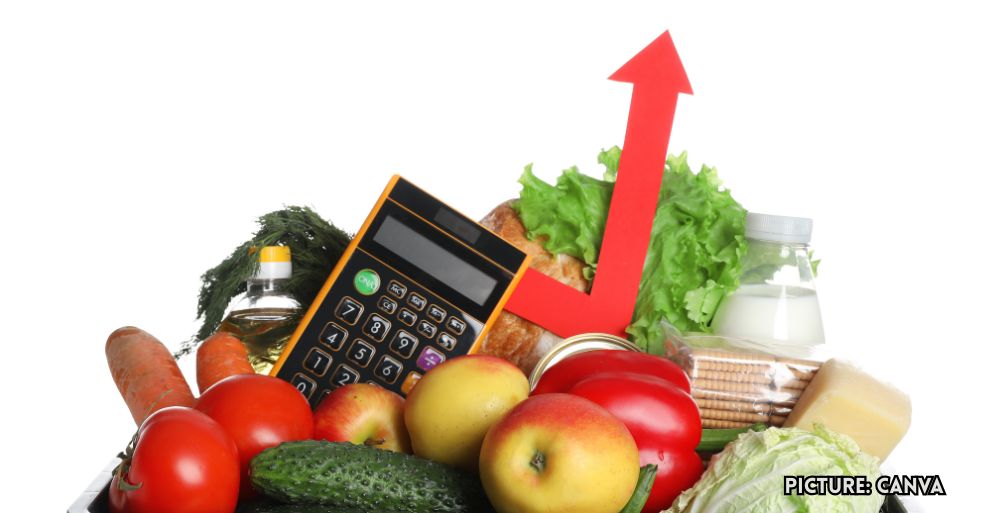
As food prices remain high, families across various income levels are adapting their shopping habits, with lower-income households facing the most significant challenges in maintaining nutritious diets.
As grocery bills persist in straining household budgets, consumers across the United States are finding themselves making difficult trade-offs regarding where they shop, what they buy, and how they maintain healthy diets. Food inflation, which has been a concern for policymakers and families alike, shows no signs of abating, with many households feeling the impact of rising grocery prices.
The burden of these price increases falls disproportionately on lower-income households, which allocate a greater share of their income to food expenses compared to higher-income families. This ongoing situation has prompted numerous households to reevaluate their purchasing strategies, as they search for ways to stretch their budgets without compromising nutritional quality.
Insights from Experts at Tufts University
Experts from the Gerald J. and Dorothy R. Friedman School of Nutrition Science and Policy at Tufts University are available to provide valuable insights into the dynamics of rising food costs and their effects on families. They also offer practical strategies to help households navigate these challenges while maintaining access to nutritious foods.
Dr. Sean Cash, a Bergstrom Foundation Professor in Global Nutrition and an associate professor at Tufts, emphasizes the adaptive nature of consumers during periods of economic strain. “When food prices rise, consumers don’t simply stop buying food,” Cash states. “They become more strategic. Many households are shopping across multiple retailers, using discount outlets such as dollar stores for lower-cost packaged foods while also trying to balance those purchases with healthier items elsewhere.”
Cash highlights that the challenge for families lies in maintaining diet quality while managing tighter budgets. “As prices increase, consumers can buy less, change where they shop, or change what they buy at the places they shop – or do all three. Understanding how shoppers adapt can help us better support healthy eating during periods of economic pressure,” he adds.
Understanding Nutritional Value and Cost
Dr. William Masters, a professor with expertise in food economics and global food systems, sheds light on the misconception that healthy eating always requires expensive specialty foods. “One of the biggest misconceptions about healthy eating is that nutritious diets always require expensive specialty foods,” Masters explains. “In reality, some of the best nutritional value per dollar comes from basic foods such as legumes, dairy products, fruits, vegetables, eggs, and other nutrient-rich staples that can be combined into a healthy diet at relatively low cost.”
However, Masters warns that rising food prices exacerbate the challenge of accessing nutritious diets. “Our research shows that billions of people around the world still cannot afford a healthy diet, even when choosing the least expensive nutritious foods available. Rising food prices make that challenge even more severe because households often have to choose between meeting nutritional needs and covering other essential expenses,” he notes.
Masters advocates for long-term solutions that not only assist families in affording healthy foods today but also facilitate the easier and less costly production, distribution, and purchase of nutritious foods across all communities. He states, “The encouraging news is that we now have better tools than ever to measure the cost of healthy diets. Those data can help guide policies and investments that bring nutritious foods within reach for more people.”
The Impact of Policy Changes on Food Security
Dr. Parke Wilde, another professor at Tufts specializing in the economics of federal nutrition programs, addresses the interplay between rising food prices and recent policy changes affecting consumers, notably the One Big Beautiful Bill. “Rising food prices hit especially hard for families that have lost their nutrition assistance benefits,” Wilde says. He points out that while Supplemental Nutrition Assistance Program (SNAP) benefits are adjusted annually for inflation, non-participants remain vulnerable to inflationary pressures.
Since the passage of the One Big Beautiful Bill (H.R. 1) in 2025, millions of SNAP participants have lost their benefits. This situation not only affects households but also reverberates through the food system, impacting retailers, farmers, food banks, and community organizations, all of which are grappling with rising costs. “Food system stakeholders are interconnected. When economic pressures on households increase, the effects ripple throughout the entire food system, from producers and retailers to the programs and institutions working to address food insecurity,” Wilde explains.
As food prices continue to climb, the implications for public health and food security are profound. Households, particularly those with limited resources, face the ongoing challenge of balancing their nutritional needs with economic realities. The insights provided by experts at Tufts University underscore the complexity of this issue and the need for comprehensive strategies that consider both immediate and long-term solutions.





No Comment! Be the first one.