





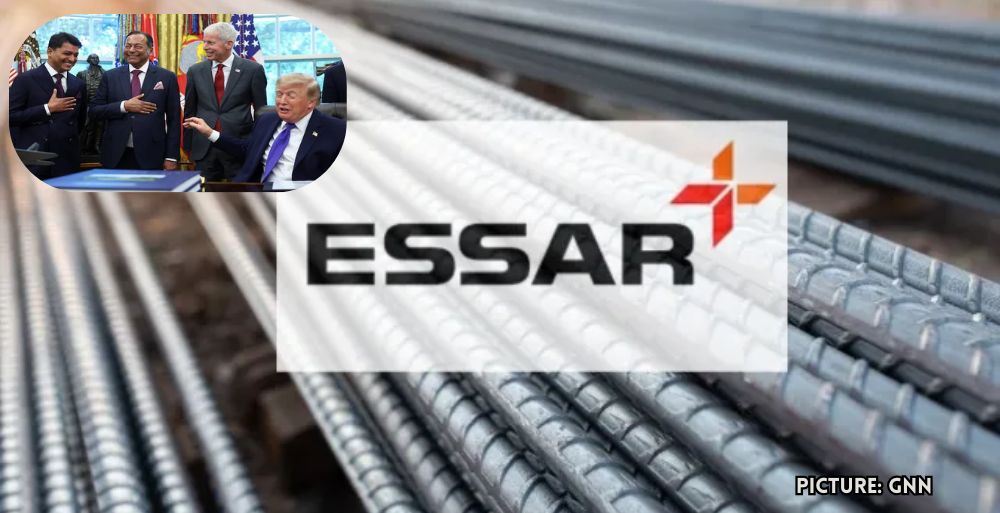
A proposed steel project in Iowa, backed by India-born businessman Rewant Ruia and Essar Group, aims to create a significant supply chain by integrating a Minnesota iron ore mine with a new steel complex in Iowa, projected to generate thousands of jobs and an economic boost.
On September 28, 2023, at a White House event, Rewant Ruia, alongside his father Ravi Ruia, announced the Essar Group’s ambitious plan to invest approximately $18 billion in a new steel complex linked to an iron ore mine in Minnesota. This initiative is poised to connect mining operations to a steel plant in southeastern Iowa, establishing a comprehensive supply chain utilizing U.S. railways and energy resources.
During the announcement, Rewant Ruia expressed a personal connection to the United States, stating, “While I was born in India, I went to high school in New York, college in Boston, and did my MBA in California. I spent half my life here so announcing this investment today is a great honor and a true homecoming for me.” His remarks underscored the significance of the investment not only for the Ruia family but also for their long-standing business in the steel industry.
Investment Breakdown and Projections
When President Trump inquired about the investment’s total cost, Ravi Ruia mentioned that it would be “about $18 billion.” However, the announcement provided varying figures; Commerce Secretary Howard Lutnick referred to the project as comprising a $2.5 billion mine alongside a $15 billion steel plant, while Rewant Ruia indicated that the family would directly invest $3 billion in the mining operations. The discrepancy in these figures was not clarified during the event, raising questions about the project’s financial structure.
President Trump announced that the planned Iowa steel plant would eventually produce 10 million tons of steel annually using ore sourced from Minnesota. The project is estimated to create up to 6,000 construction jobs and nearly 2,000 jobs in manufacturing and mining. However, it is important to note that these projections are contingent upon the successful commencement of steel production, which has not yet begun.
In his remarks, President Trump emphasized the significance of the project, stating, “Mined, melted, and made right here in the U.S.A.” He described the proposed facility as the largest steel plant in American history, asserting that construction would begin soon. This assertion highlights the administration’s focus on revitalizing American manufacturing and securing jobs within the domestic economy.
Local and Government Perspectives
Iowa Governor Kim Reynolds expressed her support for the project, highlighting the potential economic benefits and job creation for local suppliers. She stated that the state seeks to enable Iowa businesses to collaborate with Mesabi Metallics, the entity linked to the Minnesota mine. Governor Reynolds’ endorsement reflects a broader trend among state officials to attract large-scale investments that promise economic revitalization.
Additionally, the announcement raised questions regarding the nature of government support for the venture. Lutnick disclosed that the Export-Import Bank had played a role in financing the Minnesota mine, while private capital would be utilized for constructing the steel plant. However, the event did not provide specifics on the financing arrangements or the anticipated construction timeline, leaving some uncertainty surrounding the project’s financial structure.
Historical Context and Future Implications
The project aims to link Minnesota’s Iron Range, a region that has been a source of iron ore for over a century, with Iowa’s manufacturing capabilities. The integration of these two regions reflects a strategic effort to bolster U.S. steel production amid increasing competition and changing market dynamics. The Iron Range has historically been a cornerstone of the American steel industry, supplying a significant portion of the country’s iron ore and providing jobs to thousands.
While the proposed scale of the steel complex indicates a significant commitment to infrastructure and industrial growth, industry analysts note that such a large-scale facility typically requires years for construction, equipment installation, and operational commissioning before reaching its intended production capacity. The complexities involved in such a venture underscore the challenges and opportunities that lie ahead for the Ruia family and the Essar Group.
The announcement comes at a time when the U.S. steel industry is grappling with various challenges, including fluctuating demand, international competition, and regulatory hurdles. This investment could play a pivotal role in reshaping the landscape of American manufacturing, especially as the country seeks to strengthen its domestic supply chains in response to recent global supply chain disruptions.
Conclusion
As the steel industry continues to evolve, this proposed investment signals a key moment for both the Ruia family and the broader U.S. manufacturing sector. The coming months will be crucial in determining the feasibility and timeline of this ambitious project, as stakeholders await further details on financing, construction, and job creation. The success of this venture could not only enhance the Ruia family’s legacy in the steel industry but also contribute significantly to the economic landscape of Iowa and Minnesota, reinforcing the importance of domestic production capabilities in an increasingly complex global economy.




No Comment! Be the first one.