





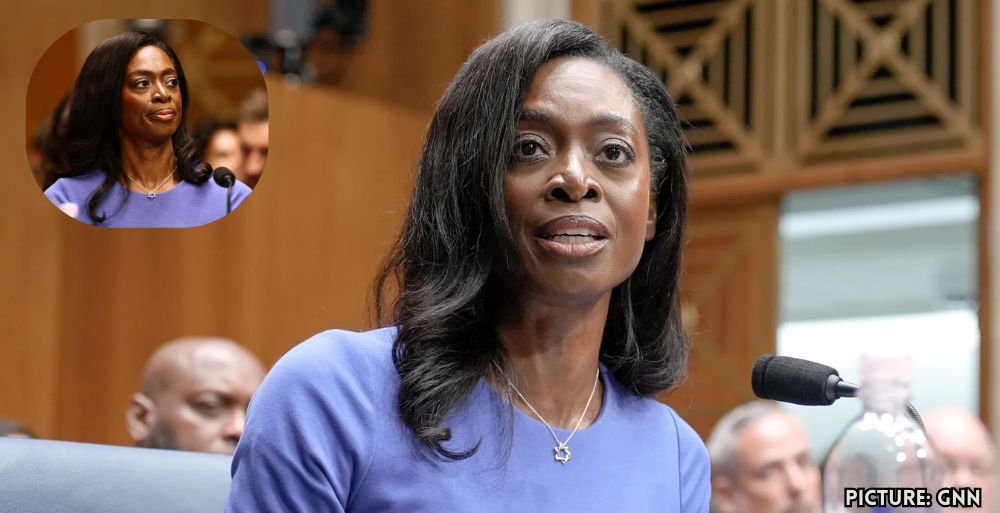
A month into her tenure, CDC Director Erica Schwartz has come under scrutiny for her silence during a critical public health crisis involving measles and other respiratory viruses.
As the United States enters a challenging respiratory virus season, the Centers for Disease Control and Prevention (CDC) is confronting significant public health challenges, including the worst measles epidemic in over 30 years. Amid this crisis, CDC Director Erica Schwartz has not made any public appearances or comments since assuming her role, raising concerns among public health experts and officials regarding her visibility and the agency’s communication strategies.
The current measles outbreak is underscored by alarming statistics; as of the latest reports, the CDC has documented a total of 3,294 measles cases this year, with 160 new cases reported in the past week alone. The agency’s decision not to acknowledge recent measles-related deaths in Pennsylvania has further fueled doubts about its transparency and reliability. In August, two unvaccinated children, too young to receive the measles, mumps, and rubella (MMR) vaccine, died in Lancaster County, Pennsylvania, but the CDC has opted not to include these fatalities in its official tally.
Concerns Over CDC’s Communication Strategy
Critics argue that Schwartz’s absence during a critical public health crisis is unprecedented. Deborah Houry, a former chief medical officer at the CDC, emphasized the importance of a CDC director’s engagement with the public during such emergencies. “This is very unusual,” Houry stated. “Thinking back to all of the prior CDC directors I have worked with, almost all met with media and publicly spoke during their first month.”
In what some perceive as a shift in communication strategy, current CDC staffers have indicated that much of the public-facing commentary is being conducted by Health and Human Services Secretary Robert F. Kennedy Jr. A veteran CDC staff member noted, “There’s a noted absence of any kind of commentary from her. She has expertise and could talk authoritatively about measles if she wanted to; she isn’t.”
The CDC has asserted that the agency is “fully engaged” in the measles response, with a spokesperson stating, “Under the leadership of Secretary Kennedy and Director Schwartz, CDC remains fully engaged in the measles response and has consistently communicated the importance of vaccination in preventing measles.” However, the spokesperson did not directly address Schwartz’s lack of public engagement.
Background on Leadership and Staffing Challenges
Schwartz, who has a robust background in public health, previously served as a top public health officer in the Coast Guard and as deputy surgeon general during the Trump administration. Her appointment was seen as a potential stabilizing force within an agency that has experienced considerable upheaval in recent years. Since the COVID-19 pandemic, the CDC has faced significant staffing reductions, with its workforce reportedly slashed by nearly 25 percent due to budget cuts and voluntary departures among career scientists.
Moreover, Schwartz’s predecessor was ousted after only a month in office following conflicts with Secretary Kennedy regarding vaccine policies. Schwartz began her tenure with a pledge to rebuild trust in the CDC, which has been eroded due to perceptions of politicization and partisanship during the pandemic.
Public health experts indicate that effective communication is critical for restoring public confidence. David Margolius, public health director for the city of Cleveland, expressed concerns about Schwartz’s current lack of visibility. “I have been hoping to hear and see her speaking to the American public about what’s going on with measles and flu season coming up,” he said. “This is an opportunity, and it’s not too late.”
Controversy Surrounding Measles Deaths Reporting
The situation in Pennsylvania has drawn considerable attention and criticism. After Governor Josh Shapiro criticized Secretary Kennedy for downplaying the severity of the measles outbreak, Kennedy publicly disputed the state’s report and implied that the deaths may have been fabricated for political reasons. Following this, the CDC supported Kennedy’s stance and did not include the two fatalities in its weekly measles report, marking a significant departure from standard practices, which typically involve accepting state investigations.
The agency’s refusal to acknowledge these deaths has been met with skepticism from public health advocates, who argue that the conversation about the definition of a measles death is secondary to the immediate harm suffered by families affected by the outbreak. Abbie Tighe, a former CDC public health adviser, highlighted the detrimental impact of the agency’s current communications strategy, stating, “So you don’t have anybody at the top who’s really speaking directly to the public that is doing it for the right reasons.”
As the CDC continues to navigate the complexities of the measles outbreak and the impending respiratory virus season, the agency’s leadership and public communication strategies will be critical in shaping public perception and response. The absence of a clear and authoritative voice from the CDC at this juncture raises questions about the agency’s capacity to effectively manage public health crises and restore trust among the American public.


No Comment! Be the first one.