





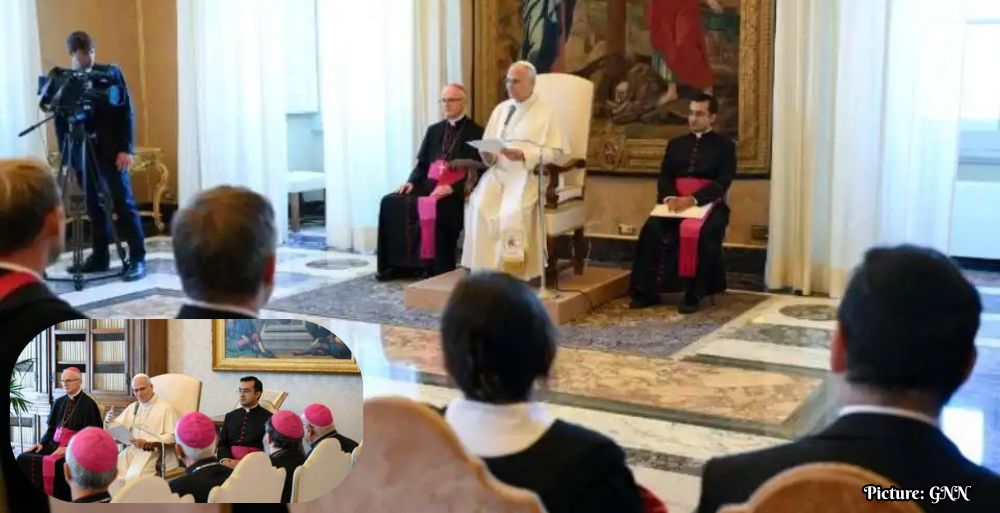
The Vatican emphasized the urgent need for women’s leadership in peace initiatives during a recent United Nations forum, calling for a shift from a prevailing culture of power to one of peace and collaboration.
The Vatican’s Permanent Observer Mission to the United Nations issued a statement on September 2, 2026, highlighting the essential role of women as leaders in peacebuilding during the U.N.’s high-level forum on implementing the Program of Action on a Culture of Peace. This annual event, held at the U.N. headquarters in New York, is designed to promote the objectives of the U.N. General Assembly’s 1999 resolution that advocates for global peace and nonviolence.
This year’s forum particularly emphasized the importance of women’s leadership as a critical factor in achieving a sustainable culture of peace. In her advance remarks, U.N. General Assembly President Annalena Baerbock noted that a culture of peace encompasses not only the absence of conflict but also the presence of justice, gender equality, and inclusive decision-making.
Significance of Women’s Participation
The concept note released ahead of the forum underscored the necessity for women’s full, equal, meaningful, and safe participation in political and peace processes. It also called for improved access to justice for women, stating, “In these fragmented times, the need for a sustainable culture of peace has never been more urgent.” The emphasis on women’s roles in peace processes reflects a broader recognition that their involvement leads to more durable and effective peace agreements.
The Holy See’s U.N. mission expressed deep concern regarding the current global environment, describing a “culture of power” that has come to dominate international relations, normalizing warfare and altering traditional diplomatic relationships. The Vatican’s statement called for renewed efforts to foster a culture of peace that actively counters this prevailing dynamic.
In its statement, the Holy See asserted that women can and should take on a more significant role in processes aimed at healing societies fractured by violence and chaos. The mission referenced both the U.N. General Assembly’s 1999 resolution and Pope Leo XIV’s encyclical, Magnifica Humanitas, which asserts that recognizing the equal dignity and rights of men and women must translate into tangible actions, including the creation of laws and policies that support women’s participation in all spheres of life.
A Call for Action in Peacebuilding
The Holy See’s U.N. mission articulated the need to bridge the gap in women’s representation and participation to enable them to become “artisans of peace and guardians of life,” thus facilitating a culture of peace capable of restoring trust among nations. This perspective aligns with a growing body of research indicating that peace agreements are more likely to endure when women are actively involved in negotiations.
The call for women’s leadership in peace efforts is not a new concept; however, it has gained renewed significance as global conflicts become increasingly complex. The U.N. has recognized that the inclusion of women in peace processes leads to better outcomes, as evidenced by studies showing that peace agreements last longer when women are part of the negotiating teams.
The Vatican’s advocacy for recognizing and empowering women’s roles in peacebuilding resonates with broader international efforts aimed at promoting gender equality and sustainable peace. The intersection of gender and peace has emerged as a critical area of focus, influencing both policy and practice within the U.N. and among its member states.
Historical Context and Broader Implications
The Vatican’s recent statement is part of a larger narrative advocating for gender equality and women’s rights, which has gained significant momentum in international discourse over the past few decades. The 1999 U.N. resolution on a culture of peace laid the groundwork for ongoing discussions surrounding the role of women in peace and security, culminating in the adoption of the Women, Peace, and Security Agenda by the U.N. Security Council in 2000 through Resolution 1325.
By reinforcing the necessity of women’s leadership in peace processes, the Vatican adds its voice to a growing coalition of advocates emphasizing that true peace must involve the participation of all sections of society, particularly women, who often bear the brunt of conflict and its consequences. This inclusive approach is increasingly recognized as vital for achieving lasting peace.
The implications of this call extend beyond the U.N. forum, as member states and international organizations consider how to implement these principles in their policies and operational frameworks. The Vatican’s emphasis on shifting from a culture of power to a culture of peace serves as a timely reminder that fostering collaboration, dialogue, and inclusive governance is essential for achieving enduring peace in a world that faces increasing fragmentation and strife.
As the U.N. continues to evolve its strategies in response to global challenges, the Vatican’s call for enhanced women’s leadership in peacebuilding is a crucial element of the broader discourse on gender equality and peace. The recognition of women’s contributions as essential to fostering a culture of peace not only aligns with the U.N.’s foundational principles but also reflects the growing acknowledgment that sustainable peace requires the engagement of all members of society.






No Comment! Be the first one.