


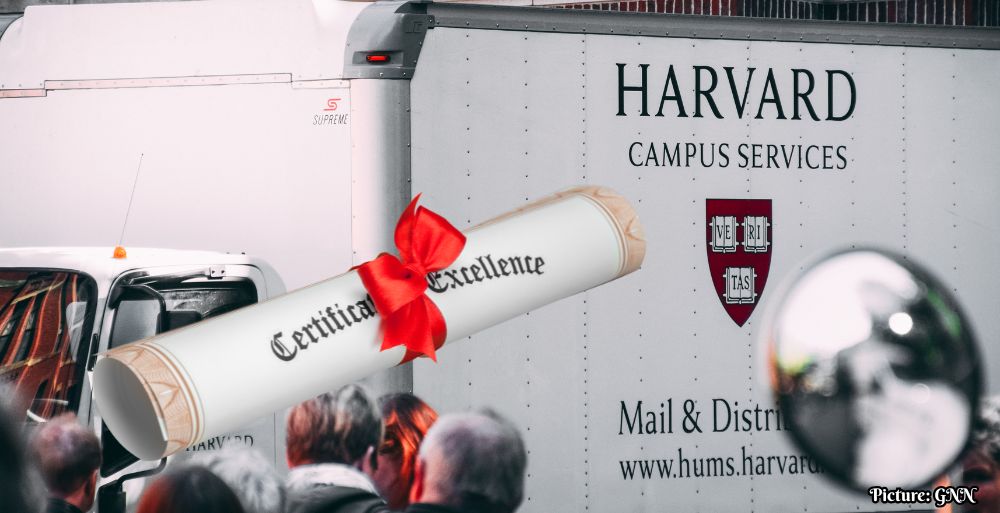
Harvard Medical School is expanding its pre-college and pre-med online certificate programs to broaden access to specialized medical training and address projected national workforce deficits. Since launching the initiative in spring 2025, the institution has enrolled approximately 2,200 high school and college students across asynchronous modules covering advanced biomedical subjects. Amid forecasts from health organizations warning of a shortage of tens of thousands of physicians over the next decade, the university aims to leverage remote learning, tailored mentorship, and capstone coursework to diversify and fortify the future talent pipeline in medicine, research, and emerging healthcare technologies.
BOSTON — In an effort to address a projected long-term deficit in the nation’s healthcare workforce, Harvard Medical School (HMS) is leveraging distance-learning infrastructure to prepare thousands of secondary and undergraduate students for careers in clinical medicine and biomedical research.
Since rolling out its pre-college and pre-med online certificate offerings in the spring of 2025, HMS has enrolled approximately 2,200 students. The initiative seeks to democratize access to advanced scientific instruction and reach aspiring physicians and researchers who might otherwise lack exposure to high-level academic medicine.
The educational push comes as federal agencies and medical associations warn of severe structural deficits across the American healthcare landscape. Projections indicate a nationwide shortage of up to 86,000 physicians by 2036. Concurrently, while the number of medical scientist positions is projected to grow by more than 14,000 through 2034, rapid advancements in artificial intelligence, genomics, and targeted therapeutics are swiftly altering the skill sets required for medical research and clinical care.
Expanding Beyond On-Campus Boundaries
While Harvard Medical School has operated its in-person MEDscience program for high school students since 2005, geographic and spatial constraints historically limited participation to local partner institutions. The expansion into asynchronous online certificates represents a deliberate effort to scale the institution’s reach nationwide.
“We need the best and brightest to come into the medical community,” said David Roberts, HMS Dean for External Education, emphasizing the institutional motivation behind the online expansion. “We would love to bring a new group of learners into our orbit who might not ordinarily consider going to medical school.”
According to Roberts, the online curriculum is adapted directly from existing HMX courses designed by HMS faculty for medical students and practicing healthcare professionals. The objective is to capture the school’s core philosophies surrounding discovery, leadership, and evidence-based practice, packaging them for earlier stages of the academic pipeline.
Curriculum Structure, Mentorship, and Costs
The online certificate programs are divided into two distinct tracks tailored to different educational tiers:
- Pre-College Track: Targeted at students aged 13 and older, offering early exposure to rigorous biological concepts and foundational health science careers.
- Pre-Med Track: Designed for undergraduate and graduate students preparing for the academic demands of medical school admissions and specialized clinical fields.
Unlike degree-granting programs or traditional prerequisites offered through the Harvard Extension School, these certificate courses do not confer academic credit and are not required for the Medical College Admission Test (MCAT). Instead, they are designed for academic enrichment and career alignment.
Each course provides 30 hours of instruction offered year-round across one-, two-, and four-week sessions with rolling enrollment. Tuition is set at approximately $2,000 per course, with financial assistance packages available for eligible applicants.
The instructional framework pairs recorded video lectures, dynamic animations, and interactive problem sets with personalized support. Each enrolled student is matched with a trained health science mentor who provides strategies, checks for understanding, and delivers detailed feedback on assignments.
To foster peer interaction within the self-paced structure, students utilize asynchronous discussion forums, bringing together diverse geographical and socio-economic perspectives.
Deep Science and Specialized Capstones
The program’s offerings fall into two primary categories: Academic Enrichment and Capstone courses. Academic Enrichment modules cover foundational biomedical disciplines, including Biochemistry, Genetics, Immunology, Pharmacology, and Physiology. Students have the option to take individual modules or enroll in a bundled curriculum.
Capstone courses focus on career exploration, systemic healthcare structures, and translational medicine:
- Becoming a Doctor: Examines real-world patient cases, clinical decision-making, and the operational aspects of patient-physician relationships.
- Medical Research: Traces scientific discovery from early laboratory trials through commercialization and clinical delivery.
- Upcoming Releases: Two new capstone courses focusing on Artificial Intelligence and Surgical Specialties are scheduled to launch in fall 2026.
Participants in capstone tracks complete culminating projects, such as designing therapeutic research proposals or mapping out post-graduate medical pathways through residency, fellowship, and administrative leadership roles.
Impact on the Pipeline: Student Experiences
For students navigating the competitive path toward medical training, the certificate coursework provides both foundational knowledge and practical context for addressing regional healthcare disparities.
Minjae (MJ) Eum, a recent Cornell University graduate holding a degree in human biology, health, and society, completed the pre-med course Biochemistry: From Molecules to Medicine. Eum plans to complete two gap years conducting laboratory research and clinical scribing at Stanford University School of Medicine before returning to practice medicine in her home state of Alabama.
“Many people in the South and other areas of the United States mistrust the healthcare system, struggle to interpret complex medical terminology, or have experienced stigma because of their medical conditions,” Eum noted, explaining how understanding metabolic pathways allows her to better explain food processing and organ function to patients in vulnerable communities.
For high school students balancing secondary coursework, the program offers flexibility alongside rigorous academic demands. Angie Telhomme, a high school senior from Boston who completed pre-college courses in Genetics and Medical Research, highlighted the role of targeted feedback from her program mentor.
“Even though I had school, sports, and family chores, I loved that I could come home and focus on what I truly wanted to do,” Telhomme said, noting that her mentor pushed her to look deeper into the biological mechanisms of conditions like type 1 diabetes for her coursework.
Similarly, Madeline Vowels, a high school student from Iowa who completed the Becoming a Doctor capstone, noted that interacting with peers across the country helped demystify the lengthy path to a medical career. “It left me feeling confident about my ability to pursue a medical career,” Vowels said. “It’s daunting, but I love it enough and think it’s going to be well worth it.”



No Comment! Be the first one.