





South Indian filter coffee, a traditional beverage steeped in cultural heritage, is experiencing a surge in popularity across the United States as entrepreneurs introduce this unique brewing method to new audiences.
In recent years, South Indian filter coffee has emerged as a notable trend in the U.S. coffee market, captivating the palates of many Americans unfamiliar with the rich cultural traditions surrounding this beverage. Characterized by its preparation in a traditional metal filter, the coffee is brewed as a concentrated decoction, mixed with hot milk and sweeteners like sugar or jaggery. This method not only creates a distinct flavor profile but also embodies a cherished ritual for many South Indians.
Praveena Sundarraj, founder of Raani Coffee Roasters in Atlanta, reflects on her childhood memories of filter coffee, describing it as a deeply personal experience that defined her mornings in Ooty, a hill station in South India. “One loud slurp was all it took for a deeply personal, grounding escape [from the cold],” she recalls. The rise of filter coffee in the U.S. is attributed to the efforts of entrepreneurs like Sundarraj, who opened her café in November 2025, aiming to share her cultural heritage with a broader audience.
Brewing Tradition and Methodology
Traditionally, South Indian filter coffee is brewed using a slow-drip metal filter, which can be composed of brass, copper, or stainless steel. This brewing apparatus consists of several components: a top chamber for coffee grounds, a plunger to compress the grounds, a lid, and a bottom chamber to collect the brewed decoction. The process involves pouring hot water over the coffee grounds, allowing it to drip for 15 to 20 minutes, resulting in a thick coffee extract.
At Sri Ramana Coffee Works in Bangalore, co-founder Lavanya Avinash utilizes a double brewing technique, combining the first and second decoctions to achieve her desired flavor. She emphasizes the importance of balancing the earthy bitterness of black coffee with milk, which is often sweetened with sugar or jaggery. The traditional filter coffee is typically prepared using a blend of dark-roasted robusta coffee and chicory, with a common ratio being 70% coffee to 30% chicory, which contributes to the beverage’s robust flavor and aroma.
Serving and Consumption
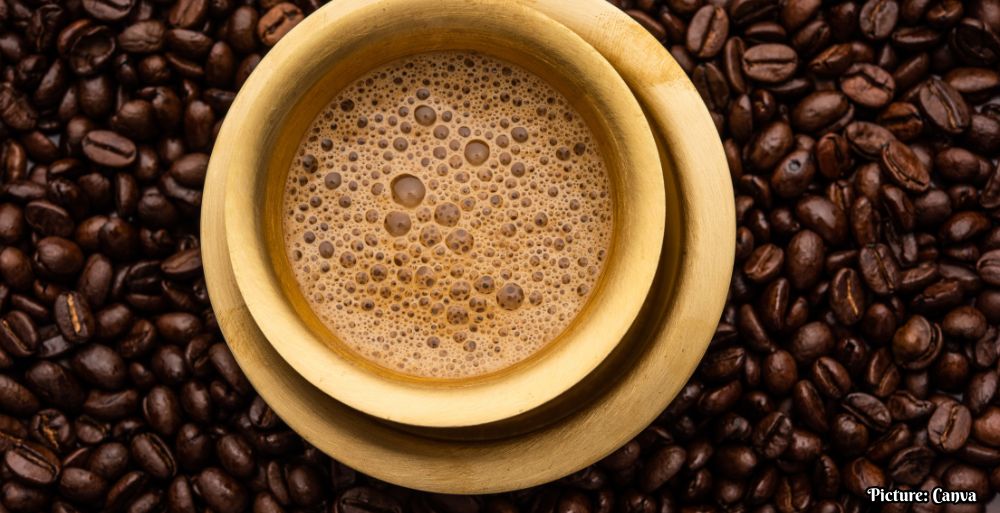
Filter coffee is traditionally served in a two-piece set consisting of a brass or stainless-steel tumbler and a deep bowl known as a dabara. The coffee is poured back and forth between the two vessels, a process that aerates it and creates a frothy layer on top. Avinash notes, “Some of us believe it’s only filter coffee if it’s frothy. Only then can you really smell and taste the coffee.” The method of drinking, which involves slurping from the dabara, is an integral part of the experience, enabling drinkers to fully appreciate the flavor profile.
Cultural Significance and History
The history of South Indian filter coffee is rich and varied, with tales dating back to the 17th century. One popular narrative involves a Sufi saint who reportedly smuggled coffee beans from Yemen to India, planting them in the Chikkamagaluru region, which is considered the birthplace of Indian coffee. The introduction of chicory is often attributed to the British Army during the early 20th century, as a means of coping with coffee shortages. Despite the unclear origins of the drip-style brewing method, filter coffee has remained a beloved household ritual for generations.
Varshi Srinivas, founder of No Filter Kaapi Klub in San Francisco, emphasizes the deep familial connections associated with filter coffee. She describes it as an inheritance passed down through her family, noting that her mother perfected the brewing technique for her father without ever tasting it herself. “It’s in our blood,” she states, highlighting the cultural lineage tied to this beverage.
Filter Coffee’s Rise in the U.S.
In the United States, South Indian filter coffee has gained traction through various cafés, pop-ups, and roasters founded by individuals of South Indian descent. Companies like Narasu, established in 1926, are reporting significant growth in their North American exports. Raani Coffee Roasters offers a range of single-origin coffees and filter kaapi brewers online, focusing on medium-roasted beans that showcase chocolate and caramel notes without chicory, aiming to convey the essence of Indian coffee.
At Sundarraj’s café in Atlanta, both hot and iced versions of Madras Kaapi are popular among patrons, with the hot variant frequently selling out. The preparation involves a theatrical pouring method that enhances the overall experience, as Sundarraj believes it adds to the enjoyment of the beverage. During the winter of 2025, Raani sold an impressive 200 filter coffees per day, often running out due to high demand.
In addition to standalone cafés, filter coffee has made its way into high-end culinary venues. Chef Vijaya Kumar, a James Beard Award winner from Tamil Nadu, incorporates filter coffee into cocktails at Semma in New York City, further diversifying the ways in which this traditional beverage is enjoyed.
As South Indian filter coffee continues to gain recognition and popularity, entrepreneurs like Sundarraj and Srinivas are optimistic about its future. “I’m seeing people who have no personal connection to South India trying kaapi for the first time and pushing the boundaries of what it can be. It’s a really exciting time to be doing this,” says Srinivas, highlighting a broader cultural exchange and appreciation for this cherished beverage.





No Comment! Be the first one.